What if you stopped fighting the tension?
Not ignoring it. Not pushing through it. Not numbing it with another massage appointment or another stretching routine that gives you three good hours before the grip returns.
What if the tension could release itself? Not because you finally found the right stretch. But because the system it was compensating for came back online, and the compensation became unnecessary.
This is not a theory. This is a principle your body has known since before you were born. Pressure bypasses tension. And it is the first thing Syntropic Core Resets restore.
Bypass, not release
The entire release paradigm, stretching, massage, foam rolling, myofascial release, operates on one assumption: tension is the problem. Find the tight spot. Apply force. Make it let go.
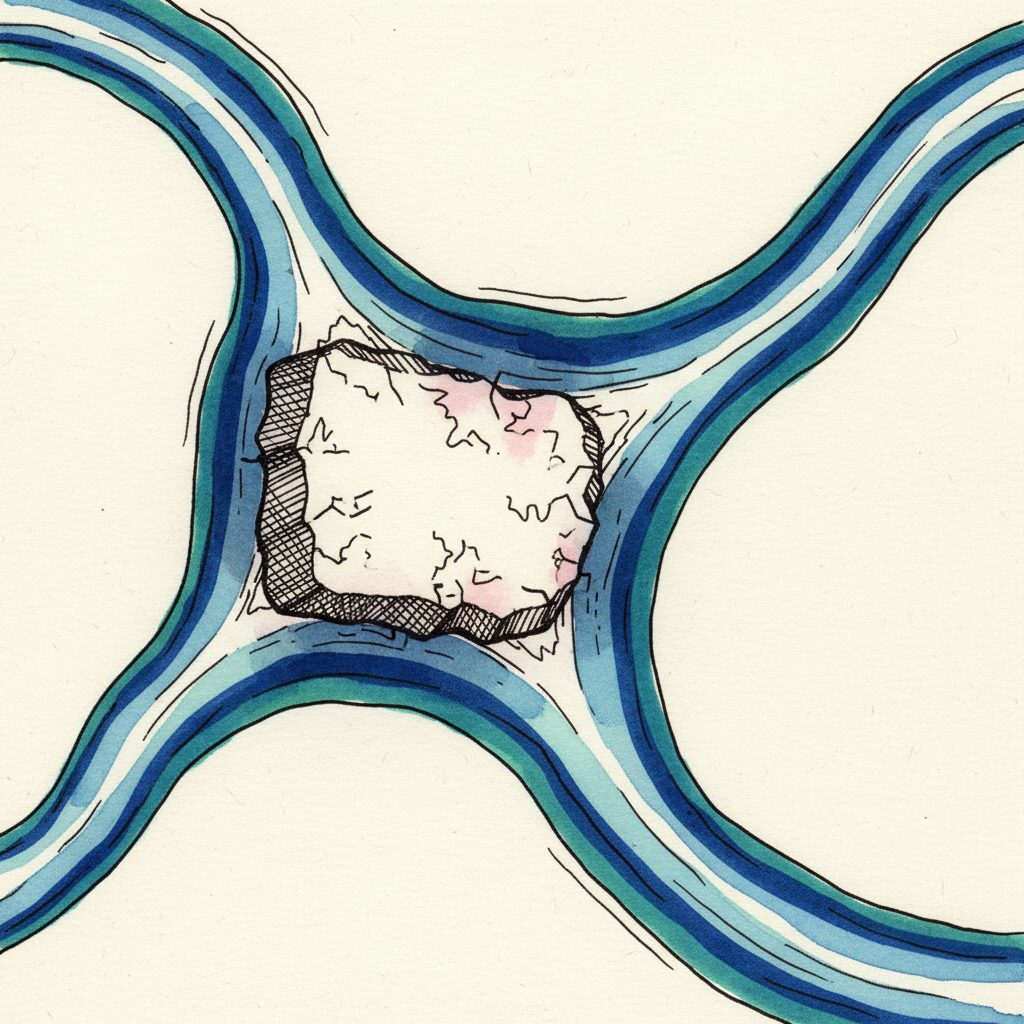
But tension is not the problem. It is the solution to a different problem. Your nervous system is gripping specific muscles to stabilize structures that lost their internal hydraulic support. The tight traps, the locked jaw, the hip flexors that retighten overnight. They are load-bearing compensations.
You do not release a load-bearing structure. You restore what it was compensating for. Then it releases itself.
This is the difference between release and bypass. Release targets the tension directly. Bypass restores the pressure system underneath and lets the nervous system decommission the tension on its own terms.
The timeline your body already lived
In the womb, you were organized by pressure alone. Amniotic fluid pressing equally from all directions. No gravity. No muscular effort. No tension. Your spine formed its curves. Your diaphragm developed its dome. Your rib cage shaped itself. All inside a pressurized vessel.
Then you were born. Gravity arrived. And your body had to solve a new problem: how to maintain pressure under gravitational load.
The developmental sequence that every infant moves through, from lying to rolling to crawling to sitting to standing, is not a motor learning sequence. It is a pressure-under-gravity sequence. Each position teaches the body to maintain internal hydraulic support against progressively greater gravitational demand [5]. Lying down, pressure is easy. Standing, it is complex. The sequence bridges the gap.
When the sequence completes successfully, you stand upright with hydraulic support. Pressure from inside. Stability without effort. The adult version of what the womb provided automatically.
When the sequence is disrupted, by stress, by injury, by years of sitting, by being told to brace your core, the pressure system goes offline. Tension fills the gap. And stays.
Frank, Kobesova, and Kolar (2013) established that Dynamic Neuromuscular Stabilization (DNS) uses developmental positions as templates for restoring pressure-based stabilization in adults. The developmental sequence from supine through quadruped to upright represents a progressive challenge to the intra-abdominal pressure system under increasing gravitational load. By returning adults to earlier developmental positions, DNS reduces the gravitational demand, allowing the deep stabilization system (diaphragm, transversus abdominis, pelvic floor, multifidus) to re-engage without the compensatory tension strategies that dominate in upright posture. Hodges et al. (2004) showed that IAP increases automatically in response to postural perturbation before conscious awareness, confirming that the pressure system is anticipatory when functional. The developmental recapitulation restores this anticipatory function.
The gate you cannot force open
There is a reason you cannot brace your way to pressure. Bracing is the tension strategy. Engaging your core, holding your abs, pulling your shoulders back. All of it uses the superficial muscles. All of it competes with the deep pressure system. All of it keeps the backup generator running and prevents the primary from coming back online.
The pressure system requires one condition that no amount of effort can produce: safety.
Porges documented this through the polyvagal framework [6]. The ventral vagal state, the neurophysiological state of safety and social engagement, enables the autonomic conditions that allow deep stabilization. Sympathetic activation, the fight-or-flight state, drives the tension strategy. Not as a choice. As physiology. When your nervous system reads the environment as threatening, it tensions. When it reads the environment as safe, it pressurizes.
This is why the hardest-working, most disciplined people are often the tightest. Effort is sympathetic. Discipline is sympathetic. Trying harder is the tension strategy wearing a motivational T-shirt.
The pressure system does not respond to effort. It responds to conditions. Ground contact. Reduced gravitational demand. Diaphragm restoration. Exhale emphasis. The conditions that tell the nervous system: you do not have to hold on right now.
Porges (2011) documented that the autonomic nervous system operates in a hierarchy: ventral vagal (safety/social engagement) enables the physiological conditions for deep stabilization and pressure-based postural support, while sympathetic activation (fight/flight) drives superficial muscular guarding and tension strategies. This is not a psychological preference but a physiological constraint. Moseley and Hodges (2006) showed that reduced variability of postural strategy, characterized by rigid tension patterns, persists even after pain resolution because the system never returns to the pressure-based strategy. The tension pattern is maintained by the autonomic state, not by the pain. Restoring pressure-based stabilization requires creating conditions that shift the autonomic state toward ventral vagal: reduced gravitational demand, ground contact, and diaphragmatic breathing that emphasizes exhalation.
What Syntropic Core Resets actually do
Syntropic Core Resets walk the adult body back through the developmental sequence. Pressure first. Then pressure under load. Then pressure in motion.
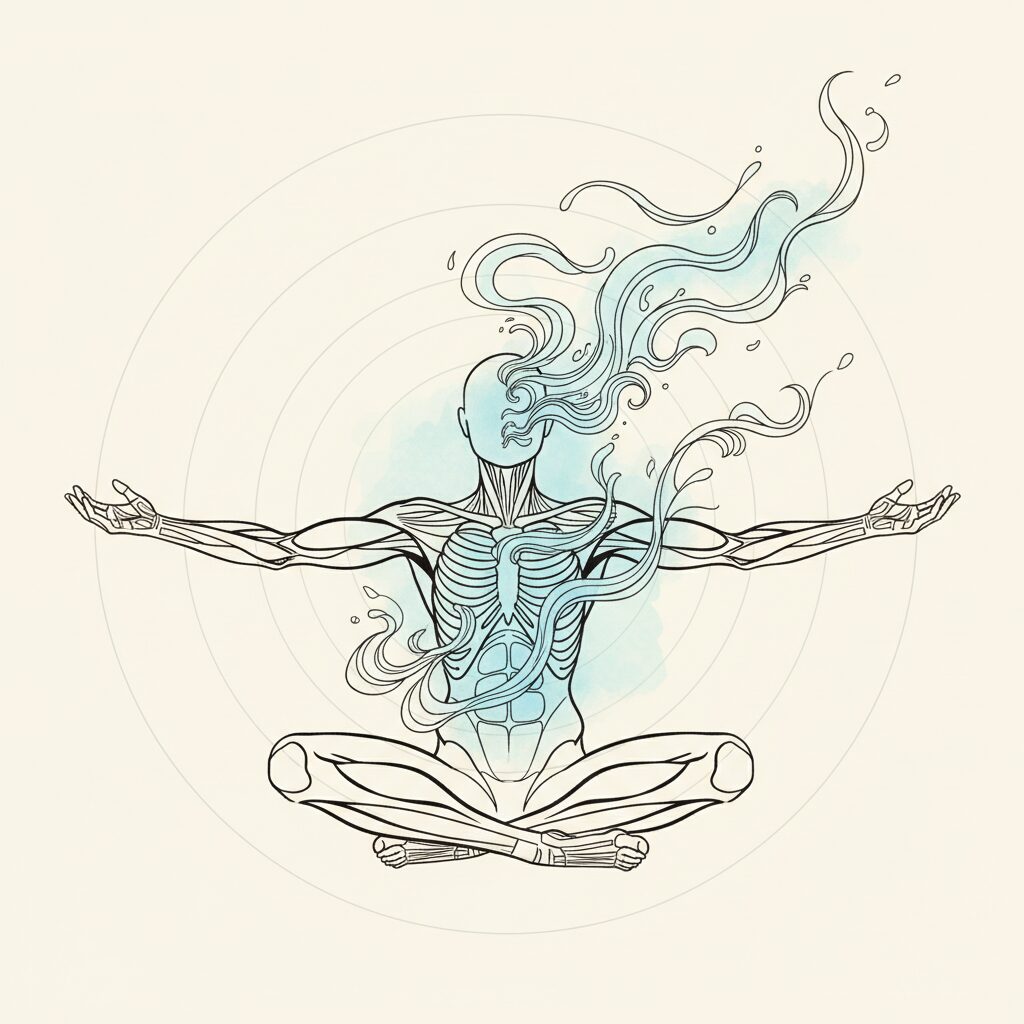
The first reset most people learn is a pressure reset. Lying down. Gravity reduced. The diaphragm given space to recover its dome. The deep stabilizers given conditions to re-engage without competition from the superficial tension system. As close to the womb’s hydraulic environment as an adult body can get.
This is not passive. Something is happening. The pressure system is coming back online. The diaphragm is cycling. Intra-abdominal pressure is building and releasing. The deep stabilizers are firing anticipatorily, before the demand, the way they were designed to [3].
And then something shifts.
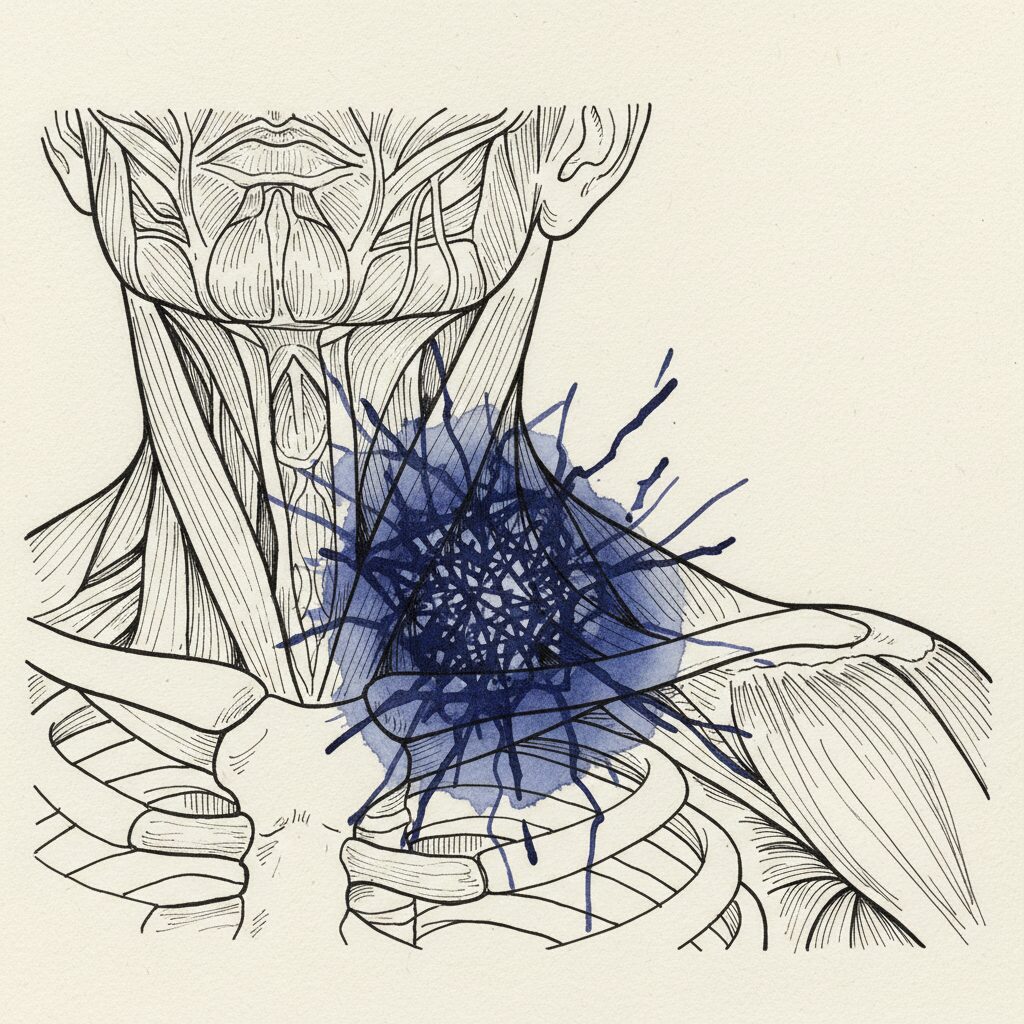
The traps soften. Not because you stretched them. The hip flexors release. Not because you rolled them. The jaw unlocks. Not because you were told to relax it. The nervous system surveyed the situation, found the pressure system operational, and decommissioned the compensations it no longer needed.
This is why people report tension releasing in muscles they did not target. The pressure system does not operate muscle by muscle. It operates as a whole. When the primary comes back, the backup shuts off everywhere at once.
This is not years of work
The pressure system is not broken. It is suppressed. The hardware is intact. The diaphragm is there. The deep stabilizers are there. The architecture of the pressure canister, the one that formed inside the womb, is unchanged.
What happened is that the tension system took over and the pressure system went quiet. Not because it failed permanently. Because the conditions for its operation were no longer present. Restore the conditions. The system responds.
People feel it in the first session. Not a dramatic event. A quiet one. Tension dropping in places they have been fighting for years. Not releasing because they finally found the right technique. Releasing because the technique was never the point. The pressure was the point. And the pressure is back.
You were never too tight. You were under-pressurized.
Pressure bypasses tension. It does not fight it. It does not stretch it. It makes the nervous system retire it voluntarily. This is the principle your body has known since the womb. And it is the first thing you will feel when the pressure comes back.
Find out what your body does when it does not have to hold on anymore.
—
Related: Why Your Body Holds Tension (Even When Nothing Is Wrong) | Why Stretching Never Fixes Chronic Tightness | The Collapse That Fixes Your Posture
—
Syntropic Core Resets begin where your body began: with pressure. The first reset restores the hydraulic system that makes tension unnecessary. Start here.
Sources
- Hodges, P.W., Eriksson, A.E., Shirley, D., & Gandevia, S.C. (2005). Intra-abdominal pressure increases stiffness of the lumbar spine. Journal of Biomechanics, 38(9), 1873-1880. PMID: 16023475 [T1]
IAP provides 8-31% spinal stiffness without voluntary effort. When this comes online, compensatory tension becomes redundant. The hydraulic system replaces the need for muscular grip.
- Kolar, P., et al. (2014). Clinical Rehabilitation. Alena Kobesova, eds. Prague: Rehabilitation Prague School. [T1]
DNS developmental positions restore pressure-based stabilization. Clinical evidence that recapitulating developmental postures restores the hydraulic system in adults with compromised deep stabilization.
- Hodges, P.W., Cresswell, A.G., & Thorstensson, A. (2004). Perturbed upper limb movements cause short-latency postural responses in trunk muscles. Gait & Posture, 20(3), 340-349. PMID: 15336286 [T1]
IAP increases automatically before conscious awareness in response to postural perturbation. Pressure-based stabilization is anticipatory. It arrives before the demand, not after.
- Moseley, G.L., & Hodges, P.W. (2006). Reduced variability of postural strategy prevents normalization of motor changes induced by back pain. Behavioral Neuroscience, 120(2), 474-476. PMID: 16719711 [T1]
Tension patterns persist after pain resolves because the system never returned to pressure-based strategy. Restoring variability requires restoring the hydraulic option.
- Frank, C., Kobesova, A., & Kolar, P. (2013). Dynamic neuromuscular stabilization & sports rehabilitation. International Journal of Sports Physical Therapy, 8(1), 62-73. PMID: 23439921 [T1]
DNS developmental positions as the template for adult pressure-based stabilization. The developmental sequence recapitulates the womb-to-gravity transition: pressure first, then pressure under gravitational load.
- Porges, S.W. (2011). The Polyvagal Theory: Neurophysiological Foundations of Emotions, Attachment, Communication, and Self-Regulation. Norton. [T1]
Ventral vagal state enables the autonomic conditions for pressure-based stabilization. Sympathetic activation drives tension strategy. Safety is the gate. You cannot effort your way to pressure.
Comments
2 responses to “The Fastest Way to Release Tension (Without Stretching or Massage)”
[…] Related: The Collapse That Fixes Your Posture | Why Stretching Never Fixes Chronic Tightness | The Fastest Way to Release Tension […]
[…] Related: Why Your Body Holds Tension (Even When Nothing Is Wrong) | The Collapse That Fixes Your Posture | The Fastest Way to Release Tension […]