The pain came back. It always comes back.
This is the master explanation. If your pain comes back specifically at night, read Why Back Pain Returns at Night. If your scan is clean and the injury healed but pain remains, read Why Pain Persists After the Injury Heals.
You have tried the treatments. Massage. Physical therapy. Chiropractic. Maybe injections. Maybe medication. Each one worked for a little while. Days. Sometimes a week. Then the pain returned to the same place, at the same intensity, on the same schedule it always follows.
You are not imagining this. You are not doing something wrong between appointments. And the treatments are not failing because they are bad treatments. They are failing because they are talking to the wrong system.
Your brain maintains an internal model of your body called the body schema. That model generates your posture. It also generates your pain. This guide is the most complete explanation I can give you for why pain persists after the tissue has healed. We have written about how the nervous system runs posture. This guide explains how that same system runs pain.
Pain that persists beyond tissue healing is not a damage report. It is a prediction. The nervous system learned that this region requires protection, and it continues generating the pain signal long after the original threat resolved.
Why Pain Returns After Treatment
Most tissues heal within three to six months. Muscles. Ligaments. Discs. Even bones. The biology of tissue repair is well documented and relatively predictable [2].
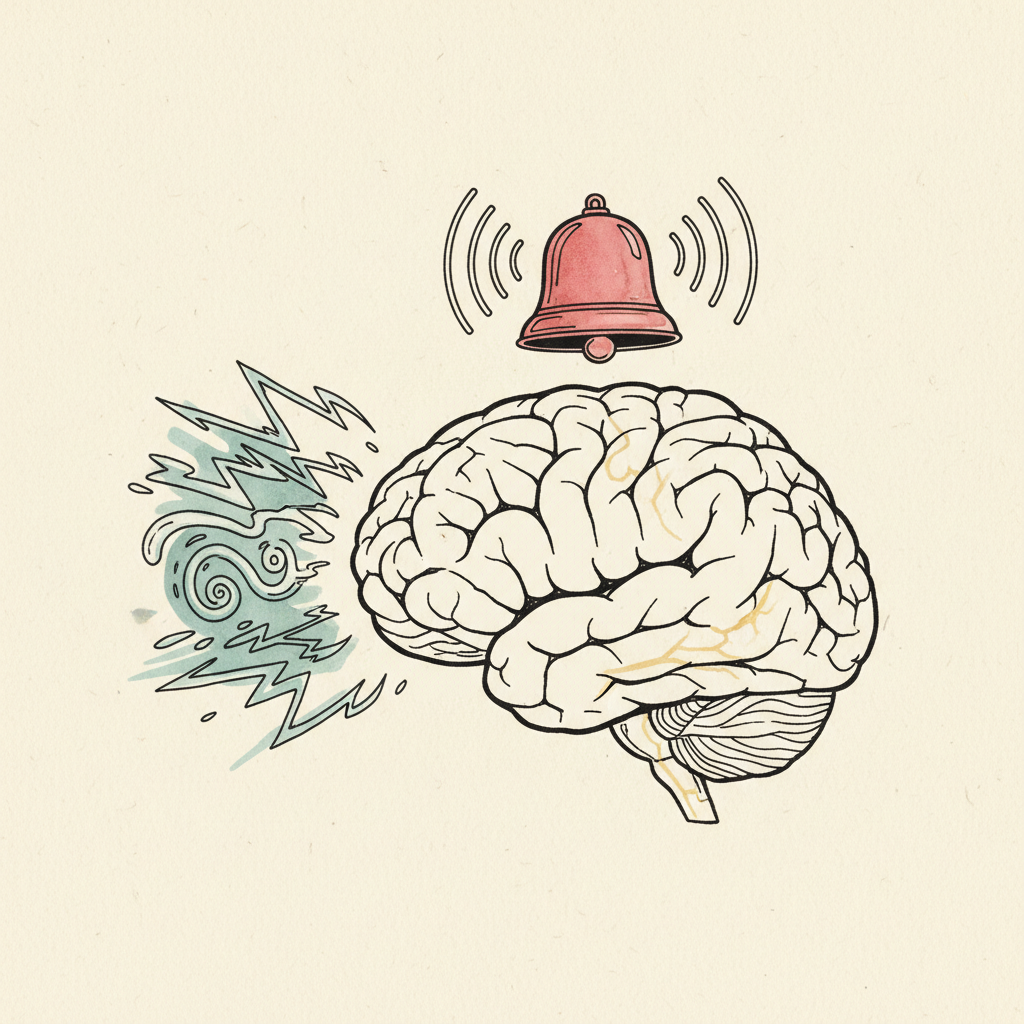
But pain can persist for years. Decades. Long after every scan shows the tissue is intact. Long after the surgeon says the surgery was successful. Long after the physical therapist says you have met every benchmark.
The gap between tissue status and pain experience is the central puzzle of chronic pain. And for most of the 20th century, medicine did not have a framework for it. If the tissue is healed, the pain should be gone. If the pain is not gone, something must still be damaged.
That framework is wrong. Not partially wrong. Structurally wrong.
Pain neuroscience research has established something that rewrites the entire conversation: pain is an output of the brain, not an input from the tissues [1]. Your brain generates pain as a protective response. It generates that response based on its threat assessment of the region. Not based on the actual status of the tissue.
The treatment addressed the tissue. The brain’s threat assessment was never updated. The prediction reasserted. The pain returned.
Chronic pain returns after treatment because the treatment addressed the tissue while the nervous system’s prediction remained unchanged. Pain neuroscience research (Moseley and Butler 2015) has established that pain is an output generated by the brain, not an input from damaged tissues. The brain maintains a threat model for each body region. When that model predicts danger, it generates pain regardless of actual tissue status. Most tissues heal within 3-6 months, yet pain can persist for years or decades. The gap between tissue healing and pain persistence is explained by the predictive model: the nervous system learned that this region requires protection, and it continues generating the pain signal long after the original threat resolved (Friston 2010). Treatments that reduce peripheral input (massage, adjustment, injection) provide temporary relief because they briefly change what the brain is receiving. But the central prediction reasserts, and the pain returns. Lasting change requires updating the prediction, not just managing the output.
What Pain Actually Is
Here is the reframe. Sit with it for a moment before I build the mechanism underneath it.
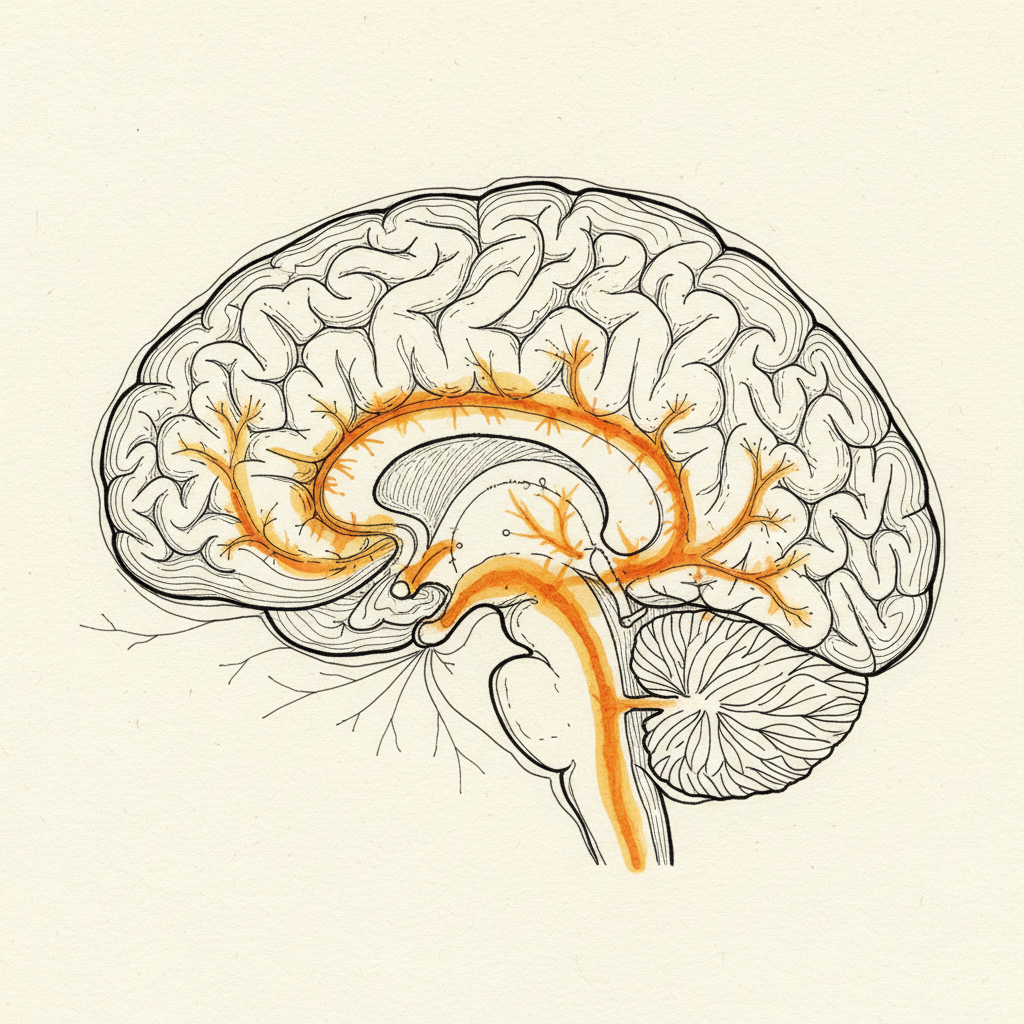
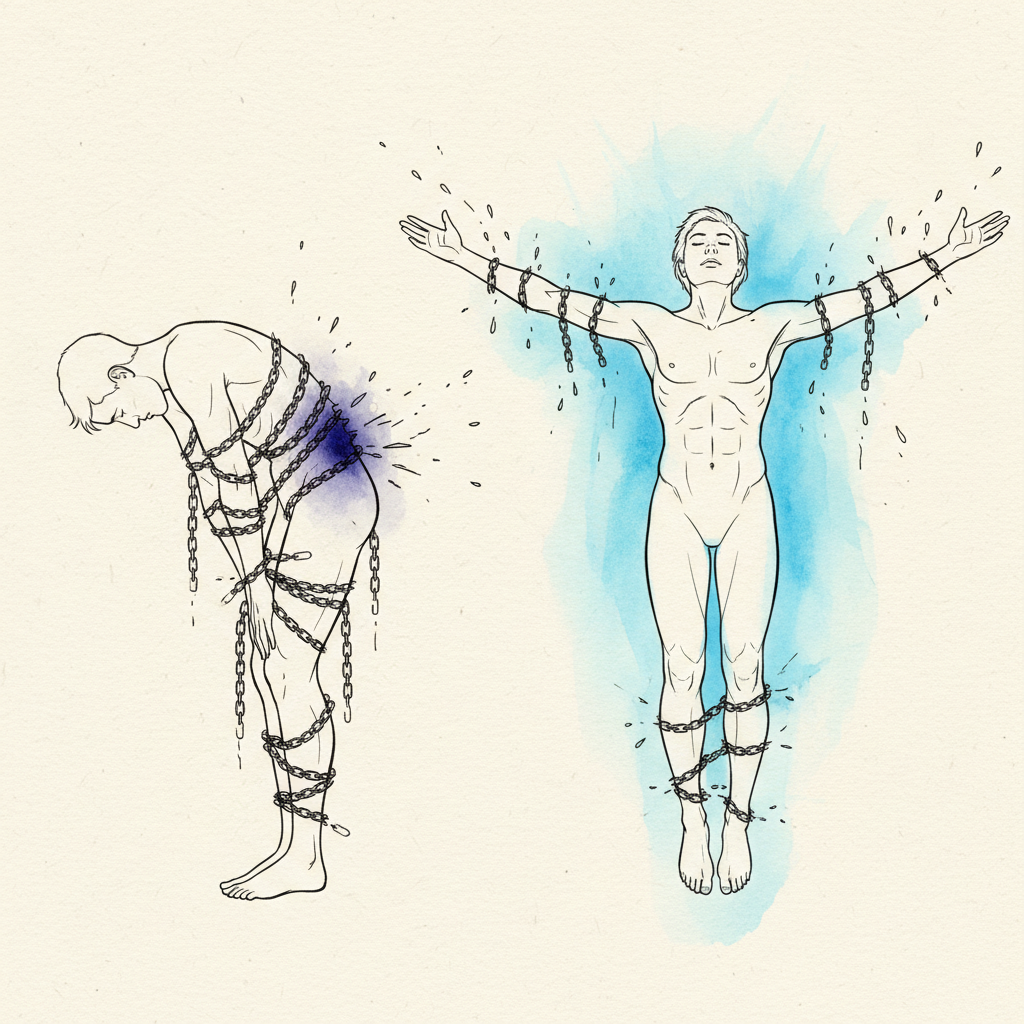
Your pain is not a damage report arriving from the tissue. It is a prediction your brain is generating about the tissue [6].
Think of it this way. The brain does not have direct access to your back. Your shoulder. Your neck. It sits inside a dark skull. All it receives are electrical signals from the periphery. It takes those signals, compares them against its existing model of your body, and generates an output.
That output is what you experience as pain.
When the model says “this region is under threat,” the brain generates pain. Even when the tissue is intact. Even when the MRI is clean. Even when you are sitting perfectly still. The body schema that generates your posture also generates your pain. Same system. Same prediction. Different output channels.
This is not speculation. This is the predictive coding framework. Friston’s research established that the brain operates as a prediction machine [6]. Clark expanded this to the embodied experience [10]. Your brain does not wait for damage reports. It generates predictions about danger based on everything it knows. Your stress level. Your sleep. Your history with that body region. Your fear about what the pain might mean.
All of that information feeds the prediction. And the prediction generates the pain.
How the Nervous System Learns Pain
Your nervous system is a learning machine. It learned to walk. It learned to talk. It learned to catch a ball without calculating trajectories. It learns by updating its internal model based on incoming evidence.
It also learned your pain.
The first injury was real. Something happened. Tissue was damaged. The nervous system correctly generated a pain signal to protect the area. That signal changed your movement. You limped. You braced. You avoided loading the painful side. All appropriate. All protective. All temporary.
Except it was not temporary. Three things happened that locked the pain in place.
First, the brain reorganized its map of the painful area. Flor’s research showed that chronic back pain physically changes the brain’s representation of the affected region [9]. The cortical map blurs. The brain’s ability to precisely locate and control that area degrades. It is like a GPS losing resolution on one neighborhood. The commands it sends to that region become coarser. Less precise. More likely to generate compensatory movement that loads the area differently and perpetuates the cycle.
Second, the brain reorganized its motor strategy. Hodges and Moseley documented that pain changes how the brain activates muscles in the region [8]. Anticipatory postural adjustments shift. The deep stabilizers stop firing on time. The superficial muscles take over the stabilization job they were never designed to do. This reorganization persists long after the tissue heals. The brain is not responding to current damage. It is running the motor strategy it built during the injury.
Third, fear entered the loop. Vlaeyen and Linton documented the fear-avoidance cycle [3]. Pain generates fear of movement. Fear generates avoidance. Avoidance generates deconditioning. Deconditioning generates more pain. The cycle feeds itself. And the nervous system learns from every lap around the circuit that movement is dangerous. Even when it is not.
The nervous system did not malfunction. It learned. It learned exactly what you taught it. The problem is that the lesson is no longer accurate. And nobody updated the curriculum.
Chronic pain is increasingly understood as a nervous system phenomenon rather than a tissue damage problem. Research by Flor et al. (1997) demonstrated that chronic back pain physically reorganizes the brain’s representation of the affected region. The cortical map blurs, reducing the brain’s ability to precisely control that area. Hodges and Moseley (2003) showed that the brain restructures its motor strategy under pain, changing anticipatory postural adjustments in ways that persist beyond tissue healing. The body schema (Paillard 1999), the brain’s internal model that generates both posture and pain predictions, enters a protective state (Porges 2011). The system organizes around perceived threat rather than efficient movement. This protective state generates the muscle bracing, movement avoidance, and compensatory loading patterns that perpetuate the pain cycle. The pain is real. The generator is in the nervous system’s threat model, not in ongoing tissue damage.
Why Treatments Provide Temporary Relief
Every treatment you have tried probably worked. Briefly.
Massage reduced the muscle tone around the painful area. The tension came back within days because the brain’s instruction to hold that tension was never changed. The massage addressed the muscle, not the model.
Chiropractic adjusted the joint position. The position reverted because the brain’s prediction of where that joint belongs was never updated. The adjustment moved the hardware while the software stayed the same.
Physical therapy strengthened the muscles. But strengthening changes what the muscles can do. It does not change the prediction that decides what the muscles will do. When the therapy stops, the prediction reasserts its protective motor strategy. The stretching was the wrong conversation entirely.
Injections blocked the pain signal at the tissue. The brain’s threat model continued generating the bracing pattern. When the injection wore off, the pain returned because the generator was never at the injection site.
Each treatment changed the peripheral input or the local output. None of them updated the central prediction. The brain compared the treatment’s evidence against its own high-confidence model, found the model more reliable, and regenerated the original pattern [6][10]. The same reversion happens in kyphosis. It happens in every postural pattern the brain is running as a prediction.
This is why the pain comes back on schedule. The schedule is the prediction reasserting. Not the tissue re-injuring.
Physical therapy often produces real improvement that does not hold because it addresses the motor output without updating the nervous system’s prediction. The brain generates motor commands based on its internal model of the body, the body schema (Paillard 1999, Clark 2015). Under chronic pain, the brain reorganizes that model around protection. Hodges and Moseley (2003) documented how pain changes anticipatory postural adjustments. Strengthening and stretching change what the muscles can do. They do not change the prediction that decides what the muscles will do. When physical therapy ends, the prediction reasserts its protective motor strategy, and the pain-generating patterns return. Fear-avoidance conditioning (Vlaeyen and Linton 2000) means the nervous system may have learned to avoid the very movements that would provide corrective evidence. The cycle maintains itself. The model that generated the pain was never given a reason to revise.
The Protection That Became the Problem
There is a deeper layer that most pain explanations miss.
When your nervous system perceives threat, it does not just generate pain. It generates a whole-body bracing pattern. Your bodyweight shifts forward. Your knees lock. Your back extensors tighten. Your neck pulls forward. Your jaw braces. The entire posterior chain activates as a protective response [4].
This pattern is not random. It is the nervous system’s protective mode. Porges documented how the autonomic nervous system organizes the body around perceived safety or threat [4]. Under threat, the system braces. Under safety, the system softens.
This is where chronic pain lives.
The bracing pattern itself generates mechanical load at the weakest link in the chain. Your low back. Your neck. Your shoulder. Wherever your body’s structure is most vulnerable, that is where the bracing pattern deposits the most force.
The pain is real. The tissue at the pain site is genuinely being loaded. But the generator is not at the pain site. The generator is the nervous system’s protective pattern. And the protective pattern is running because the nervous system perceives threat. And the pain itself is the threat signal.
The loop closes. Whether the pain started in the neck, the low back, or a scoliosis curve, the mechanism is the same.
Pain signals threat. Threat generates bracing. Bracing generates mechanical load. Mechanical load generates more pain. The nervous system’s security system filters incoming sensory information. Under threat, it suppresses the very signals that would let the brain update its model. The brain cannot update a map for a region it cannot fully feel.
This is why trying harder makes it worse. Effort is a motor intention. Motor intentions generate their own filtering. The harder you try to fix the pain, the more you engage the exact system that maintains it.
What Actually Changes the Pain Prediction
Changing the pain prediction is not the same as managing pain. Managing pain addresses the output. Changing the prediction addresses the model that generates the output.
Three things appear necessary.
The nervous system state must shift from threat to safety. Under threat, the brain suppresses the sensory input needed to update the model [4]. Pain itself maintains the threat state. The nervous system needs enough safety signals to open the gate to new information. This is not relaxation. It is a neurological threshold. The system that filters sensory input must downregulate before updating can occur.
The brain’s map of the painful region must be restored. The cortical blurring that Flor documented [9] degrades the brain’s ability to precisely control the painful area. Two-point discrimination research by Moseley shows that restoring the map’s resolution is both possible and therapeutic. When the brain can locate the region with precision, its motor commands to that region become precise. Compensation decreases. The pain-generating loading pattern begins to change.
The brain needs sensory evidence it did not predict. Thomas Hanna identified a pattern called Sensory Motor Amnesia: the brain’s loss of voluntary control over chronically held muscles [5]. The muscles generating the bracing pattern are held below conscious access. You cannot release them because you cannot feel them. Pandiculation, the practice Hanna developed to restore this access. In a 2022 chart review of 103 clinic patients who learned it, average pain fell from 3.2 to 0.6 on a 0 to 5 scale over an average of 2.8 sessions [11]. Not by stretching the muscles. By restoring the brain’s connection to them.
The combination addresses the nervous system state, the cortical map, and the motor prediction. All three.
Breaking the chronic pain cycle requires addressing the nervous system’s prediction, not just the tissue. Three components appear necessary. First, the nervous system state must shift from threat to safety (Porges 2011). Under threat, the brain suppresses the sensory input needed to update its model. Pain itself maintains the threat state. Second, the brain’s cortical map of the painful region must be restored. Research by Flor (1997) shows the brain’s representation degrades under chronic pain. Two-point discrimination training and directed attention practices restore the map quality. Third, the brain needs sensory evidence it did not predict. Hanna (1988) described pandiculation as a method for restoring voluntary control over muscles the brain has lost access to through Sensory Motor Amnesia. Clinical data showed meaningful pain reduction beginning within the first few sessions. The combination addresses the nervous system state, the cortical map, and the motor prediction simultaneously.
When to Seek Professional Help
This article is about the nervous system mechanism behind chronic pain. It is not a substitute for medical evaluation.
Seek immediate professional assessment if your pain is accompanied by numbness or tingling that is spreading. If you experience sudden weakness in a limb. If your pain followed a significant trauma. If you have bowel or bladder changes. If your pain wakes you from sleep and is not position-dependent.
These are red flags that may indicate something beyond the prediction mechanism described here. Rule them out first.
For pain that has persisted beyond tissue healing timelines, that returns after every treatment, that lives in the same spot regardless of what you do. That pain is likely being generated by the mechanism in this article. A nervous system prediction that learned to protect a region and never received the evidence it needed to update.
You are not broken. The prediction is outdated. Those are different problems with different solutions.
If the pattern described in this article matches your experience, the question is no longer “what is wrong with my body.” The question is “what is my nervous system still predicting, and what evidence would it need to revise?”
The answer to that second question is what we build at Syntropic Core.
Frequently Asked Questions
Why does my pain come back in the same spot every time?
The brain’s threat model is region-specific. Once it assigns a high threat prediction to a body region, it generates bracing, altered motor control, and cortical map degradation specifically for that area [9]. The pain returns to the same spot because the prediction is anchored to that spot. The tissue heals. The prediction does not automatically update. It requires specific sensory evidence to revise. Without that evidence, the same location receives the same protective output indefinitely.
Is chronic pain “all in my head”?
No. The pain is real. The tissue at the pain site is genuinely being loaded by the compensatory bracing pattern the nervous system generates. What is “in your head” is the prediction that generates the bracing. But the downstream effects of that prediction are physical. Muscle tension. Joint compression. Mechanical load. Real forces on real structures [1][8]. The mechanism is neurological. The consequences are physical. Both are real.
How long does it take to change a pain prediction?
It depends on how long the prediction has been running and how many systems are reinforcing it. A 2022 chart review of Hanna Somatic Education found significant pain reduction after an average of 2.8 sessions [11]. That is the sensory motor component. The full picture includes the nervous system state, the cortical map quality, and the fear-avoidance conditioning. For pain that has been present for months, meaningful change often begins within weeks. For pain running for decades, the process takes longer. The mechanism still works. The timeline extends with the depth of the prediction’s entrenchment.
—
Sources
[1] Moseley, G.L., & Butler, D.S. (2015). Fifteen Years of Explaining Pain: The Past, Present, and Future. The Journal of Pain, 16(9), 807-813.
[2] Butler, D.S., & Moseley, G.L. (2013). Explain Pain (2nd ed.). Noigroup Publications.
[3] Vlaeyen, J.W., & Linton, S.J. (2000). Fear-avoidance and its consequences in chronic musculoskeletal pain: a state of the art. Pain, 85(3), 317-332.
[4] Porges, S.W. (2011). The Polyvagal Theory: Neurophysiological Foundations of Emotions, Attachment, Communication, and Self-Regulation. W.W. Norton.
[5] Hanna, T. (1988). Somatics: Reawakening the Mind’s Control of Movement, Flexibility, and Health. Da Capo Press.
[6] Friston, K. (2010). The free-energy principle: a unified brain theory? Nature Reviews Neuroscience, 11(2), 127-138.
[7] Paillard, J. (1999). Body schema and body image: A double dissociation in deafferented patients. In G.N. Gantchev et al. (Eds.), Motor Control, Today and Tomorrow.
[8] Hodges, P.W., & Moseley, G.L. (2003). Pain and motor control of the lumbopelvic region: effect and possible mechanisms. Journal of Electromyography and Kinesiology, 13(4), 361-370.
[9] Flor, H., Braun, C., Elbert, T., & Birbaumer, N. (1997). Extensive reorganization of primary somatosensory cortex in chronic back pain patients. Neuroscience Letters, 224(1), 5-8.
[10] Clark, A. (2015). Surfing Uncertainty: Prediction, Action, and the Embodied Mind. Oxford University Press.
[11] Huang, Q., & Babgi, A.A. (2022). Effect of Hanna Somatic Education on low back and neck pain levels. Saudi Journal of Medicine & Medical Sciences, 10(3), 266-271. PMID: 36247048.
—
About the author: Sam Miller is the creator of Syntropic Core and founder of Posture Dojo. Diagnosed at 13 with an 85-degree kyphoscoliosis, he spent 20 years living with it before spending the last 9 mapping the nervous system mechanisms that conventional treatment misses. He works with people whose bodies did not respond to the standard playbook. His approach is built on the predictive neuroscience of posture, not the mechanical model that failed him.
Syntropic Core Reset
Most posture programs give you exercises. This one updates the system that generates your posture. Four weeks live with Sam Miller. You learn how the hidden map works, why everything else missed it, and how to give your nervous system the evidence it needs to generate a different pattern. Breath. Ground contact. Safety. Sensory input. Floor to standing. You leave with a daily practice that holds because the map itself has changed.
The Reset is a four-week course.
Details and enrollment →Sources
- Moseley, G.L., & Butler, D.S. (2015). Fifteen Years of Explaining Pain: The Past, Present, and Future. The Journal of Pain, 16(9), 807-813. [T1]
Pain is an output generated by the brain, not an input from damaged tissues. - Butler, D.S., & Moseley, G.L. (2013). Explain Pain (2nd ed.). Noigroup Publications. [T1]
Pain education framework. Tissue healing timelines vs. pain persistence. - Vlaeyen, J.W., & Linton, S.J. (2000). Fear-avoidance and its consequences in chronic musculoskeletal pain: a state of the art. Pain, 85(3), 317-332. [T1]
Fear-avoidance cycle maintaining chronic pain. - Porges, S.W. (2011). The Polyvagal Theory: Neurophysiological Foundations of Emotions, Attachment, Communication, and Self-Regulation. W.W. Norton. [T1]
Nervous system organizes the body around perceived safety or threat. - Hanna, T. (1988). Somatics: Reawakening the Mind’s Control of Movement, Flexibility, and Health. Da Capo Press. [T1]
Sensory Motor Amnesia: the brain loses voluntary control over chronically held muscles. - Friston, K. (2010). The free-energy principle: a unified brain theory? Nature Reviews Neuroscience, 11(2), 127-138. [T1]
Predictive coding: pain as a prediction, not a damage report. - Paillard, J. (1999). Body schema and body image: A double dissociation in deafferented patients. In G.N. Gantchev et al. (Eds.), Motor Control, Today and Tomorrow. [T1]
Body schema as the brain’s internal model generating postural and pain predictions. - Hodges, P.W., & Moseley, G.L. (2003). Pain and motor control of the lumbopelvic region: effect and possible mechanisms. Journal of Electromyography and Kinesiology, 13(4), 361-370. [T1]
Motor reorganization under pain persists beyond tissue healing. - Flor, H., Braun, C., Elbert, T., & Birbaumer, N. (1997). Extensive reorganization of primary somatosensory cortex in chronic back pain patients. Neuroscience Letters, 224(1), 5-8. [T1]
Cortical reorganization in chronic pain. The brain’s map of the painful region blurs. - Clark, A. (2015). Surfing Uncertainty: Prediction, Action, and the Embodied Mind. Oxford University Press. [T1]
Predictive processing: correcting the output without updating the model produces temporary change. - Huang, Q., & Babgi, A.A. (2022). Effect of Hanna Somatic Education on low back and neck pain levels. Saudi Journal of Medicine & Medical Sciences, 10(3), 266-271. PMID: 36247048 [T2]
Retrospective chart review at one clinic: 103 adults with neck or low back pain, 81 of them women. After an average of 2.8 sessions, average pain fell from 3.2 to 0.6 on a 0 to 5 scale, and the number taking pain medication fell from 53 to 14. No control group.
Related research
- Two Papers Just Landed: The Neural Generation Hypothesis and the Generative Posture Framework
- Stand Up Tall, Pull Your Shoulders Back, Brace Your Core: Why the 3 Most Common Posture Cues Are Neuroscience Dead Ends
- How Much Can I Actually Change My Scoliosis? What the Research Shows
- You Can’t Tickle Yourself. That’s Why Your Posture Won’t Change.
Comments
3 responses to “Why Your Pain Keeps Coming Back: The Nervous System Explanation”
[…] Why Your Pain Keeps Coming Back: The Nervous System Explanation […]
[…] Why Your Pain Keeps Coming Back: The Nervous System Explanation […]
[…] Why Your Pain Keeps Coming Back: The Nervous System Explanation […]