Pull your shoulders back. Sit up straight. Strengthen your core. Stretch your hip flexors. Wear the brace.
You have tried all of these. And your posture went right back to where it was.
That is not a discipline problem. It is an address problem. Every one of those instructions targeted the wrong system.
Body image versus the hidden map
When you look in the mirror and decide to stand taller, you are working with your body image. The conscious, visual picture of how you look. The surface layer. The one you can see and try to control.
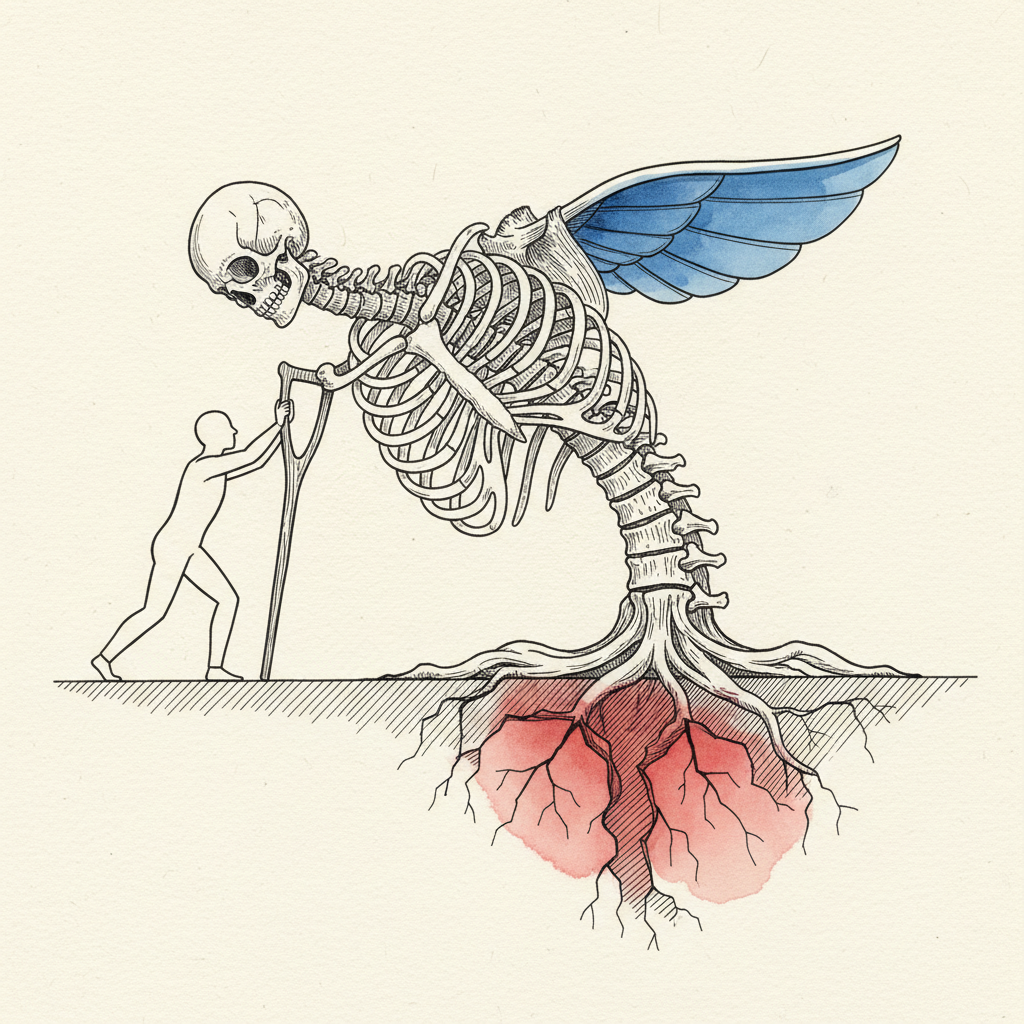
But your posture is not produced by the body image. It is produced by something underneath it. A hidden map your brain maintains below conscious awareness. In neuroscience it is called the body schema.
That map is running right now. It generates the position of every joint, every curve, every pattern of tension. It does not take instructions. It does not respond to reminders. It only updates when it receives new sensory evidence.
Every posture correction you have ever tried targeted the body image. The mirror. The conscious surface. The map was never reached. That is why it did not last.
Your posture is a prediction
Your posture is not a position you hold. It is a prediction your nervous system generates, moment by moment, based on the sensory data available to it. That prediction runs whether you are paying attention or not.
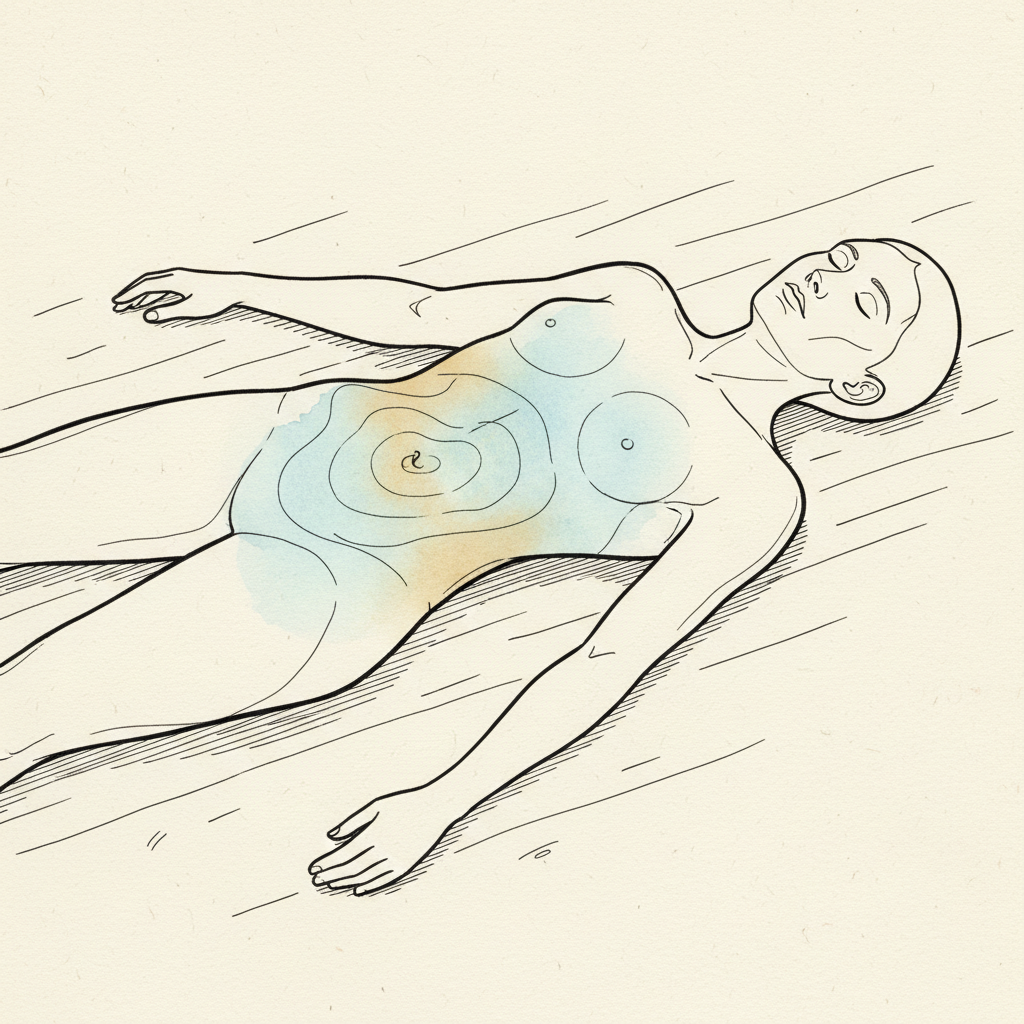
When you “correct” your posture, you override the prediction temporarily. When your attention leaves, the prediction resumes. The body returns to the position the system calculated was necessary.
Not a failure of willpower. A nervous system doing exactly what it was designed to do.
Two maps, one body
There is a useful distinction in neuroscience between your body image and your body schema.
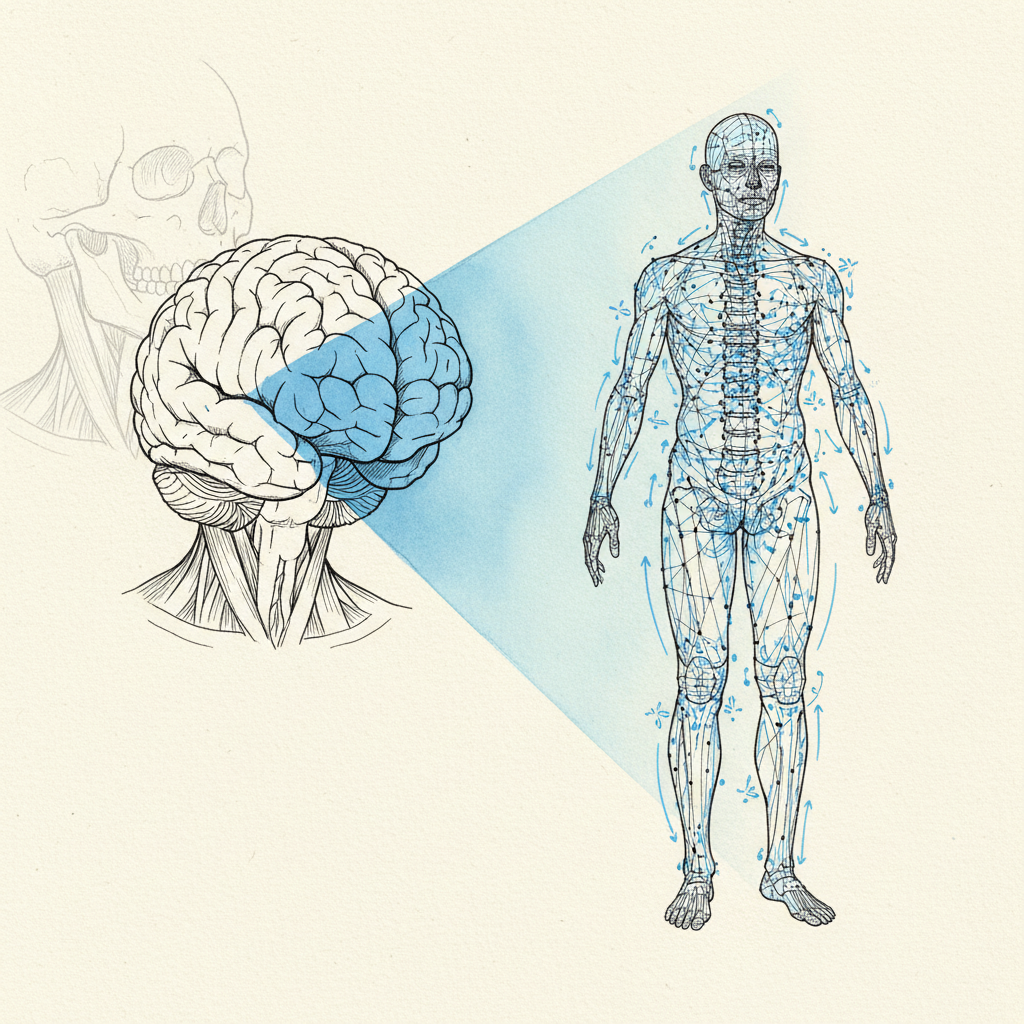
Your body image is the conscious, visual story you tell yourself about how you look. It is what you see in the mirror. It is what you are trying to change when you pull your shoulders back.
Your body schema is different. It is the unconscious, real-time map your nervous system uses to track your body in space. It processes input from your balance system, your fascia, your breath, your vision, your jaw. It generates your posture automatically. Every posture correction you have ever tried was aimed at the body image. None of it reached the body schema. The map that is actually running the show.
You can force the image. You cannot force the map. The map only updates when the system receives new sensory evidence that the current prediction is wrong.
Why stretching and strengthening miss
The standard approach to posture follows a simple logic: strengthen what is weak, stretch what is tight.
This logic was developed to treat acute injuries. A torn muscle needs strengthening. A stiff joint needs mobility. For those problems, the approach works. For chronic posture patterns, it does not.
The muscles you are trying to strengthen are not weak. They are neurologically inhibited. Your nervous system switched them off as part of a protective strategy. Loading them harder does not change the signal that switched them off. The muscles you are trying to stretch are not short. They are in chronic contraction because the system decided to keep them there. Stretching creates a temporary change. The underlying signal has not been addressed. The contraction returns within hours.
Your back is not tight because it is weak. Your back is tight because it is doing the job that your internal pressure system stopped doing.
What actually updates the map
The body schema updates through sensory evidence. Not instructions. Not force. Evidence.
Three things need to happen.
The nervous system must feel safe. When it detects threat, it braces. The posterior chain locks. The breath shortens. The map freezes. No update is possible in a threat state. Relaxation is not a warm-up. It is a prerequisite.
The internal pressure system must organize. Your diaphragm, pelvic floor, and deep abdominals form a sealed pressure canister. When they coordinate, the spine is supported from the inside out through hydraulic pressure. When they do not, the muscles of the back, neck, and shoulders take over.
The sensory inputs must update. The body schema is built from sensory data. The dominant inputs are your vision, your jaw, your breath, and your contact with the ground. When those inputs are disorganized, the map degrades. When they are organized, the map sharpens. The posture follows.
This is not a theory. The body schema was first described by Paillard in 1999. Predictive coding models of the brain (Friston, Clark) explain how the nervous system generates and updates its predictions. The role of intra-abdominal pressure in spinal stabilization is documented by Hodges and Kolar through the DNS framework. Polyvagal theory (Porges) explains why the system must feel safe before it will adapt. What is new is the synthesis. These fields have not been connected before.
What this looks like on the floor
Lie on your back. Feel the floor support you. Slow your exhale. Let your ribs settle.
You just regulated your nervous system. That is the first step of actually changing your posture.
Now feel your breath. Not in your chest. Lower. Feel the expansion in your lower ribs, your sides, your back. Feel the gentle pressure that builds in your core on each inhale. That pressure is what your spine was designed to run on. Not muscular tension. Hydraulic support from the inside out.
Most people have never felt this. No one showed them where to look.
When you feel organized internal pressure for the first time, something shifts. The back muscles that have been gripping for years start to release. Not because you told them to. Because they finally have something to let go into.
One of the participants in our first cohort, Kami, described it this way: “I started noticing my diaphragm holding throughout the day. I’d bring awareness there and it just wasn’t moving. How interesting. And then allowing it to move was less force. Not more.”
Less force. Not more. That is the whole thesis in seven words.
Why it holds this time
The reason conventional corrections do not last is that they never changed the prediction. They overrode it temporarily with conscious effort.
When you update the body schema, the change persists because the prediction itself has changed. The system is no longer generating the old pattern. It is generating a new one, based on new sensory evidence, running automatically. You do not have to think about it. You do not have to hold it. You do not have to remember to sit up straight.
The map has been updated. The posture follows the map.
What I know from my own body
I was diagnosed with an 85-degree kyphoscoliosis at 13. I spent two decades believing management was the ceiling.
At 33 everything shut down. Eight months unable to function. It was the first time I had no choice but to stop forcing and start listening.
What I found on the other side of that collapse changed everything. I finally addressed the right layer. The pattern I had been compensating around began to reorganize. Without surgery. Without bracing. Without someone pulling my shoulders back.
I stopped giving my body instructions. I started giving it evidence.
Next: How Your Brain Actually Controls Your Posture: The Body Schema Model
Syntropic Core Reset
Most posture programs give you exercises. This one updates the system that generates your posture. Four weeks live with Sam Miller. You learn how the hidden map works, why everything else missed it, and how to give your nervous system the evidence it needs to generate a different pattern. Breath. Ground contact. Safety. Sensory input. Floor to standing. You leave with a daily practice that holds because the map itself has changed.
Limited spots. Next cohort enrolling now.
Details and enrollment →Related research
- Two Papers Just Landed: The Neural Generation Hypothesis and the Generative Posture Framework
- Stand Up Tall, Pull Your Shoulders Back, Brace Your Core: Why the 3 Most Common Posture Cues Are Neuroscience Dead Ends
- How Much Can I Actually Change My Scoliosis? What the Research Shows
- You Can’t Tickle Yourself. That’s Why Your Posture Won’t Change.
Comments
3 responses to “Why Posture Corrections Don’t Last (And What Actually Does)”
[…] Related: The Complete Guide to Kyphosis | Can Scoliosis Exercises Reduce Your Curve? | Why Posture Corrections Don’t Last […]
[…] Why Posture Corrections Don’t Last | Why Awareness Changes Posture and Effort Doesn’t | The Kyphosis Bracing […]
[…] posture corrections don’t last […]