Eighty percent of scoliosis cases are labeled “idiopathic.” Most people hear that word and think it means doctors don’t know what caused it. That is not what the word means. And the difference matters more than you think.
What the Greek Actually Says
Idiopathic comes from two Greek words. Idios: one’s own, private, peculiar. Pathos: suffering, disease. The literal meaning is “a suffering peculiar to itself.” A disease that arises from within. Not a disease without a cause. A disease whose cause is internal rather than external.
The first recorded English use was in 1669, by physician William Simpson. For two centuries, the word meant exactly what the Greek said: this condition is primary, not secondary to something else. It distinguished endogenous diseases from symptomatic ones.
Then germ theory arrived. The late nineteenth century brought the expectation that every disease should have an identifiable external agent — a bacterium, a virus, a toxin. When no external cause could be found, “idiopathic” drifted from “arising from within” to “we don’t know.” That drift has never been corrected.
How Scoliosis Got the Label
The modern classification of scoliosis sorts curves into categories by cause: congenital (vertebral malformation at birth), neuromuscular (cerebral palsy, muscular dystrophy, polio), and syndromic (associated with a known syndrome). “Idiopathic” is the bin for everything that doesn’t fit the other categories. In 1954, James subdivided it by age of onset: infantile, juvenile, adolescent.
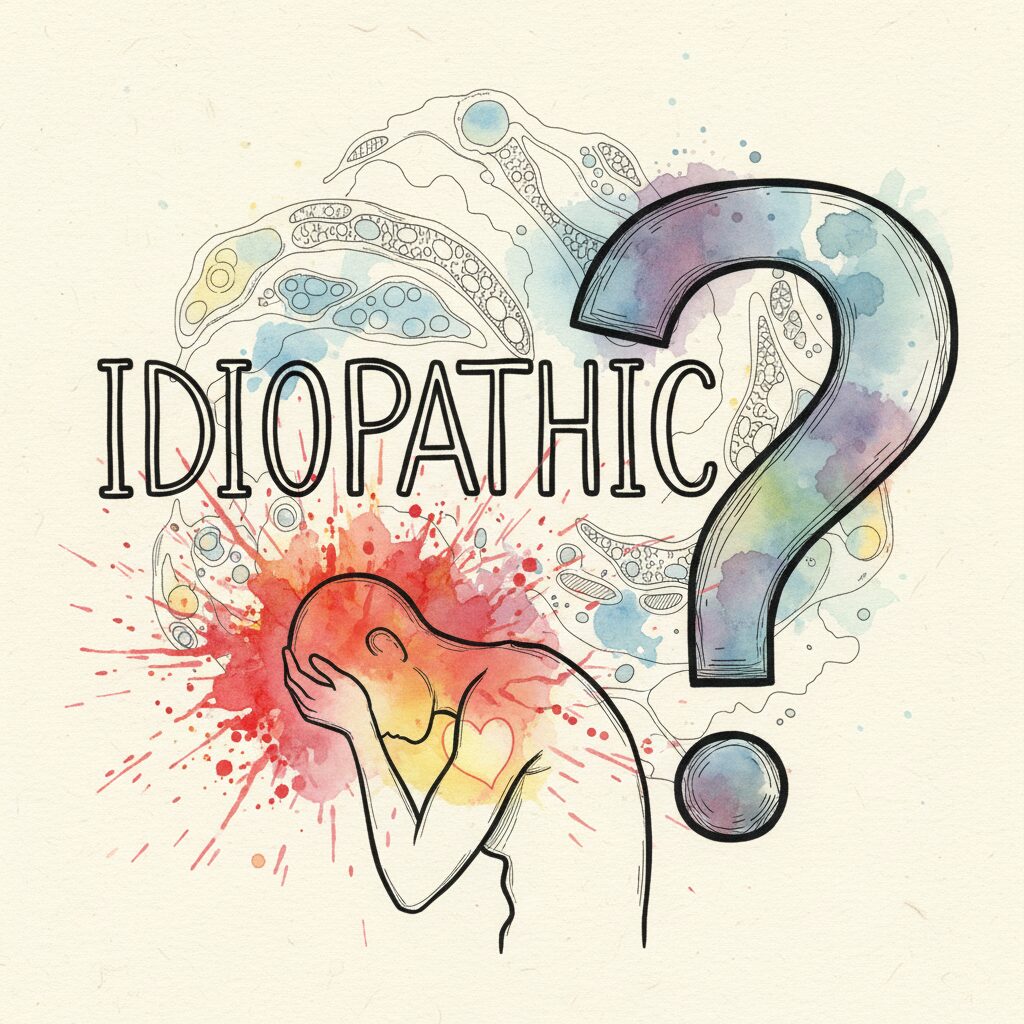
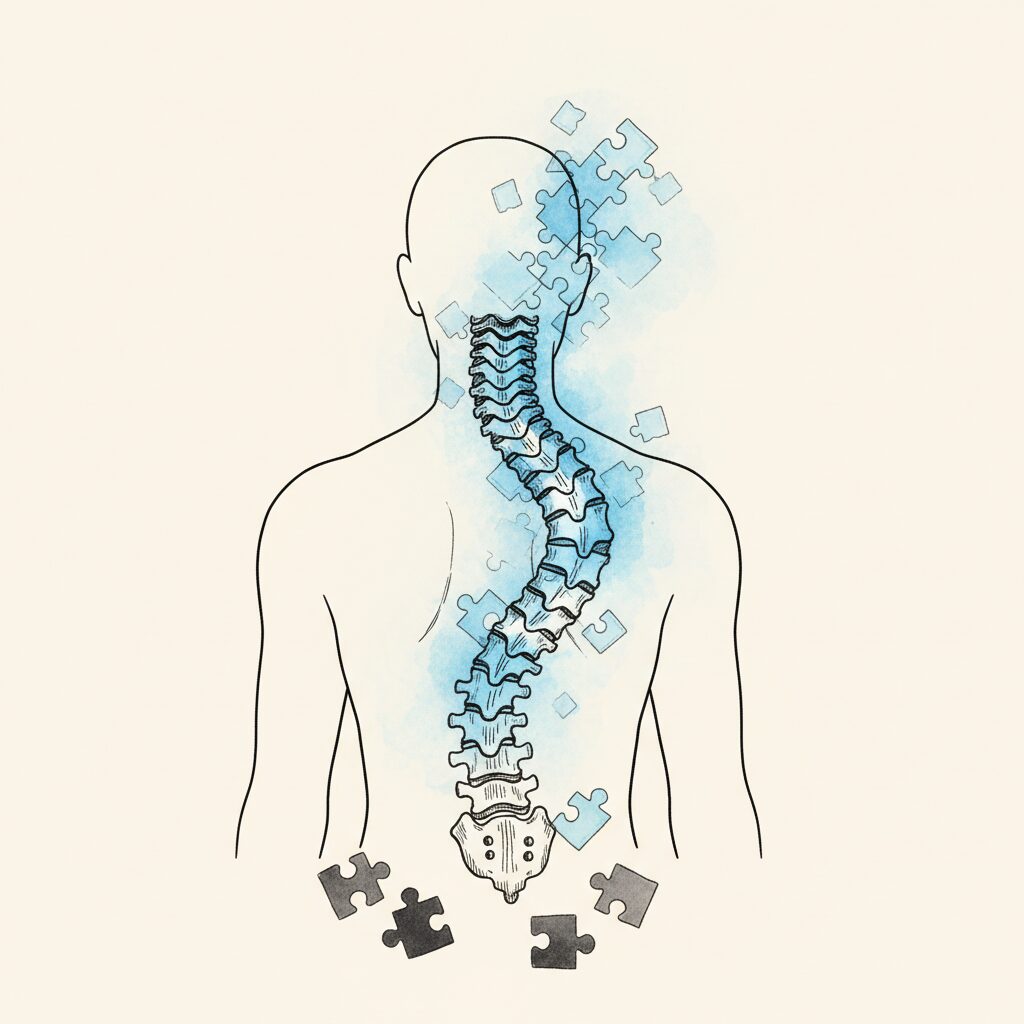
Adolescent idiopathic scoliosis. AIS. The name that eighty percent of scoliosis patients carry. It does not describe what happened. It describes the boundary of what the classification system can explain.
The 80% Problem
When a clinician says “eighty percent of scoliosis is idiopathic,” they mean: in eighty percent of cases, no congenital, neuromuscular, or syndromic cause can be identified within the current diagnostic framework. The depth of investigation before assigning the label varies from clinician to clinician. Some run extensive workups. Some run the standard screen and move on.
As one review noted: “What specific minimum investigations need to be performed to define idiopathic is not always clear.”
“Idiopathic” does not mean “no cause exists.” It means “no cause was found with the tools we used.” The word describes the boundary of the measurement, not the boundary of the biology.
The Word That Sounds Like an Answer
In 2013, physician Thomas Beaney published a paper in Medical Humanities titled “Classifying unknowns: the idiopathic problem.” His argument was direct:
“Far from being an innocent translation of ‘unknown,’ idiopathic creates problems for future terminology and adds little to medical understanding.”
His central critique: the word masks the unknown rather than honestly communicating it. When a doctor says “you have idiopathic scoliosis,” the patient hears a technical term that sounds like a diagnosis. It sounds like the doctor knows something. The Greek-derived word creates an asymmetry — the clinician appears to hold knowledge that the patient does not. In reality, neither party knows the cause. “Idiopathic” dresses up a question as an answer.
Beaney called the term “paternalistic” and concluded it “should be avoided in modern medical terminology.”
When Labels Become Identities
A 2022 systematic scoping review examined what happens when people receive diagnostic labels. The findings were consistent across conditions:
Diagnostic labels decrease the perceived likelihood of recovery. They increase psychological incapacitation. Noun-form labels — “you are scoliotic” versus “your spine has a curve” — increase the perceived permanence of the condition. The label integrates into self-concept. Patients who see their condition as a continuing aspect of their identity are less likely to recover.
The label itself becomes a source of harm. Not because the diagnosis is wrong. Because the word carries implicit messages: this is permanent. This is who you are. This has no cause, therefore no solution.
“You have idiopathic scoliosis” constructs an identity around a mystery.
“Your nervous system generated a spinal curve through a process we can now describe” opens a door.
Three Conditions That Dropped “Idiopathic”
This is not hypothetical. Other conditions have already walked this path.
Idiopathic Thrombocytopenic Purpura became Immune Thrombocytopenia once the immune-mediated mechanism was identified. Both words in the name changed. “Idiopathic” became “immune” — the mechanism. “Purpura” was dropped because the bleeding symptom was not universal. Treatment shifted toward immune modulation. One paper titled it directly: “Immune thrombocytopenia: No longer ‘idiopathic.’”
Idiopathic Generalized Epilepsy became Genetic Generalized Epilepsy in 2010, when the International League Against Epilepsy replaced “idiopathic” with “genetic” across its classification system. The ILAE noted that “idiopathic” was “an imprecise term given our increasing recognition and discovery of the genes involved.”
Idiopathic Chronic Sensory Neuropathy lost its label after RFC1 gene expansions were identified as a common cause of what had been called “idiopathic.” The authors wrote in Brain: “Removing terms such as ‘idiopathic’ and ‘cryptogenic’ from as many conditions as possible is an important goal for all neurologists.”
The pattern is the same every time. The mechanism is identified. The “idiopathic” falls away. Treatment becomes more targeted. Patient understanding improves.
What the Neural Generation Hypothesis Changes
The research already exists. Vestibular dysfunction in AIS patients. Proprioceptive processing differences. Altered sensory reweighting. Cognitive vestibular integration impairment. Body schema precision deficits. Each finding comes from a different discipline. Vestibular neuroscience. Proprioceptive physiology. Postural control research. Sensory integration. Body schema science.
No single field held the complete picture.
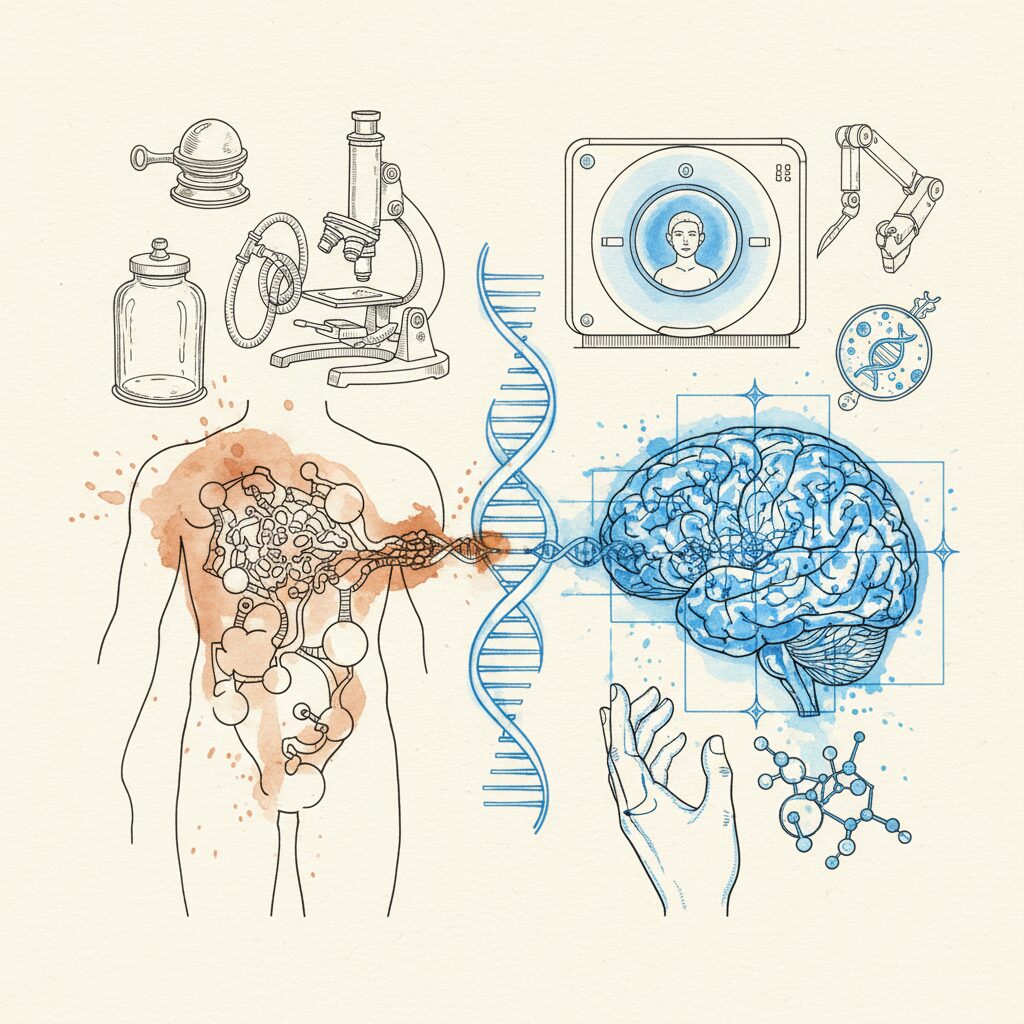
The Neural Generation Hypothesis assembles seven of these research lines into one causal chain for the first time. It proposes that the body schema — the nervous system’s predictive model of the body — generates spinal curvature when it operates on degraded proprioceptive input. The strongest scoliosis gene, LBX1, specifies proprioceptive relay neurons, not bone. The mechanism was always in the literature. It was distributed across disciplines that did not communicate.
“Idiopathic” meant: we measured the output but not the generating system.
The hypothesis does not claim to have proven the mechanism. Each link in the chain is supported by peer-reviewed evidence. The chain connecting them is new. Eight testable predictions are proposed. The science is open.
But the reframe is already available: the curve is not a mystery. It is the output of a system that can now be described. And systems that can be described can be influenced.
What This Means for You
If you carry the label “idiopathic scoliosis,” here is what that word actually tells you: it tells you that the diagnostic system measured your curve and could not assign it to a known category. It does not tell you the cause is unknown. It tells you the cause was not measured.
The original Greek was more honest than the modern usage. Idiopathic: a suffering peculiar to itself. Arising from within. That is closer to what the science now suggests. The curve arises from within — from a neural predictive model operating on the sensory data it receives. Not from damaged bone. Not from weak muscles. From a system doing its best with the information available.
Three other conditions have already outgrown their “idiopathic” labels. The mechanism was found. The word was replaced. The conversation changed.
The same conversation is beginning for scoliosis.
Related Reading
- The Neural Generation Hypothesis: What the Paper Says and Why It Matters
- The Scoliosis Gene That Proves It’s a Nervous System Problem
- The Scoliosis Research Nobody Has Connected
- Why Scoliosis Treatment Hasn’t Changed in 60 Years
- Why Your Keyboard Doesn’t Recognize the Word Syntropy
Sources
- Beaney, T. (2013). Classifying unknowns: the idiopathic problem. Medical Humanities, 39(2), 126-130. DOI: 10.1136/medhum-2012-010297
- James, J.I.P. (1954). Idiopathic scoliosis: the prognosis, diagnosis, and operative indications related to curve patterns and the age at onset. Journal of Bone and Joint Surgery, 36-B(1), 36-49.
- Weinstein, S.L. et al. (2008). Adolescent idiopathic scoliosis. The Lancet, 371(9623), 1527-1537.
- Systematic scoping review on consequences of diagnostic labels. PMC, 2022. PMC8727520.
- Sloan, T.J. & Walsh, D.A. (2010). Explanatory and diagnostic labels and perceived prognosis in chronic low back pain. Spine, 35(21), E1120-E1125. DOI: 10.1097/brs.0b013e3181e089a9
- Immune thrombocytopenia: No longer ‘idiopathic.’ PMC. PMC3410635.
- Berg, A.T. et al. (2010). Revised terminology and concepts for organization of seizures and epilepsies. Epilepsia, 51(4), 676-685. PMC5386840.
- Removing the idiopathic from the chronic sensory neuropathies. Brain, 2021, 144(5), 1291. PMC8354263.
- Miller, S.A. (2026). The Neural Generation Hypothesis of Adolescent Idiopathic Scoliosis. SSRN: 6493379
- Simoneau, M. et al. (2009). Cognitive vestibular integration dysfunction in idiopathic scoliosis. BMC Neuroscience, 10:102.
- Haumont, T. et al. (2011). Wilmington robotic exoskeleton: A novel device to maintain alignment and mobilization during prone ventilation. PMC. PMC3398941.
The Posture Dojo is a free community exploring the science of how your body generates posture. No corrections. No exercises. A different operating system. Join the conversation here.
Comments
4 responses to “What ‘Idiopathic’ Really Means — And Why It’s About to Change”
[…] What ‘Idiopathic’ Really Means — And Why It’s About to Change […]
[…] What ‘Idiopathic’ Really Means — And Why It’s About to Change […]
[…] What ‘Idiopathic’ Really Means — And Why It’s About to Change […]
[…] What ‘Idiopathic’ Really Means — And Why It’s About to Change […]