Rowing strengthens the posterior chain. That is real. Measurable. Not disputed.
But your kyphosis is not a strength problem. It is a prediction problem. Your nervous system is generating that curve as its best current estimate of how to organize you in gravity. Adding force to the muscles that oppose the curve does not change the estimate.
This is like adding horsepower to a car pointed the wrong direction. More power. Same trajectory.
The debate that misses the point
The rowing-for-kyphosis debate splits into two camps. One says rowing pulls you upright by strengthening extensors. The other says rowing reinforces the flexed position. Both are arguing about the output layer. Neither is asking about the model that generates the output.
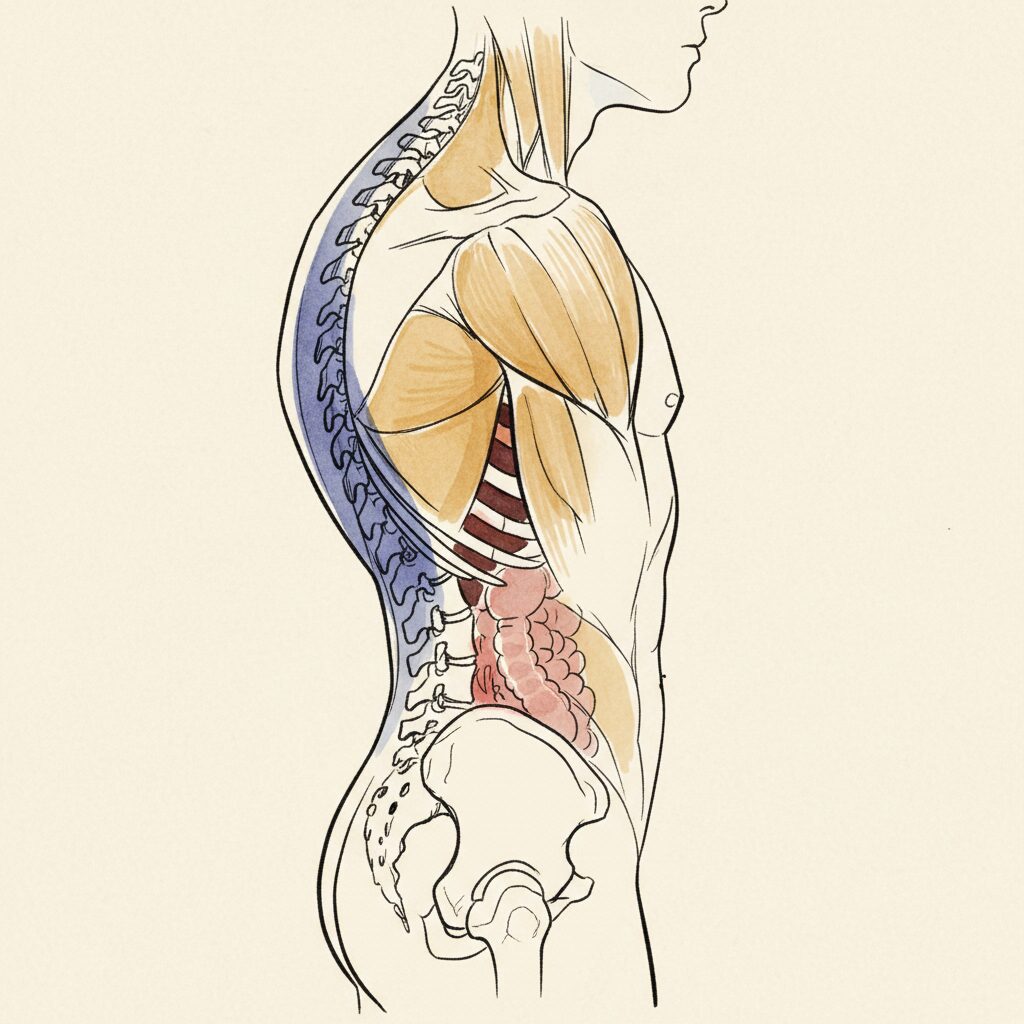
Posture is not held by muscles. It is generated by a predictive model called the body schema. Your brain runs this model continuously, below awareness, selecting motor strategies from an enormous number of possibilities. Latash calls this motor abundance. The nervous system has many solutions available for any posture. It selects the one consistent with its current prediction. Not the one with the most strength behind it.
Rowing increases the strength available to one set of solutions. It does not change which solution the model selects.
Two rowers, one variable
Two people can row identically. Same machine. Same load. Same form. Same number of sessions. One person’s posture changes. The other’s does not.
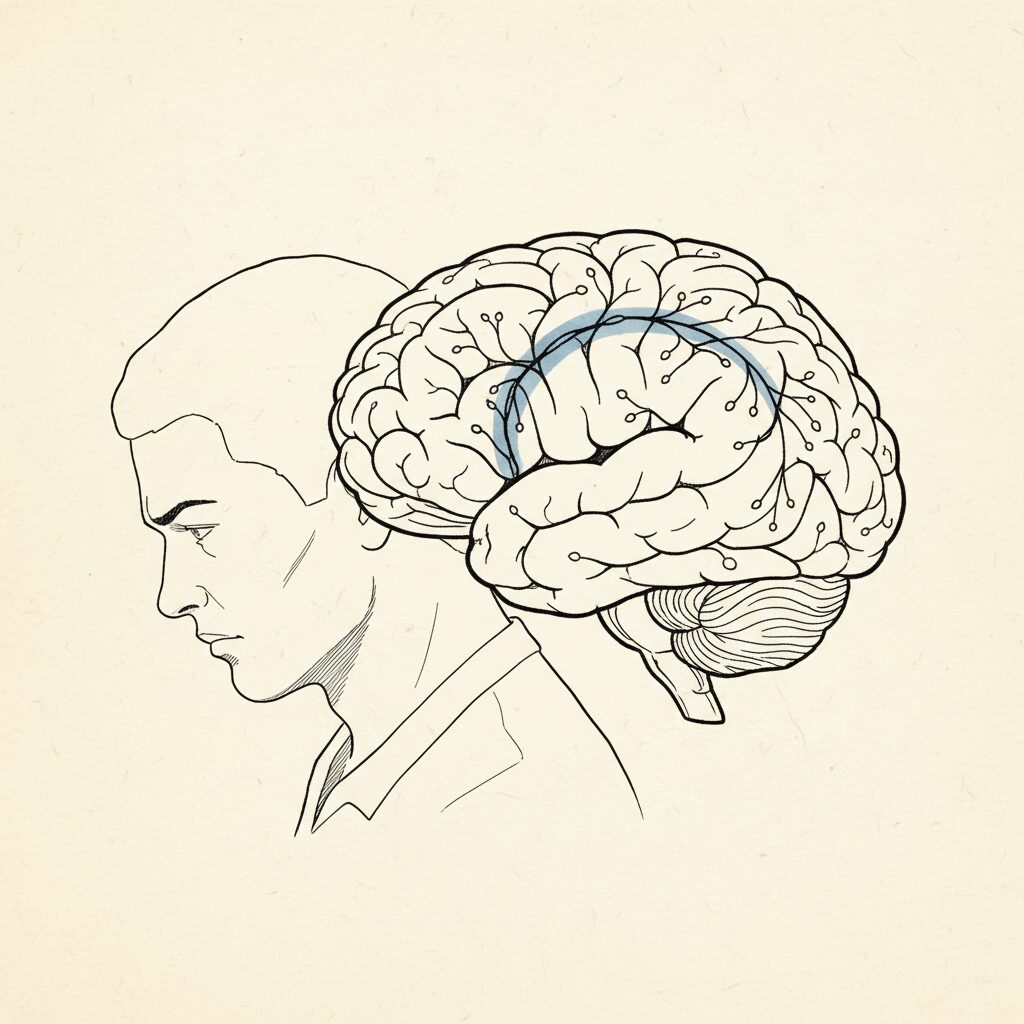
The variable is not the exercise. It is the quality of internal signal during the exercise.
Motor control of the trunk is governed by the nervous system’s predictive model, not by muscular strength alone. Hodges and Moseley (2003) demonstrated that lumbopelvic motor strategies are centrally organized and that strengthening without updating the control model does not change motor strategy selection. Kolar et al. (2012) showed that the diaphragm serves a primary postural function, and that posterior chain strengthening without restoring central pressure organization bypasses the deeper stabilization system entirely. Friston (2010) formalized this through the free-energy principle: the brain generates posture as a prediction, and the model regenerates the old output once conscious effort ceases, regardless of how much force the muscles can now produce. Strength changes the capacity of the output layer. It does not revise the prediction that selects the output.
Force without information
One person rows and their nervous system encounters proprioceptive information it cannot assimilate into its current prediction. The model receives a signal that does not match what it expected. That mismatch is prediction error. Prediction error is the only currency the body schema accepts for revision.
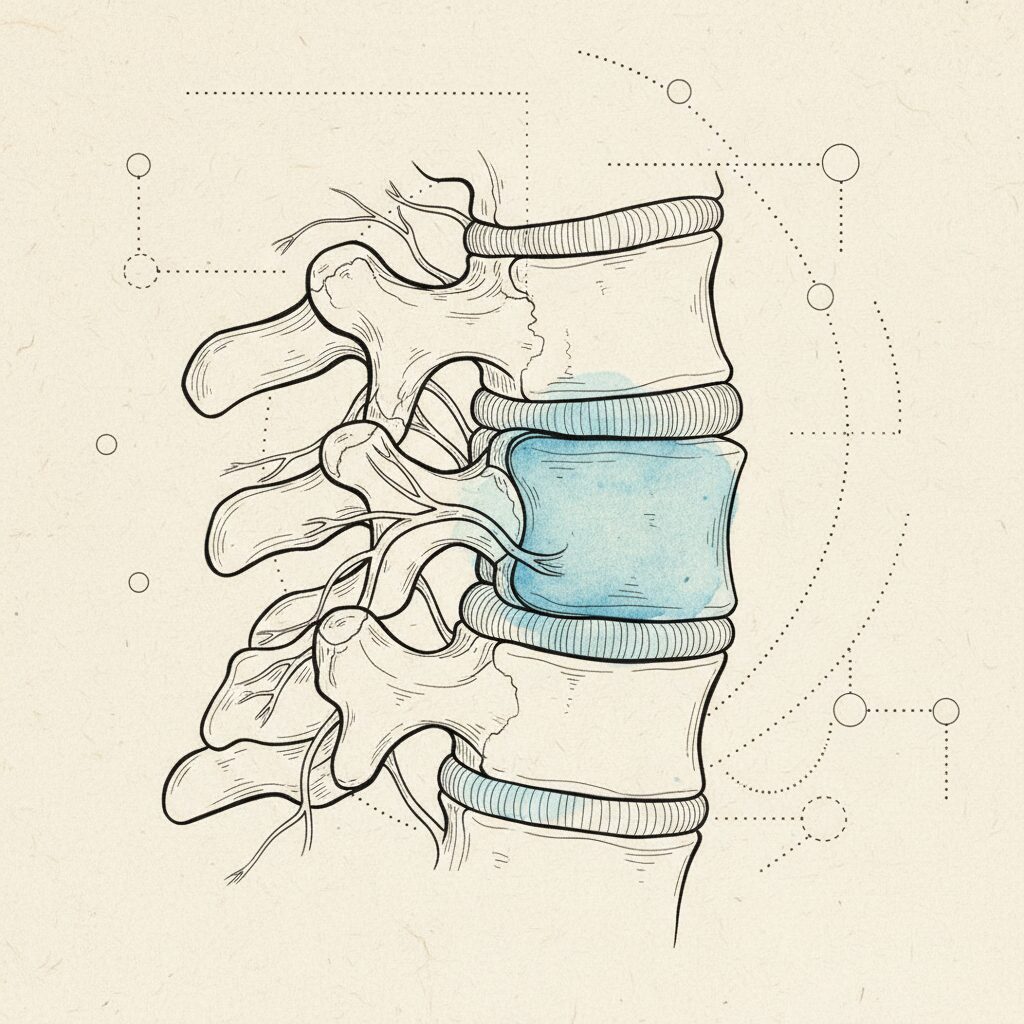
The other person rows and their nervous system confirms what it already knew. The load is different. The sensation is familiar. No mismatch. No update. The model holds.
The exercise is identical. The information content is not.
Under Friston’s (2010) free-energy framework, the brain minimizes surprise by maintaining predictions that match incoming sensory data. When an exercise produces sensory feedback that the model already predicts, no prediction error is generated. No update occurs. Hodges and Moseley (2003) showed that motor control retraining changes outcomes only when it alters the underlying motor strategy, not when it merely strengthens muscles within the existing strategy. Kolar et al. (2012) demonstrated that diaphragmatic postural function operates upstream of posterior chain activation. Strengthening extensors while the central pressure system remains disorganized adds force to a downstream output without changing the upstream model. The exercise becomes stronger repetition of the same prediction.
When rowing works
Rowing is not the problem. Rowing without updating the model first is the problem.
When the body schema has been revised, the nervous system selects different motor strategies from the same available pool. The same rowing movement now operates on a different system. The extensors fire in a different context. The load is received by a differently organized trunk. The exercise is identical. The result is not.
The question is not whether to row. The question is what state your nervous system is in when you row.
—
Related: The Complete Guide to Kyphosis | Can Scoliosis Exercises Reduce Your Curve? | Why Posture Corrections Don’t Last
—
Syntropic Core Reset establishes the conditions for a schema update before adding load. Safety first: autonomic downregulation. Then sensory recalibration. Then motor organization. Rowing after a schema update works differently than rowing without one. The exercise is the same. The system receiving it is not. Learn what that looks like.
Sources
- Hodges, P.W., & Moseley, G.L. (2003). Pain and motor control of the lumbopelvic region: effect and possible mechanisms. Journal of Electromyography and Kinesiology, 13(4), 361-370. PMID: 12832166 [T1]
Motor control is governed by the nervous system’s predictive model, not by muscular strength alone. Strengthening without updating the control model does not change motor strategy. - Kolar, P., et al. (2012). Postural function of the diaphragm in persons with and without chronic low back pain. JOSPT, 42(4), 352-362. PMID: 22236541 [T1]
The diaphragm’s postural function is primary. Posterior chain strengthening without restoring central pressure organization misses the deeper stabilization system. - Friston, K. (2010). The free-energy principle: a unified brain theory? Nature Reviews Neuroscience, 11(2), 127-138. PMID: 20068583 [T1]
Posture as prediction. The model regenerates the old output once conscious effort stops, regardless of strength gains.
Related research
- Best Exercises for Kyphosis: What Actually Changes the Curve
- Cervical Kyphosis, Military Neck, and the Flat Neck Epidemic
- Your Kyphosis Is Not a Mistake Your Body Made
- Kyphosis and Ankylosing Spondylitis: What Surgery Can and Can’t Change