She laughed when she said it. That was the part that got me.
We were in a session. I asked what happened when she tried to let her shoulders drop. She said they went UP. And then she laughed. Not because it was funny. Because the absurdity of it had finally hit her. The instruction was “let go.” The body’s response was “hold tighter.”
If you have ever been told to relax your shoulders and felt them climb toward your ears, you know exactly what she was describing. The instruction lands. Your brain receives it. And then your body does the opposite.
You are not bad at relaxing. You are caught in a trap your nervous system designed on purpose.
The instruction is the problem
“Just relax” assumes the tension is voluntary. It assumes you are choosing to hold your shoulders up and you could simply choose to put them down. This is the mechanical model: your body is a machine with levers you operate consciously.
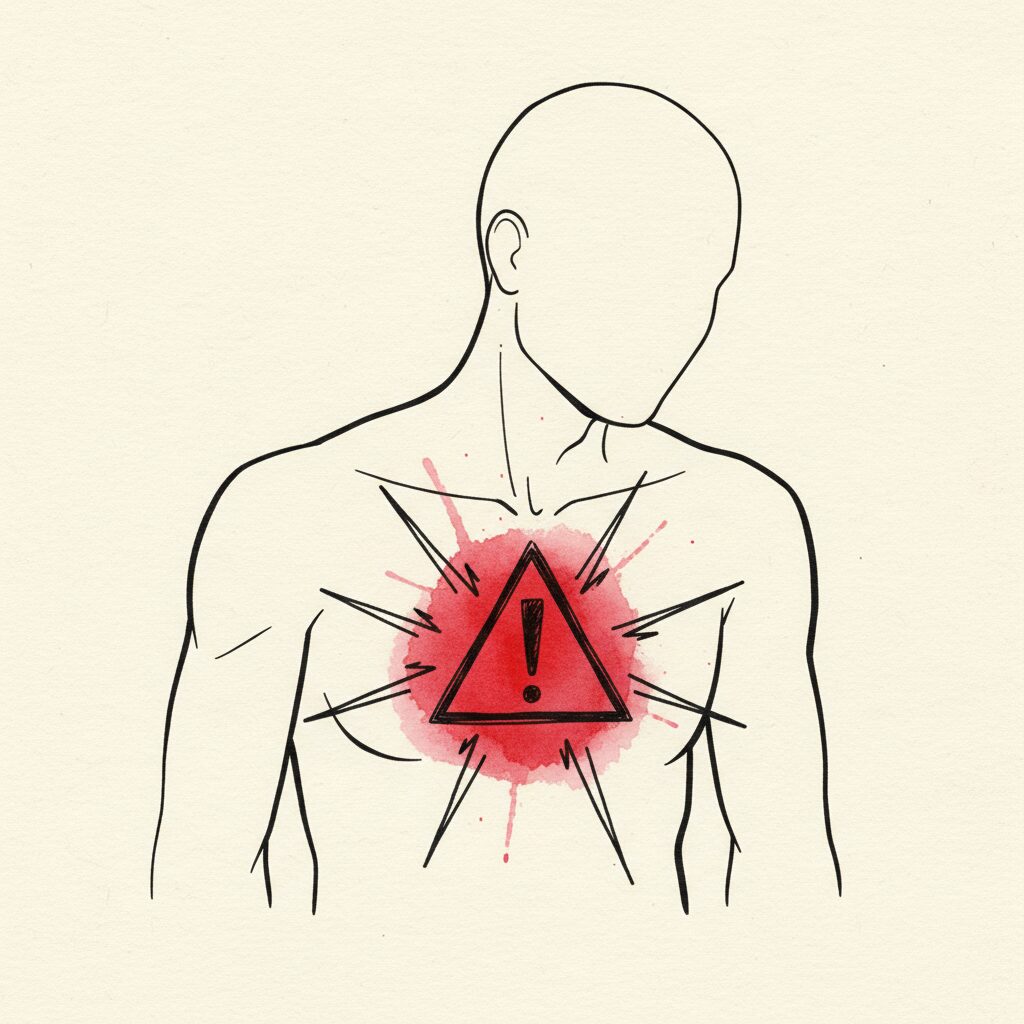
In reality, the tension is generated automatically by your body schema. Your brain’s internal model of your body decided this bracing pattern is necessary. It is a protective prediction. Not a choice. Not a habit you can override with willpower. A prediction your system is defending.
Here is where it gets worse.
The command to relax is itself a motor intention. Your brain generates a plan to change the position of your shoulders. The moment that plan forms, before your muscles even respond, your brain does something it does with every motor command: it generates an efference copy. A predicted version of what the resulting sensation should feel like. That prediction is sent to your sensory cortex ahead of time, where it cancels the incoming proprioceptive signal [1].
The very act of trying to relax suppresses the sensory information your brain needs to actually update.
When you consciously attempt to change your posture, whether through correction or relaxation, the motor cortex generates an efference copy: a prediction of the expected sensory outcome. This prediction reaches the sensory cortex before the actual movement occurs and cancels the matching incoming signal. The result is sensory attenuation. The proprioceptive feedback your body schema needs in order to update its internal model is suppressed by the act of trying to provide it. Kilteni and Ehrsson (2020) demonstrated that efference copies are generated only by volitional movement, and that they are necessary for sensory attenuation. Passive or externally generated movement does not produce this suppression. The implication for posture correction is direct: any instruction that contains a motor intention, including the instruction to relax, generates the mechanism that blocks the update.
This is not a metaphor. Kilteni and Ehrsson demonstrated in 2020 that efference copies are necessary for sensory attenuation, and that only volitional movement generates them [1]. The instruction to relax your shoulders is volitional. It contains a motor plan. The motor plan generates a prediction. The prediction cancels the signal. The signal was the thing your body schema needed to change.
Telling someone to relax their shoulders is neurologically identical to telling them to tense their shoulders. Both generate efference copies. Both suppress the proprioceptive channel. The instruction to let go is, at the level of your nervous system, another form of holding on.
The trap has a name
Fear-avoidance research has been documenting this pattern for decades. Vlaeyen and Linton established in 2000 that protective strategies prevent the prediction error that would resolve the protection [2]. Your body braces because it predicts danger. The bracing prevents the sensory evidence that would tell your system the danger has passed. So the prediction stays. So the bracing stays.
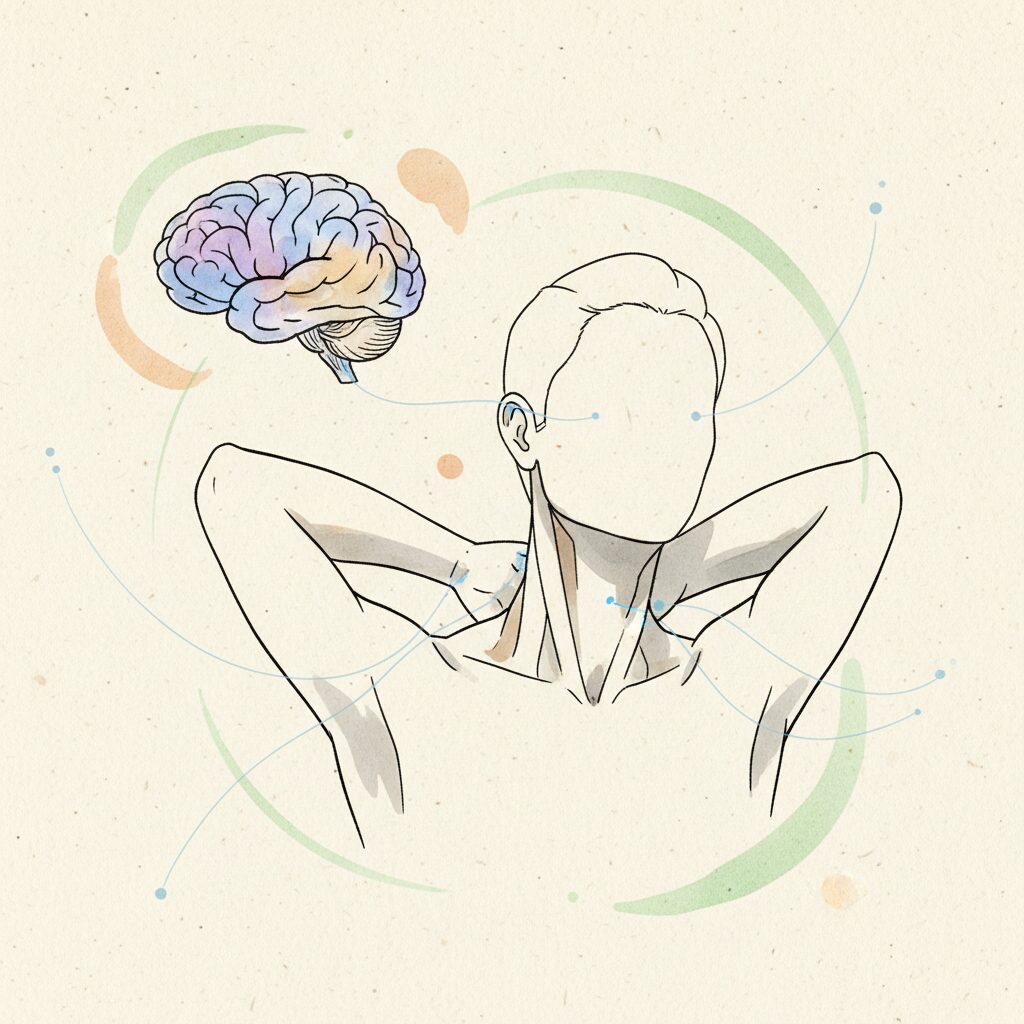
Garcia-Castillo and colleagues confirmed in 2026 that kinesiophobia directly impairs postural control [3]. The fear of movement changes how your body organizes itself in space. Not through weakness. Through prediction.
Bretherton and colleagues found the same year that pain beliefs predicted outcomes twice as powerfully as clinical factors [4]. What you believe about your body is a stronger determinant of your posture than what is structurally happening in your body.
The fear-avoidance model (Vlaeyen & Linton, 2000) describes a self-reinforcing cycle in which pain-related fear leads to protective guarding behavior. The guarding prevents exposure to the movements that would generate prediction errors, which would allow the brain to update its threat model. Garcia-Castillo et al. (2026) demonstrated that kinesiophobia, the fear of movement, directly impairs postural control independent of structural pathology. Bretherton et al. (2026) found that pain beliefs predicted functional outcomes twice as strongly as clinical severity factors. Tang et al. (2007) identified safety-seeking behavior from the anxiety literature appearing in chronic pain patients, showing the same protective mechanism operating across diagnostic categories. These findings converge on a single principle: the protective strategy that feels necessary is the same strategy that prevents the system from learning the protection is no longer needed.
Tang and colleagues identified the bridge in 2007: safety-seeking behavior from the anxiety literature appearing in chronic pain patients [5]. The same mechanism. Different label. Your system is running a protective program and the protection prevents the evidence that would end the protection.
This is the Allowing Paradox. You cannot allow, because your system predicts that letting go means collapse. And you cannot fight, because fighting generates the efference copies that block the update. Both exits appear closed.
What the paradox actually looks like
I spent twenty years inside this trap. Diagnosed with 85-degree kyphoscoliosis at 13. Every signal my body received for two decades confirmed one prediction: if you stop bracing, you lose the structure. So I braced. And the bracing became the pattern that generated the posture I was trying to escape.
Every person who walks into our community with a structural diagnosis carries some version of this. The protective strategy that made sense at diagnosis has become the operating system. And the operating system is generating the very output it was designed to prevent.
Your body is not failing. It is succeeding at the wrong prediction.
The jazz saxophone grip
Every musician who plays a reed instrument knows this paradox from the inside. The instrument plays better when held less. A tight embouchure produces a thin, pinched tone. The grip constrains the reed. The reed cannot vibrate freely. The sound narrows.
The moment the player softens the grip, the sound opens. The resonance returns. The instrument breathes.
Every saxophone player knows this. And every saxophone player still grips during performance. Because the body’s prediction is: if I let go, I lose control of the note. The nervous system will not release the grip until it has evidence that releasing does not mean losing.
Your body is the instrument. The tension is the tight embouchure. The thin, pinched tone is the posture you are generating under that tension. The grip IS the bad tone. They are the same event.
The body schema is the brain’s internal model from which posture is generated as a continuous output. When the body schema contains a high-confidence prediction that bracing is required for structural safety, any attempt to release that bracing is interpreted as a threat to structural integrity. The system responds by increasing protective tone, not by allowing reorganization. Simultaneously, any attempt to consciously override the bracing generates efference copies that suppress the proprioceptive signal needed for the body schema to revise its prediction. This creates a double bind: the person cannot allow (the system predicts collapse) and cannot fight (fighting blocks the update). The resolution pathway must deliver sensory evidence through a channel that does not trigger the protective response and does not generate posture-relevant efference copies.
But the saxophone player does not resolve this by deciding to let go. Deciding is another motor intention. Another efference copy. Another round of the same trap.
The grip releases when the player stops attending to the grip and starts attending to the sound. The channel shifts. The attention moves from the effortful system to a receptive system. The hands reorganize as a consequence, not as an instruction.
The back door
Your body schema does not need your instructions. It needs evidence. Evidence that arrives through channels the protective response cannot close.
Not all sensory channels are created equal. The vestibulospinal tract, the pathway that connects your balance system to your postural muscles, operates without thalamic gating. Gravity always gets through. Your protective pattern cannot suppress the signal from gravity the way it suppresses proprioceptive feedback from volitional movement.
This is why awareness changes posture and effort does not. Not because awareness is gentle. Because awareness without a motor plan does not generate efference copies. The sensory channel stays open. The body schema receives information it was not predicting. That mismatch is a prediction error. And prediction errors are the only currency the body schema accepts for an update.
The exit from the Allowing Paradox is neither allowing nor fighting. It is a different operation entirely. One that speaks to your nervous system through a channel the protective pattern was not designed to monitor.
The body schema updates through prediction error: a mismatch between what the brain expected and what the sensory system actually reports. When sensory evidence arrives through channels that do not generate efference copies, the signal reaches the body schema at full precision. Non-demanding awareness, attention directed to the body without a motor plan, removes the efference copy mechanism that would otherwise suppress the incoming signal (Kilteni & Ehrsson, 2020). Certain sensory pathways, particularly vestibulospinal and proprioceptive channels activated by passive perturbation rather than volitional movement, bypass the attentional gating that blocks self-generated movement signals. The body schema receives unexpected but non-threatening input, compares it against the current prediction, registers the mismatch, and begins revising the model. Posture changes as the output of the revised model.
What this means for you
If you have been told to relax and your body tightened, you are not broken. You met the trap. The instruction was the trigger.
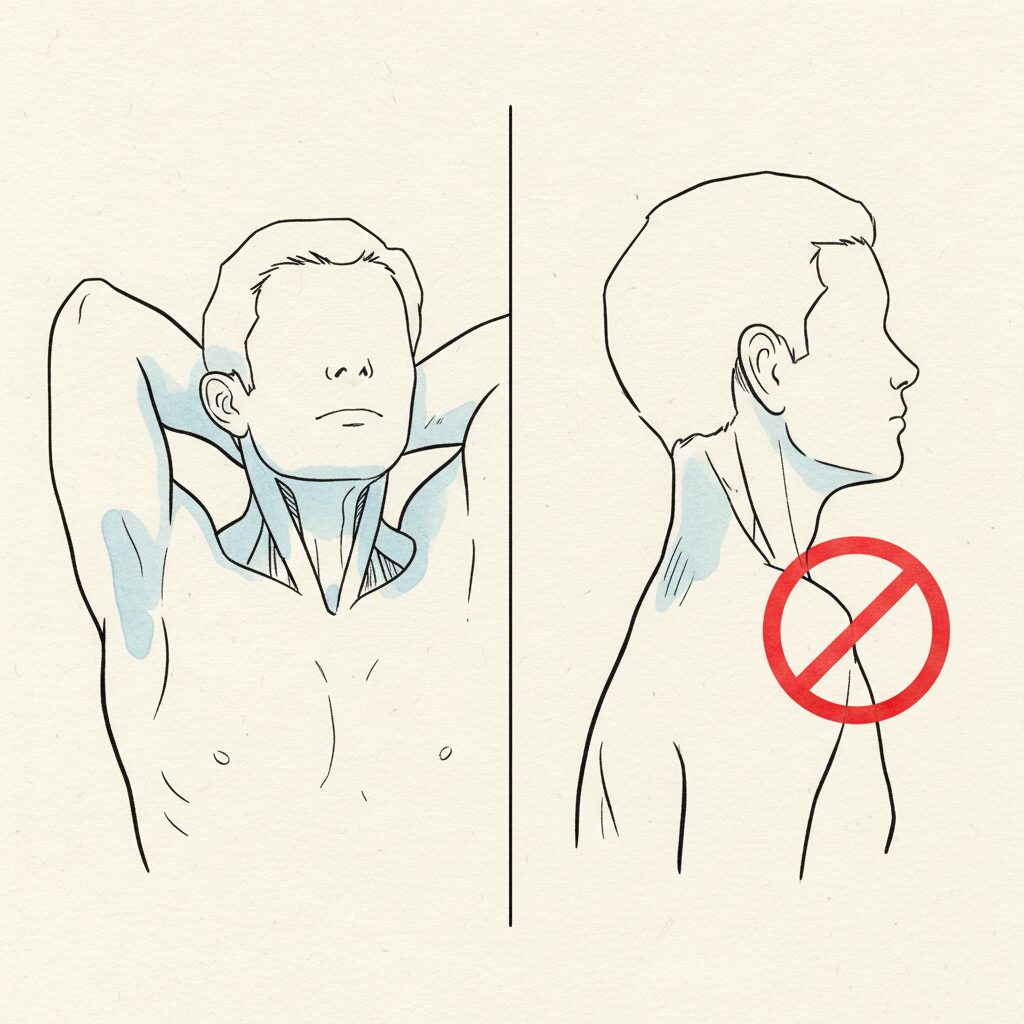
If you have been trying harder and nothing has changed, the trying is the mechanism that prevents the change. Not because effort is bad. Because effort generates the neurological event that blocks the update your system needs.
If you have a diagnosis and you have been fighting it, the fighting is part of what keeps the pattern running. The body schema does not respond to force. It responds to evidence. Evidence that does not arrive through a channel saturated with your own motor predictions.
There is a way to deliver that evidence. It is not a trick. It is not relaxation rebranded. It is a specific neurological operation that opens the channels your protective pattern has been closing for years.
Right now, notice your jaw. Do not change it. Just notice.
If you felt your jaw clench the moment you paid attention to it, you just met the trap from the inside. The noticing itself was enough to generate a motor intention. Something in you tried to do something with the information.
There is a way to notice without generating that intention. It is the difference between shining a flashlight on your body and pushing the flashlight into your body. One illuminates. The other contaminates.
That difference is the exit.
—
The Posture Dojo is a free community where we explore how to exit the tension trap without fighting it. No corrections. No exercises. A different operating system for your body. Join the conversation here.
Sources
- Kilteni, K., & Ehrsson, H.H. (2020). Efference copy is necessary for the attenuation of self-generated touch. iScience, 23(2), 100843. PMID: 32058957 [T1]
Demonstrated that efference copies are generated only by volitional movement and are necessary for sensory attenuation. Passive movement produces no attenuation. The motor intention is the mechanism, not the movement itself.
- Vlaeyen, J.W.S., & Linton, S.J. (2000). Fear-avoidance and its consequences in chronic musculoskeletal pain: a state of the art. Pain, 85(3), 317-332. PMID: 10903553 [T1]
Established the fear-avoidance model: protective strategies prevent the prediction error that would resolve the protection. The avoidance behavior maintains the fear by preventing disconfirmatory evidence.
- Garcia-Castillo, F.O., et al. (2026). Kinesiophobia impairs postural control in chronic musculoskeletal pain. PMID: 41877566 [T1]
Confirmed that fear of movement directly impairs postural control independent of structural pathology. The prediction of danger changes the body’s output.
- Bretherton, B., et al. (2026). Pain beliefs predict functional outcomes more powerfully than clinical severity. PMID: 41763260 [T1]
Found that what you believe about your pain predicts your outcome twice as powerfully as the clinical severity of the condition itself. Belief is input to the system that generates your posture.
- Tang, N.K., et al. (2007). Safety-seeking behaviours and dysfunctional cognition in chronic back pain. Behaviour Research and Therapy, 45(12), 2821-2835. PMID: 17868641 [T1]
Identified safety-seeking behavior from the anxiety literature appearing in chronic pain patients. The protective strategy that prevents exposure to the evidence that would resolve it.
- Blakemore, S.J., Wolpert, D.M., & Frith, C.D. (1999). Spatio-temporal prediction modulates perception of self-produced stimuli. Journal of Cognitive Neuroscience, 11(5), 551-559. PMID: 10511643 [T1]
Established that sensory attenuation is proportional to the match between predicted and actual sensory feedback. The better the brain predicts the sensation, the more it suppresses it.