
Two papers, one framework
I recently posted two research papers on SSRN. This post is about what they say, why I wrote them, and what they change.
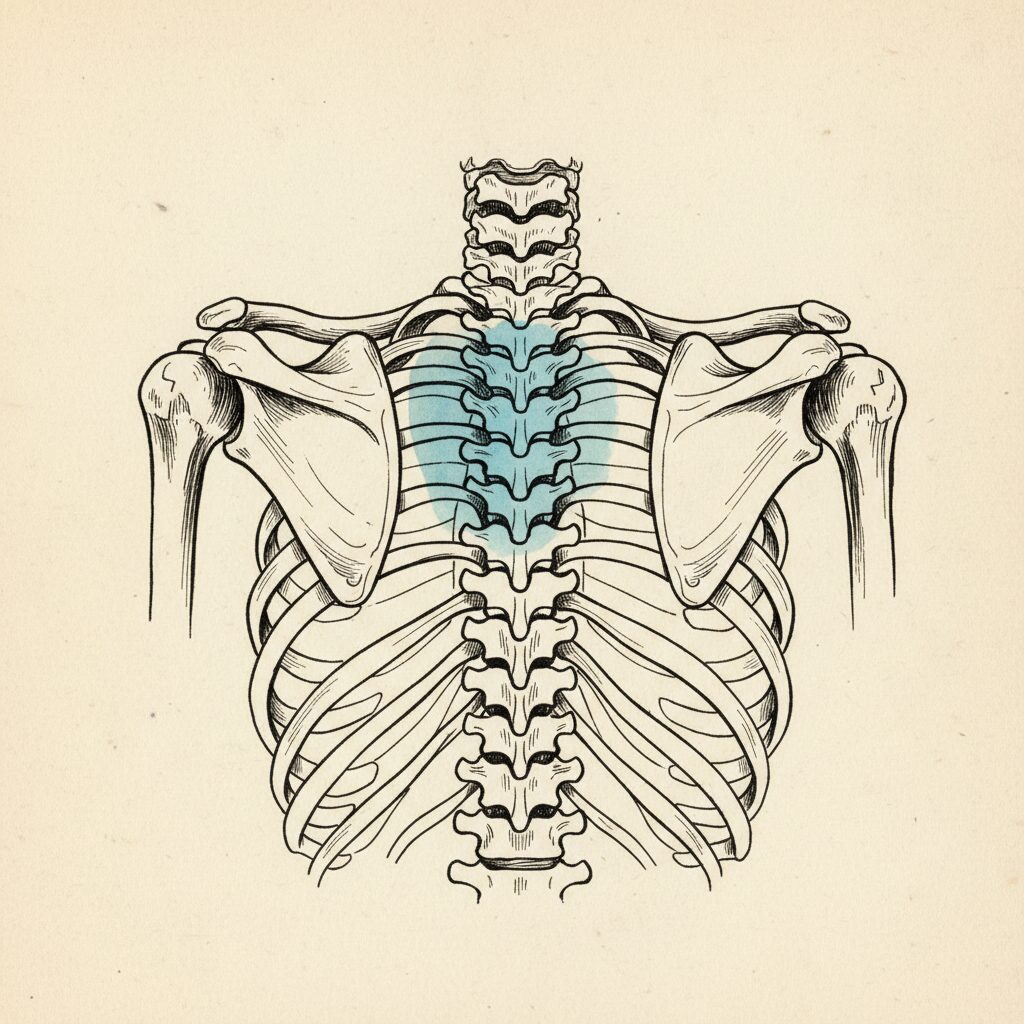
The first is the Neural Generation Hypothesis [1]. It names what drives scoliosis. Not the bone. Not the gene. The nervous system’s internal map of the body, operating on degraded sensory input during a critical developmental window.
The second is the Generative Posture Framework [2]. It names what drives posture everywhere else. Posture is not held. Posture is generated. The brain is making a best guess about how to organize your body given whatever sensory precision is currently available, and the shape you see in the mirror is that guess rendered as geometry.
NGH came first. Then, working through GPF, the broader framework sharpened what NGH was actually claiming. On the day GPF went live, I re-released NGH as an updated version with the new framing folded back in. Same thesis. More precise language. Tighter convergence with the evidence. The two papers are now a matched pair.
What follows is what each paper says, the fifteen-year question they both answer, and why a congress across the Atlantic, writing submissions before either paper was public, landed on the same terrain at the same time.
The curve has a generator. The generator has an address.
Why I stopped accepting “idiopathic”
I was diagnosed with scoliosis at 13. By 18 I was in a surgeon’s office asking for a fusion. He refused. He told me to live with it.
Eighty-five degrees of kyphoscoliosis is a number you do not forget. Neither is being sent home.
For eight years after that I built a neurosomatic practice. Not clinical. Not medical. Practical. Reading anatomy. Testing cues on my own body. Tracking what held and what did not. At 33 I collapsed. A horse, a hard fall, and a nervous system that had been white-knuckling the whole structure gave out. A David Goggins book pointed me at the hip flexor. The hip flexor pointed me at the diaphragm. The diaphragm pointed me at something I did not yet have a name for. I gained roughly two inches of height. I measured it on a doorframe. Roughly 80 percent of that was myofascial remodeling. Roughly 20 percent was bony change.
At 34 I founded Posture Dojo.
The one word that never fit was “idiopathic.” The one sentence that never fit was “you have a genetic predisposition.” Both sentences told me to stop looking. I had already tried every structural intervention I could find. Bracing, strengthening, stretching, mobilizing, adjusting, fusing as a last option. None of it explained why my body had organized itself this way in the first place. The genetics answer felt like a permission slip handed to doctors and parents to stop asking the harder question.
The Neural Generation Hypothesis is what emerged when I refused the permission slip.
The Neural Generation Hypothesis, in plain language
Scoliosis does not begin in bone.
It begins in sensory processing, during a critical developmental window, inside a brain that is trying to build an internal map of a body it cannot feel clearly.
That is the core claim of NGH [1]. Everything else is how.
The paper names four genes that keep appearing in the scoliosis literature: LBX1, GPR126, PAX1, CHD7. Every one of them expresses in sensory tissue. None of them code for bone. They shape the quality of somatosensory, vestibular, and proprioceptive input during development. When that input is degraded, the body schema, the brain’s internal map of the body, builds on bad data.
Here is the rate mismatch. The body schema updates at the speed of sensory refresh. The adolescent spine grows at the speed of bone. When the schema update rate falls below the skeletal growth rate, the map cannot keep up with the territory. The map makes a guess about a body it cannot clearly perceive, and the growing bones follow the guess. A curve is the downstream geometry of an upstream sensory gap.
Twenty percent of adolescent idiopathic scoliosis cases have an identified genetic component. The other eighty percent have been called “idiopathic” for a century. That word does not mean “no cause.” It means “no cause found.” NGH names the layer we were not looking at. The generator model replaces the structural one. Diagnosis describes the shape. It does not describe the generator.
There is a convergence point in the evidence that most people miss. In 2010 and again in 2013, Doménech and colleagues ablated the somatosensory cortex in rats and produced kyphoscoliosis [4]. No gene was edited. No bone was cut. One sensory region was removed, and the spine organized itself into a curve. The causal arrow in that study does not run from bone to brain. It runs from brain to bone. The body built the curve that the map predicted.
NGH assembles six lines of convergent empirical evidence and generates eight testable predictions. It is the first framework to name why the “idiopathic” label was a measurement gap, not a mystery. The gene-vestibular convergence is part of the same story.
Why NGH forced a bigger frame
Once you see scoliosis as a body schema operating on degraded input, you cannot unsee it everywhere else.
Chronic pain stops looking like tissue damage and starts looking like precision weighting gone wrong. Kyphosis stops looking like weak rhomboids and starts looking like a protective prediction that has calcified into architecture. Post-concussive postural change stops looking like vestibular damage and starts looking like a sensory system that can no longer send clean prediction error upstream. Post-traumatic freezing stops looking like muscle tension and starts looking like an old protection model still being run by a body that never got the cancellation signal.
They all share the same architecture. I kept noticing. I kept writing. I kept stress-testing it inside the Syntropic Core Reset and the client sessions.
When the pattern held across six different postural conditions, it was no longer a theory about scoliosis. It was a theory about posture itself.
That is the Generative Posture Framework.
The Generative Posture Framework, in plain language
Posture is not held. Posture is generated.
That is the one sentence the entire paper turns on [2].
Your posture right now is the precision-weighted output of an active inference process. The brain is making a best guess about how to organize the body, given whatever sensory precision is currently available. Vision. Vestibular. Proprioception. Interoception. Stomatognathic input. When any of those channels is low-resolution, the prediction rests more heavily on what is left. When all of them are high-resolution, the prediction gets closer to the territory. The output is what you see in the mirror.
Posture is not held. Posture is generated. What holds you is the precision of what you can feel.
GPF formalizes this as five prerequisite principles, one interference mechanism, and two amplifiers.
The five principles sit under everything. Active inference. Predictive body schema. Precision weighting. Sensory hierarchy. Threat-gated access. The interference mechanism is efference copy suppression: the brain’s own motor commands cancel the sensation those commands would have produced, which is why “stand up tall” does not update anything that matters. The two amplifiers are the layers that let the system actually learn: co-regulated relational context and Interoceptive Attention. Without those, the back door stays shut.
The paper bridges five bodies of work that had never before been unified under one computational account. Wand’s Fit-for-Purpose model of chronic low back pain [5]. The RESOLVE graded sensorimotor retraining trial [6]. The SPINE CARE Egoscue trial [7]. Kontos’s post-concussion sensorimotor work. The predictive-processing pain literature. It also bridges Porges’s polyvagal theory [8] and Friston’s active inference [3] for the first time. Safety is not a feeling layered on top of posture. Safety is the gain control on the whole generative process.
Then GPF maps six postural conditions as instances of the same architecture. Adolescent idiopathic scoliosis. Kyphosis. Chronic pain. Post-traumatic freezing. Age-related postural collapse. Post-concussive postural change. One framework. Ten testable predictions.
The curve has a generator. The generator has an address. So does the stoop, the flinch, the freeze, and the collapse.
The convergence at SOSORT
Here is the part that still catches me.
SOSORT is the international scoliosis research society. Their congress runs in Turin this spring. Abstracts closed and acceptances went out well before either paper was public, and both of mine were sitting in closed drafts for months before that. No one at SOSORT had read either paper when they wrote their submissions. This matters.
And yet.
Three independent research programs, on three continents, submitted work that lands on the same terrain NGH names.
The Taian and Qingdao group (Wang and colleagues) ran two randomized controlled trials. One tested vestibular enhancement training. The other tested a brain-science sensorimotor integration protocol. The brain-science arm produced 5.8 degrees of Cobb reduction versus 3.1 degrees in the traditional arm, durable at three months [11]. Both are award nominees. Their own conclusion, written without ever seeing NGH: “shift from correcting morphology to remodeling neural control.”
The Hong Kong PolyU and HKU group (Huang, Wong, Chan) submitted a PROSPERO-registered systematic review of neurophysiological mechanisms in AIS, plus a paraspinal mediation analysis, also an award nominee [10]. Their language: “disrupted sensorimotor feedback loop.”
The ISICO and Milan group (Cordani, Zaina, Negrini) submitted a neurophysiological scoping review of 89 studies [9]. Their conclusion: “altered sensorimotor integration rather than isolated deficits.” In a separate submission, F. Negrini documented an instant 5.8 degree Cobb reduction from unaided active self-correction, radiographically measured. The spine moved that much without a brace, without surgery, without strengthening. Just a change in what the nervous system was organizing toward.
Limerick and Minnesota filed an umbrella review of twenty systematic reviews covering proprioception, vestibular, visual, and stomatognathic inputs in AIS. The findings cohered across domains.
Three programs. Three vocabularies. One phenomenon.
NGH’s sensory-first causal claim was drafted at epistemic tier T3, meaning synthesis not yet independently confirmed. The SOSORT submissions move it toward T2, meaning convergent external evidence from independent research programs. NGH does not claim the convergence. It names the synthesis the convergence implies.
What this changes inside Posture Dojo right now
This is not theory we are working toward. This is the working framework.
When a client lands in the Syntropic Core Reset with rounded shoulders, a locked diaphragm, and fifteen years of daily bracing, we do not start by correcting the shoulders. We start by restoring sensory precision. Jaw first, because jaw is Tier 1. Eyes next, because vision is Tier 1. Diaphragm next, because the Dragon is the one movement that delivers ungated prediction error through visceral mechanoreceptors, and the body schema has no efference copy mechanism for visceral sensation. The signal arrives unmuted. The map updates. The shoulders reorganize downstream.
When a participant tells us they can finally feel the left side of their back for the first time in twenty years, we are not watching a tissue change. We are watching a body schema update. The change in posture follows the change in the map. Every time.
When someone asks me why they stood up tall yesterday and slumped again today, I stop explaining it as a willpower problem. It was never willpower. It was efference copy. The intention to stand tall generated the prediction that cancelled the signal. The map never got new information. The default returned. GPF names the mechanism.
When a cohort member reports that the curve “feels smaller” after a breathwork ceremony, we do not dismiss it and we do not oversell it. We treat it as a precision report. The map has more information than it did an hour ago. What the spine will eventually do with that information is a separate question. But the generator has clearly moved.
The framework is how we teach, how we sequence, and how we talk. Now it has a public citation trail.
The curve has a generator. The generator has an address.
For fifteen years I was told that the explanation for my spine was either a gene I did not have or a label that meant nothing. I refused both and kept looking. The Neural Generation Hypothesis is what I found when I looked at what the body schema was doing during development. The Generative Posture Framework is what I found when I realized the same architecture runs every postural condition I had ever worked with.
Two papers. One body. One fifteen-year question. Now, finally, a paper trail.
If you are living with a spine someone told you to accept, a posture someone told you was genetic, or a pain someone told you was structural, the generator framework is where the next decade of this work begins. You can read both papers at the DOIs above. You can come train with us at posturedojo.com. Either way, the frame has changed.
The curve has a generator. The generator has an address.
Sam Miller is the creator of the Syntropic Core method and the founder of Posture Dojo. He writes about posture as a nervous system phenomenon at posturedojoresearch.com.
References
[1] Miller S. Neural Generation Hypothesis (NGH) v2.0. SSRN. 2026. doi:10.2139/ssrn.6493379.
[2] Miller S. The Generative Posture Framework (GPF) v1.0. SSRN. 2026. doi:10.2139/ssrn.6577078.
[3] Friston K. The free-energy principle: a unified brain theory? Nat Rev Neurosci. 2010;11(2):127-138.
[4] Doménech J, García-Martí G, Martí-Bonmatí L, Barrios C, Tormos JM, Pascual-Leone A. Somatosensory deprivation induces kyphoscoliosis: a rat model. Spine (Phila Pa 1976). 2013.
[5] Wand BM, O’Connell NE, Di Pietro F, Bulsara M. Fit-for-Purpose model of chronic low back pain. 2023.
[6] Bagg MK, Wand BM, Cashin AG, et al. Graded sensorimotor retraining for chronic low back pain: the RESOLVE randomized clinical trial. JAMA. 2022;328(5):430-439.
[7] Choudhry NK, Bykov K, Sanfelix-Gimeno G, et al. SPINE CARE trial: individualized postural therapy for chronic low back pain. JAMA. 2022;328(23):2334-2344.
[8] Porges SW. The Polyvagal Theory. New York: W.W. Norton; 2011.
[9] Cordani C, Zaina F, Negrini S, et al. Neurophysiological mechanisms in adolescent idiopathic scoliosis: a scoping review of 89 studies. SOSORT Congress abstract; Turin, Italy.
[10] Huang Z, Wong A, Chan C. Systematic review of neurophysiological mechanisms in adolescent idiopathic scoliosis. SOSORT Congress abstract #168; Turin, Italy.
[11] Wang X, et al. Brain-science sensorimotor integration intervention for adolescent idiopathic scoliosis: a randomized controlled trial. SOSORT Congress abstract #99; Turin, Italy.
Comments
2 responses to “Two Papers Just Landed: The Neural Generation Hypothesis and the Generative Posture Framework”
[…] Two Papers Just Landed: The Neural Generation Hypothesis and the Generative Posture Framework […]
[…] Two Papers Just Landed: The Neural Generation Hypothesis and the Generative Posture Framework […]