It was 2am and I was scrolling through posture program ads. Not as a customer. As someone who has been inside these programs, on both sides of them, for twenty years.
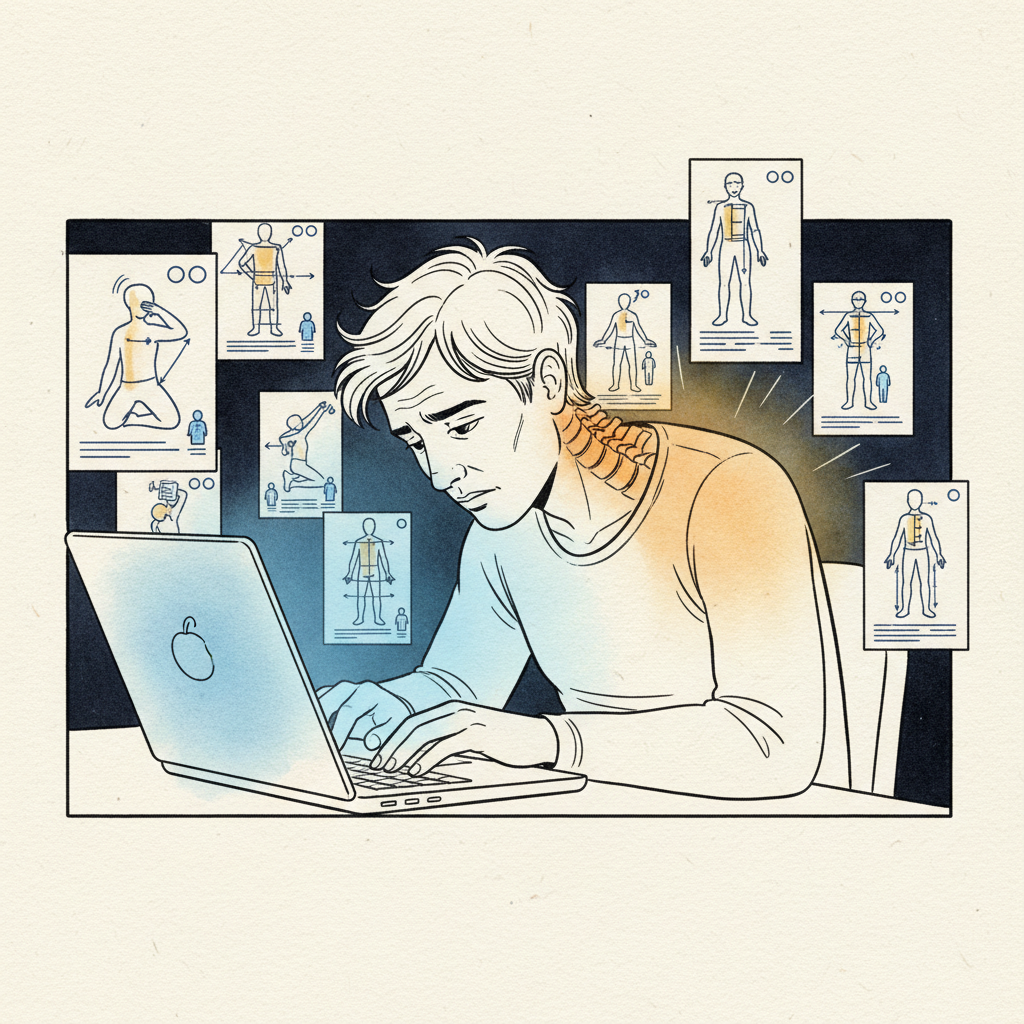
The thumbnails were almost identical. A person with red arrows pointing at their slouch. A before-and-after silhouette. The words “fix,” “correct,” “strengthen.” I opened twelve of them. I took notes. And by the fourth one, I could predict the entire protocol before watching the video. Stretch this. Strengthen that. Hold this position. Repeat daily.
The same blind spot, twelve times in a row.
What the best programs get right
I want to be fair. The best posture programs in 2026 share real strengths.
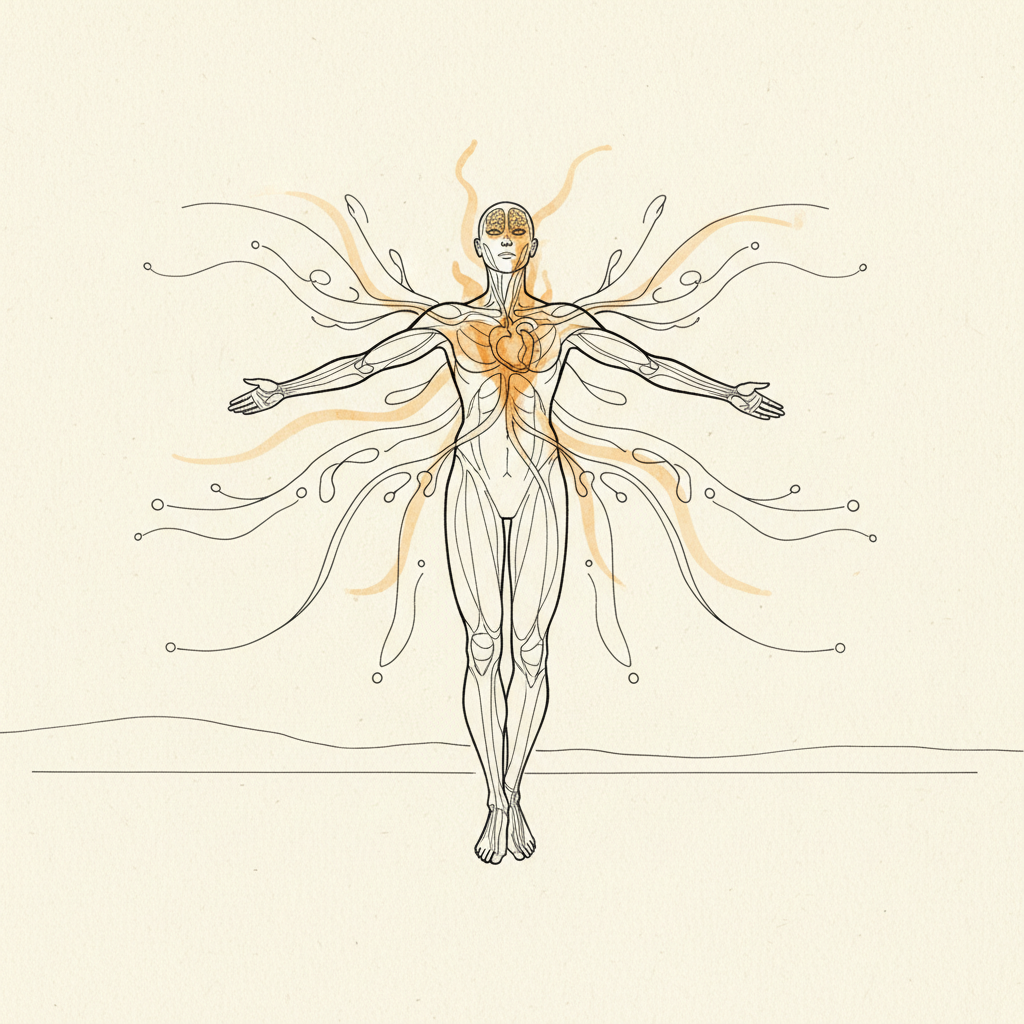
Movement quality. Programs rooted in physical therapy, Pilates, and corrective exercise teach people to move with better mechanics. They strengthen weak muscles. They mobilize restricted joints. They improve body awareness. Real outcomes.
Consistency structures. Online programs have solved the compliance problem better than clinical settings ever did. Daily routines, progress tracking, community accountability. People actually do the work.
Education. The best programs teach people about their bodies. Anatomy basics. Movement principles. Why stretching alone does not work.
If you are doing any structured posture program consistently, you are ahead of someone doing nothing. That matters.
The shared blind spot
Every posture correction program I encountered, regardless of method, treated posture as a mechanical problem. Muscles too tight on one side, too weak on the other. Joints restricted in one direction, hypermobile in another. The solution: rebalance the equation through stretching, strengthening, and mobilization.
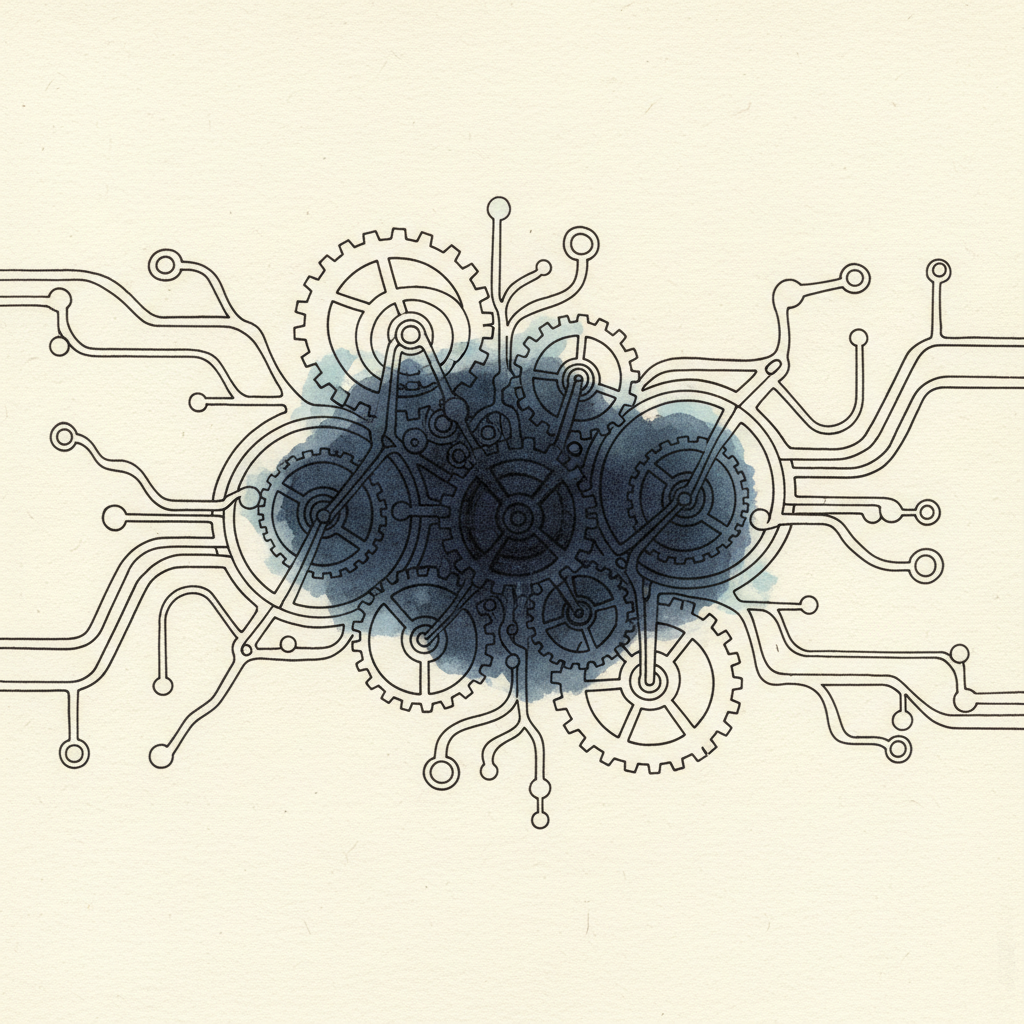
The research tells a different story. Posture is a prediction generated by the nervous system’s body schema, a deep map built from sensory data. The muscles execute the prediction. They do not create it. Programs that address muscles without addressing the prediction produce corrections that require constant maintenance because the underlying model has not changed.
Your posture right now, reading this, is not the result of your muscles being in a particular state of tension. It is the result of your nervous system’s prediction of where your body should be. That prediction is built from vision, jaw position, breath pattern, ground contact, threat history, and internal pressure. The muscles are executing whatever the prediction says.
Change the muscles without changing the prediction, and the prediction wins every time.
Three questions worth asking
Does it address the nervous system, or only the muscles? If the program is entirely composed of stretching, strengthening, and mobilization exercises, it is operating on the output layer. A program that includes nervous system state regulation, breathing that goes beyond relaxation, sensory input restoration, and body schema awareness is operating on the prediction layer. The results hold differently.
Does it follow a sequence, or is it random? The nervous system has a hierarchical architecture. Safety before sensory before motor. Programs that jump straight to corrective exercises skip the prerequisites. Sequence matters more than selection.
Does it explain why previous approaches did not work? If a program cannot articulate why stretching did not hold, why strengthening did not transfer, why the posture kept reverting, it is probably operating within the same model that produced those failures.
Approaches worth knowing about
DNS (Dynamic Neuromuscular Stabilization). Developed from the Prague School of rehabilitation. DNS understands that the diaphragm is a postural stabilizer, not just a breathing muscle. It teaches internal pressure organization and developmental movement patterns. Of all the approaches in the clinical world, DNS comes closest to addressing the pressure layer. Its limitation: it operates primarily through the biomechanical lens and does not explicitly address the sensory hierarchy or nervous system threat state.
PRI (Postural Restoration Institute). PRI maps the sensory hierarchy with more precision than any other clinical framework. It understands that vision and jaw are rate-limiting variables for posture. It addresses the asymmetric bracing patterns. PRI is specialist-level work, typically requiring practitioner guidance, and its clinical language can be dense. But the underlying model is the closest the clinical world has to a full nervous-system-first framework.
The Schroth Method. The gold standard for scoliosis-specific exercise. Three-dimensional correction with targeted breathing. The best mechanical approach to scoliosis available. Its limitation is the same as the broader field: it treats the output without explicitly addressing the prediction that generates it.
Somatic Education (Hanna, Feldenkrais). These approaches understand that the nervous system governs posture. They work through awareness, slow movement, and sensory re-education. Their limitation: they typically do not include the pressure mechanics, the sensory hierarchy, or the specific sequencing that a full nervous-system-first model requires.
What is missing from the landscape
No single existing approach addresses all the layers. DNS gets pressure right but misses the sensory hierarchy. PRI maps the hierarchy but does not deliver a self-directed protocol. Schroth addresses the curve but not the prediction. Somatic education addresses awareness but not pressure mechanics.
A complete posture approach must address three layers in sequence. First, nervous system safety: reducing the threat state that locks the bracing pattern. Second, sensory input restoration: feeding the body schema accurate data from vision, jaw, breath, and ground contact. Third, mechanical reorganization: the exercises, the pressure work, the movement patterns.
No program that skips a layer produces durable results. Most programs start at layer three.
The test
There is a simple way to evaluate any posture program you have tried or are considering.
Does the correction hold when you stop thinking about it?
If you have to sustain attention to maintain the improved posture, the program is producing an override. A conscious muscular effort that fights the prediction. Overrides feel like effort. They exhaust you. They fade the moment you get distracted.
If the correction holds when your attention moves elsewhere, the program has produced an update. The body schema has accepted new sensory evidence and revised its prediction. Updates feel effortless. They persist. They accumulate.
Wes, a participant in our first cohort, described what the accumulation feels like: “My ability to sense is getting stronger. It’s starting to show up in the way I move.”
That is an update. Not holding a correction. Building a new baseline.
What matters more than the program
Understanding what posture actually is. If you understand that posture is a nervous system prediction, you will evaluate every approach differently. You will notice when a program is addressing the output versus the input. You will understand why corrections wash out. You will know what questions to ask.
The best posture program in 2026 is one that matches the architecture of the problem. Posture is neurological. The program should be too. It should start where the nervous system starts: with safety, with sensory data, with the inputs that build the prediction. The exercises should come last, not first. And the result should be a posture that holds itself.
Sam Miller is the founder of Posture Dojo. He has an 85-degree kyphoscoliosis and has been inside more posture programs than most practitioners have prescribed.
Syntropic Core Reset
Most posture programs give you exercises. This one updates the system that generates your posture. Four weeks live with Sam Miller. You learn how the hidden map works, why everything else missed it, and how to give your nervous system the evidence it needs to generate a different pattern. Breath. Ground contact. Safety. Sensory input. Floor to standing. You leave with a daily practice that holds because the map itself has changed.
The Reset is a four-week course.
Related research
- DNS Exercises for Adults: Why Baby Positions Fix Grown-Up Posture
- The Schroth Method: What It Gets Right and Where It Stops
- Two Papers Just Landed: The Neural Generation Hypothesis and the Generative Posture Framework
- Stand Up Tall, Pull Your Shoulders Back, Brace Your Core: Why the 3 Most Common Posture Cues Are Neuroscience Dead Ends
Comments
One response to “The Best Posture Programs in 2026 (And Why Most Share the Same Blind Spot)”
[…] The Best Posture Programs in 2026 (And Why Most Share the Same Blind Spot) […]