Two thousand years ago, a man hung from wood and said seven words that still rearrange people.
“Father, forgive them. They do not know what they do.”
Not after the trial was over. Not from a safe distance. Not once the pain had faded. He said it while the nails were still in.
That line has been theologized to death. Sermonized. Framed on walls. Reduced to a greeting card.
But if you read it through the body, it says something the theology usually misses.
He was not asking God to let them off the hook.
He was refusing to let them into his nervous system.
The grudge you carry has a body
You know the person.
Maybe it is the surgeon who told you nothing could be done. Maybe it is the one who told you something could be done and then did it badly. Maybe it is the parent who signed the consent form when you were too young to understand what was happening to your spine. Maybe it is the doctor who looked at your imaging, shrugged, and said “just live with it.”
Maybe it is not medical at all. Maybe it is a partner. A parent. A business deal gone sideways. A betrayal you never got an explanation for.
You carry it.
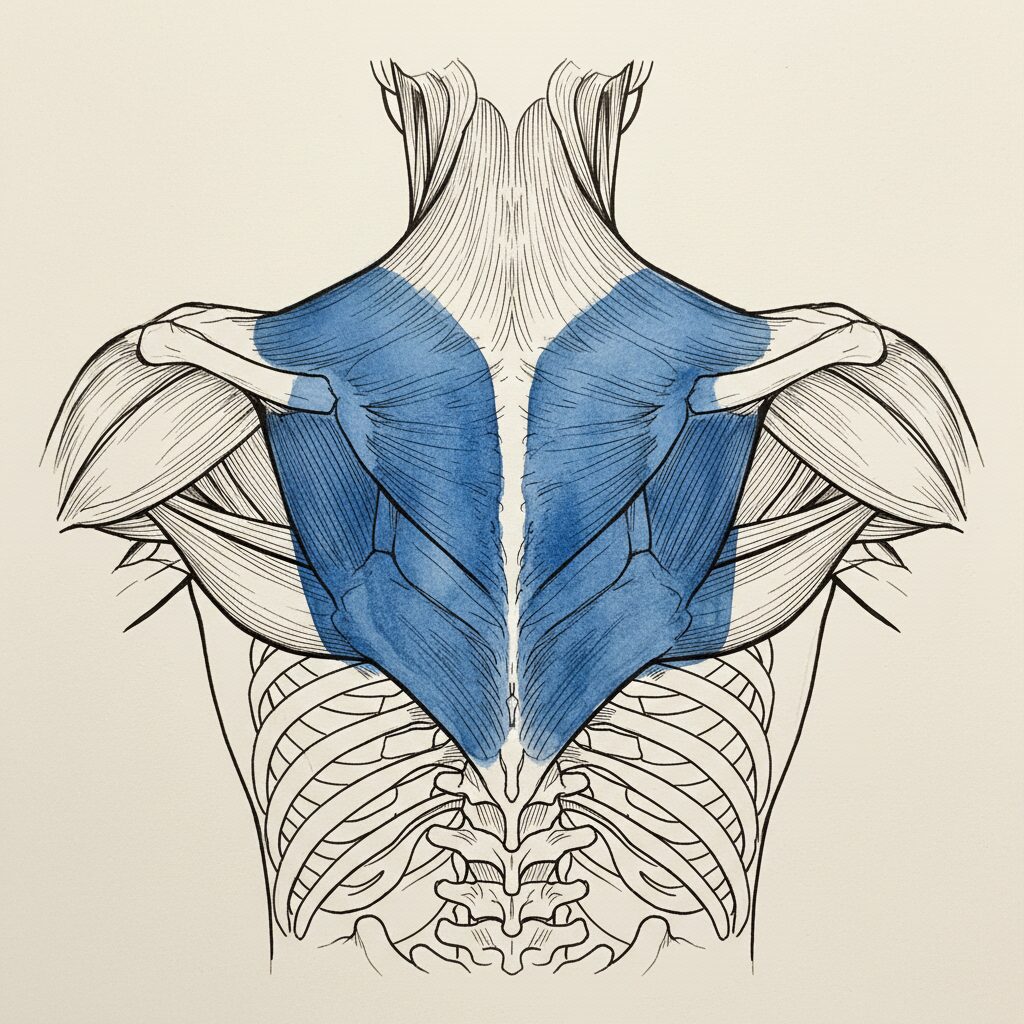
Not as a thought. As a pattern. As a tightness in the jaw. A brace across the upper back. A shallow breath you have had so long you forgot breathing was supposed to feel different.
Resentment is not a concept. It is a contraction.
And it lives in your tissue.
What a grudge does to your body
This is not metaphor. This is physiology.
In 2001, Charlotte vanOyen Witvliet and her team at Hope College ran a landmark study [1]. They asked 71 people to imagine their offenders under two conditions. First, holding the grudge. Rehearsing the offense. Keeping the charge alive. Second, extending empathy and forgiveness toward the same person.
The results were not subtle.
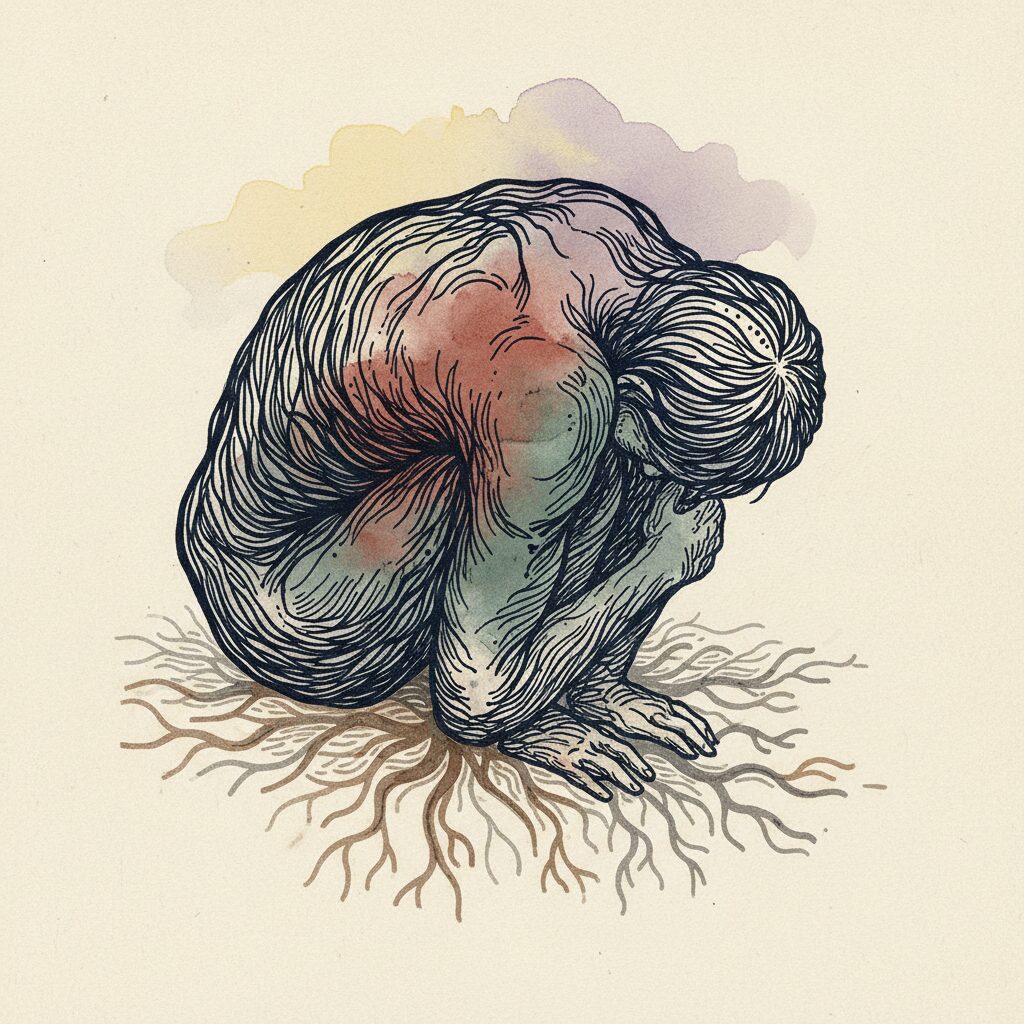
During grudge imagery, facial muscle tension spiked. Skin conductance rose. Heart rate climbed. Blood pressure elevated. The entire sympathetic nervous system activated as if the offender were in the room.
The body could not tell the difference between the memory and the threat.
And here is the part that matters most. Those physiological markers did not return to baseline immediately after the imagery ended. They persisted. The grudge left a residue in the body that outlasted the thought.
One thought pattern produced a body that would not let go. The other produced a body that could.
Witvliet, Ludwig, and Vander Laan (2001) demonstrated that unforgiving thoughts produce measurable sympathetic activation: elevated EMG, skin conductance, heart rate, and blood pressure, all persisting into the recovery period after imagery ends. The body does not return to baseline after grudge rehearsal. Multiple research teams have confirmed that dispositional forgiveness predicts lower cortisol reactivity (Tabak & McCullough, 2011; Tartaro et al., 2005; Ysseldyk et al., 2019). Friedberg, Suchday, and Shelov (2007) found that higher forgiveness correlates with faster cardiovascular recovery after stress. Lawler-Row et al. (2005) linked trait forgiveness to fewer physical symptoms, less fatigue, and better sleep quality. The physiological signature of unforgiveness is indistinguishable from chronic threat: sustained sympathetic activation, suppressed parasympathetic recovery, elevated cortisol, and persistent muscular bracing.
The cortisol trap
Cortisol is your body’s primary stress hormone. Useful in acute situations. Destructive when it stays elevated chronically.
People with higher levels of dispositional forgiveness show lower cortisol reactivity to stress [2]. Their stress response is not absent. It is proportional. It rises when needed and returns to baseline when the threat passes.
People who hold grudges show the opposite pattern. Their cortisol stays elevated. Their stress response does not resolve. The threat is gone but the chemistry continues.
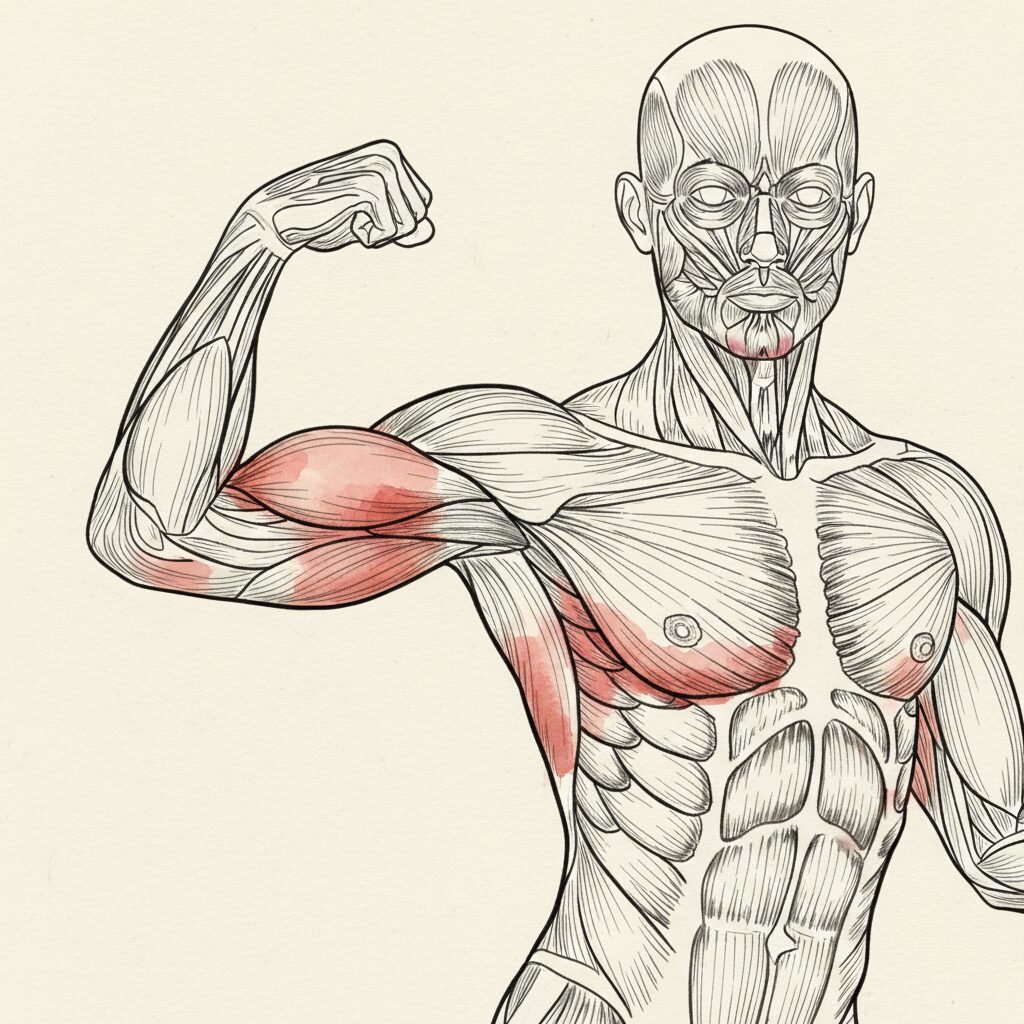
Cortisol disrupts sleep. It increases inflammation. It degrades tissue. It suppresses immune function. And, critically for anyone working with their posture, it disrupts the coherence of the fascial matrix. Chronic cortisol keeps the body in a state of structural defense.
You are not choosing to hold this tension. Your body is holding it because the grudge is still running. The chemistry of resentment is the chemistry of chronic bracing.
The nervous system cannot tell the difference
Your autonomic nervous system does not distinguish between a real threat and a remembered one. When you replay the betrayal, the dismissal, the surgery you did not want, the words that broke something in you, your body responds as if it is happening now.
Sympathetic activation. Posterior chain bracing. Shallow breathing. Jaw tension. The same pattern your body runs when it feels unsafe.
This is why you can do all the exercises, see all the practitioners, get all the adjustments, and the pattern comes back. Because the grudge is still running. The nervous system is still defending against a threat that ended years ago but has never been released.
The largest randomized controlled trial ever conducted on forgiveness found that a structured forgiveness practice reduced depression and anxiety across 4,598 participants in five countries [3]. Not therapy. Not medication. Forgiveness. The practice of releasing the charge around what was done to you.
A separate trial found that forgiveness training produced a measurable improvement in heart rate variability, the gold-standard measure of vagal tone and parasympathetic function [4]. Forgiveness did not just change how people felt. It changed how their autonomic nervous system regulated.
Ho, Worthington et al. (2024) conducted the largest forgiveness RCT to date (n=4,598, five countries), demonstrating that a self-directed REACH forgiveness workbook significantly reduced unforgiveness, depression, and anxiety. Skalski-Bednarz, Toussaint, and Surzykiewicz (2024) found that a self-forgiveness intervention improved heart rate variability and vagal tone, shifting autonomic regulation from sympathetic dominance toward parasympathetic recovery. Teixeira et al. (2025) showed forgiveness training reduced systolic blood pressure by 7mmHg and improved endothelial function in a controlled trial (n=100). Bashir, Saleem, and Arouj (2025) demonstrated that forgiveness therapy significantly reduced chronic widespread musculoskeletal pain in an RCT (n=60). The convergence across these trials shows forgiveness operating at the level of autonomic regulation, not merely subjective well-being.
It is not about them
This is the part that is hardest to accept.
Forgiveness is not about the person who hurt you. It is not saying what they did was acceptable. It is not reconciliation. It is not pretending it did not happen.
Forgiveness is the decision to stop carrying the physiological cost of what they did.
When you hold the grudge, you are the one paying. Your cortisol. Your muscle tension. Your sleep. Your nervous system. Your body. They moved on. You did not.
The research on conditional forgiveness makes this devastatingly clear. Toussaint, Owen, and Cheadle followed over 1,200 adults and found that people who required an apology before they could forgive, people who set conditions on their release, had higher rates of mortality over the follow-up period [5]. Conditional forgiveness, waiting for the other person to earn it, was associated with dying sooner.
The condition was killing them. Not the original harm. The waiting.
What forgiveness actually is
Forgiveness is a somatic event. Not a cognitive one.
You do not think your way to forgiveness. You release your way there.
The Hebrew word for forgiveness, salachah, means “to send away.” The Greek word, aphesis, means “letting go” or “liberty.” Both words describe a physical act. Something leaves the body.
In 2025, a randomized controlled trial gave forgiveness therapy to patients with chronic widespread musculoskeletal pain [6]. The forgiveness group showed significantly reduced pain scores compared to control. Not through manual therapy. Not through exercise. Through the practice of releasing the held charge around people who had harmed them.
Their pain decreased because their nervous system stopped defending against a threat that had already passed.
The four phrases
In Hawaii, there is a practice called Ho’oponopono. Four phrases. No prerequisites. No belief system required.
I’m sorry.
Please forgive me.
Thank you.
I love you.
It sounds too simple to matter. But read it through the body.
“I’m sorry” is acknowledgment. You stop pretending the wound is not there. You turn toward it instead of bracing against it. Awareness meets what was held without judgment.
“Please forgive me” is an invitation. Not a demand. Not an intellectual decision. An invitation for the part of you that sealed this room to consider that the danger has passed.
“Thank you” is ventral vagal activation. Gratitude shifts the autonomic state. Safety deepens. The nervous system receives evidence that the emergency is over.
“I love you” is reception. Not romantic love. Unconditional reception. The state where you stop defending and start receiving what was always available underneath the brace.
Preliminary research on Ho’oponopono as a forgiveness intervention has shown reductions in both unforgiveness and self-reported stress [7]. The broader forgiveness literature, with its evidence for reduced cortisol, improved HRV, lower blood pressure, and decreased chronic pain, provides the mechanistic framework for why these four phrases work. They are a structured practice for moving from sympathetic defense to parasympathetic reception.
Four phrases. Spoken inward, not outward. The body listens even when the mind resists.
The cycle breaks here
“Father, forgive them. They do not know what they do.”
The parent who made the wrong call did not know. The doctor who said the wrong thing did not know. The surgeon who left you worse did not know. They were doing the best they could with what they had. Some of them were negligent. Some of them were careless. Some of them were wrong.
And you are the one still carrying it.
The cycle of resentment does not punish them. It punishes you. Your body. Your nervous system. Your sleep. Your tension. Your pain.
Forgiveness is not letting them off the hook. It is taking yourself off the hook. It is the decision that what they did will no longer determine the state of your body.
It is not weakness. It is the hardest thing a nervous system can do. It is choosing to release the defense that has been running since the original harm. It is trusting that you can be safe without the bracing. It is doing something that resentment cannot do to you: it is letting go.
They did not know what they were doing.
Now you do.
—
Sam Miller is the founder of Posture Dojo and creator of the Syntropic Core method. He works with people whose bodies carry patterns that outlasted the events that created them. Learn about Syntropic Core Reset.
Sources
- Witvliet, C.V.O., Ludwig, T.E., & Vander Laan, K.L. (2001). Granting forgiveness or harboring grudges: implications for emotion, physiology, and health. Psychological Science, 12(2), 117-123. [T1]
Landmark study demonstrating that unforgiving thoughts elevate muscle tension, skin conductance, heart rate, and blood pressure. Critically, physiological markers persisted into recovery. The body did not return to baseline after grudge imagery ended. - Tabak, B.A. & McCullough, M.E. (2011); Tartaro, J., Luecken, L.J. & Gunn, H.E. (2005); Ysseldyk, R., Matheson, K. & Anisman, H. (2019). Multiple studies on forgiveness and cortisol reactivity. [T1]
Convergent finding across multiple teams: dispositional forgiveness predicts lower cortisol reactivity to stress. The stress response is proportional, not absent. It rises when needed and returns to baseline when the threat passes. - Ho, M.Y., Worthington, E.L., et al. (2024). Effectiveness of a self-directed REACH forgiveness workbook for reducing unforgiveness and improving mental health: a randomised controlled trial across five sites. BMJ Public Health, 2(1), e000072. [T1]
Largest forgiveness RCT to date (n=4,598, five countries). Self-directed REACH workbook significantly reduced unforgiveness, depression, and anxiety. - Skalski-Bednarz, S., Toussaint, L., & Surzykiewicz, J. (2024). Restore: The journey toward self-forgiveness and its effects on mental well-being and heart rate variability. Journal of Religion and Health, 63, 3397-3419. [T1]
Self-forgiveness intervention produced measurable improvements in heart rate variability and vagal tone. Forgiveness operates at the level of autonomic regulation, not merely subjective well-being. - Toussaint, L.L., Owen, A.D., & Cheadle, A. (2012). Forgive to live: forgiveness, health, and longevity. Journal of Behavioral Medicine, 35(4), 375-386. [T1]
Conditional forgiveness (requiring apology before releasing) predicted all-cause mortality in older adults. The condition was the risk factor, not the original offense. - Bashir, S., Saleem, S., & Arouj, K. (2025). Religiously integrated forgiveness therapy for chronic musculoskeletal pain and depression in Pakistani women. Journal of Religion and Health, 64, 437-455. [T1]
Forgiveness therapy significantly reduced chronic widespread musculoskeletal pain in RCT (n=60). Pain decreased because the nervous system stopped defending against a passed threat. - James, M.S. (2008). Ho’oponopono: Assessing the effects of a traditional Hawaiian forgiveness technique on unforgiveness. Walden University dissertation. [T2]
Participants practicing Ho’oponopono showed statistically significant reductions in unforgiveness compared to controls. Small sample (n=79), but directionally consistent with the broader forgiveness literature. - Teixeira, R.J., et al. (2025). Forgiveness training reduces blood pressure and improves endothelial function. Psychosomatic Medicine. [T1]
Forgiveness training reduced systolic blood pressure by 7mmHg and improved endothelial function (RCT, n=100). - Friedberg, J.P., Suchday, S., & Shelov, D.V. (2007). The impact of forgiveness on cardiovascular reactivity and recovery. International Journal of Psychophysiology, 65(2), 87-94. [T1]
Higher forgiveness correlates with faster cardiovascular recovery after stress exposure. - Lawler-Row, K.A., et al. (2005). The unique effects of forgiveness on health: an exploration of pathways. Journal of Behavioral Medicine, 28(2), 157-167. [T1]
Trait forgiveness associated with fewer physical symptoms, less fatigue, and better sleep quality, mediated through reduced negative affect and stress.
Related research
- Forward Head Posture, Dizziness, and Brain Fog: The Vestibular Connection
- The Vagus Nerve and Posture: How Your Body Reads Safety Through Shape
- Can Posture Cause Anxiety? The Nervous System Connection Nobody Talks About
- Two Papers Just Landed: The Neural Generation Hypothesis and the Generative Posture Framework
Comments
2 responses to “Forgiveness Is Not Weakness. It Is the Only Way Out.”
[…] Forgiveness Is Not Weakness. It Is the Only Way Out. […]
[…] Forgiveness Is Not Weakness. It Is the Only Way Out. […]