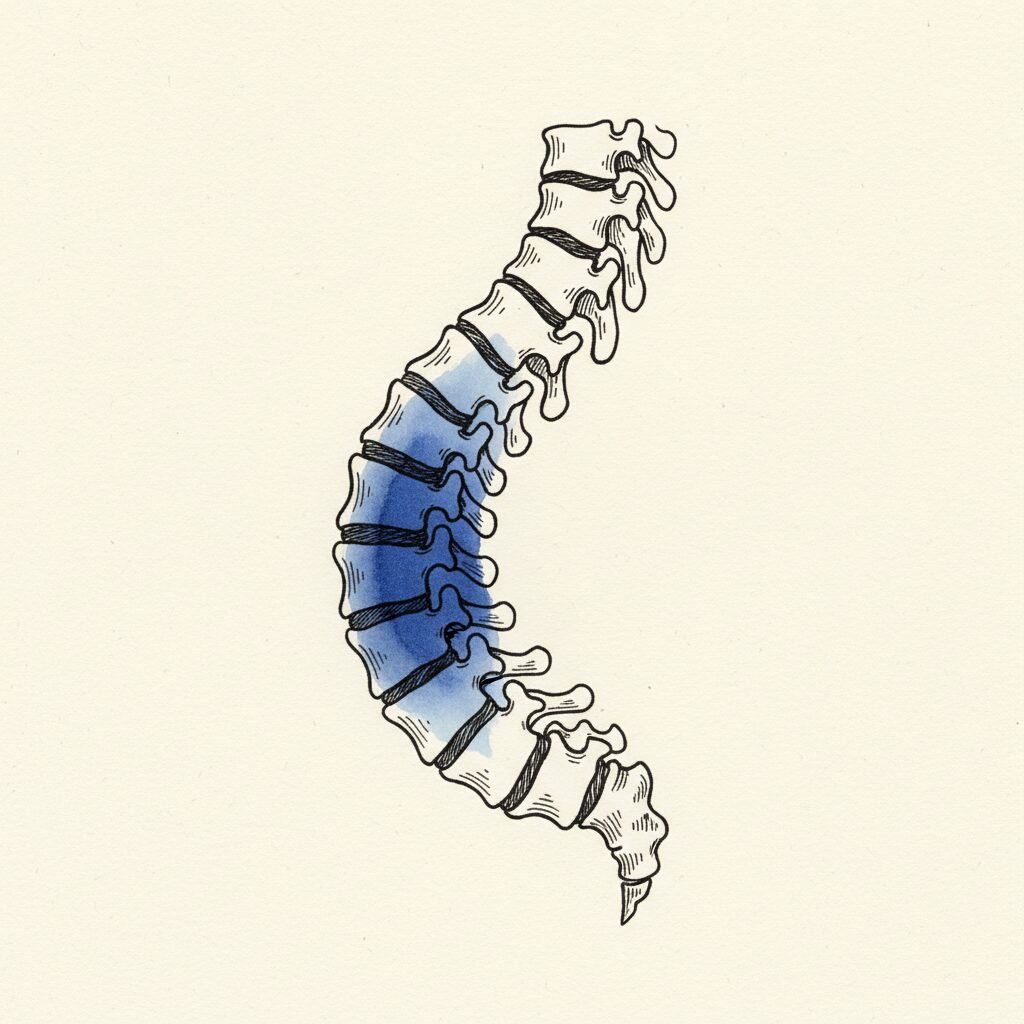
Your body does not change on one clock. It changes on four. And they are nested inside each other like Russian dolls. If you are working on the wrong clock, nothing happens. Not because you are doing the wrong exercise. Because you are talking to the wrong tissue.
The four clocks: Neural. Pressure. Fascial. Bone. Minutes to years. And they are not sequential. They are hierarchical. The fastest one governs what all the slower ones receive.
Clock 1: Neural (minutes to days)
Your nervous system reorganizes fast. Within a single session, motor recruitment patterns shift. Muscle activation sequences change. The body schema updates its prediction and generates a different output. This is not strengthening. It is reprogramming.
Tsao and Hodges (2008) demonstrated that motor control training produces measurable changes in muscle recruitment within sessions, and those changes persist when the motor strategy itself updates [3]. The variable is not repetition. It is whether the nervous system received genuinely novel information.
This is the clock most people skip entirely.
Clock 2: Pressure (days to weeks)
Once the neural prediction changes, loading patterns change. Fluid dynamics shift. Soft tissue that was compressed begins to hydrate. Tissue that was stretched begins to shorten. Intervertebral discs respond to new pressure gradients. This is mechanical, but it depends entirely on the neural clock firing first.
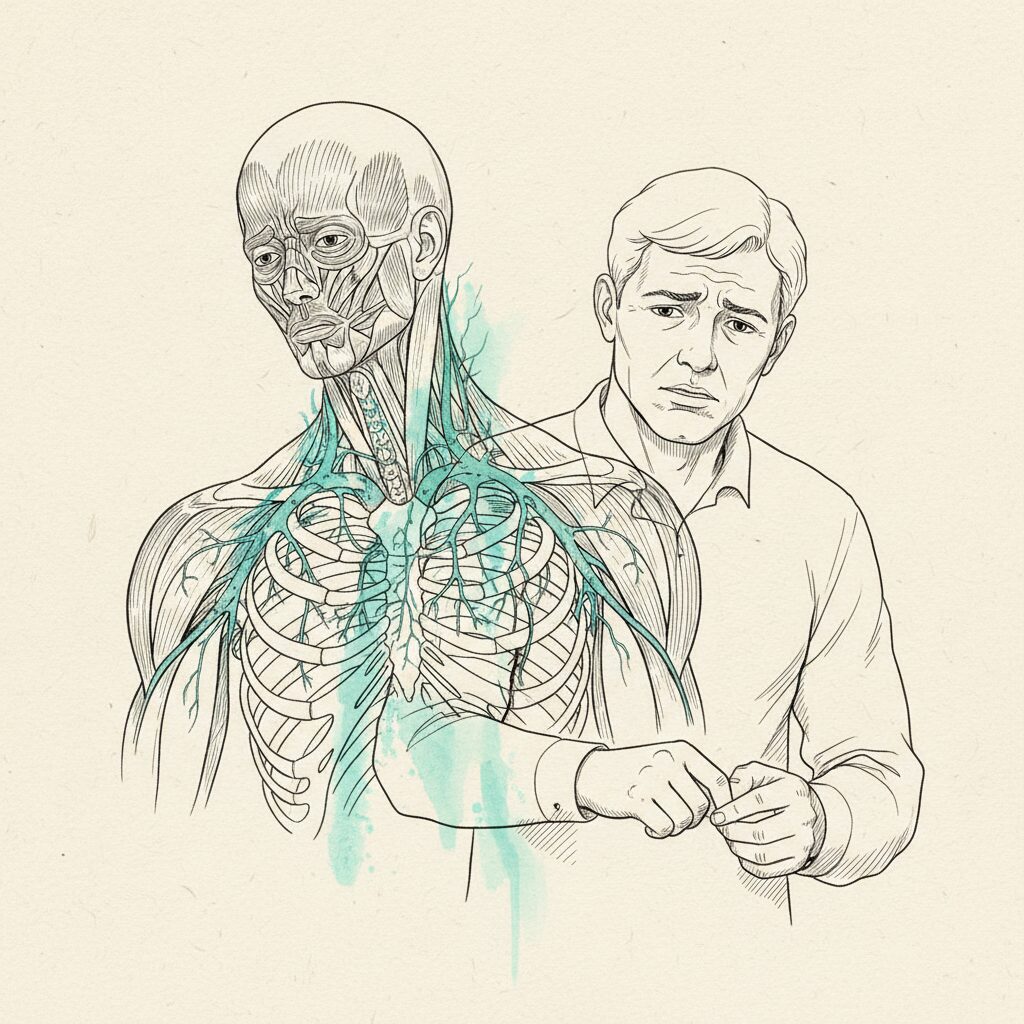
Langevin and Sherman (2006) showed that connective tissue is not passive packing material. It is a mechanosensitive signaling network that responds to changes in loading, stretch, and nervous system input. Fibroblasts within fascia alter their behavior based on the mechanical environment they receive. Change the loading pattern, and the tissue begins to remodel. But the loading pattern is determined by the neural prediction. If the prediction does not change first, the tissue receives the same mechanical signal it has always received. No remodeling occurs. The pressure clock cannot start until the neural clock has already shifted the prediction that determines what loads the tissue receives.
Clock 3: Fascial (weeks to months)
Collagen remodels slowly. The fascial matrix that has adapted to your old posture does not dissolve overnight. It takes weeks of consistent new loading for fibroblasts to lay down collagen along new force vectors. This is where most physical therapy programs aim. And this is why they fail.
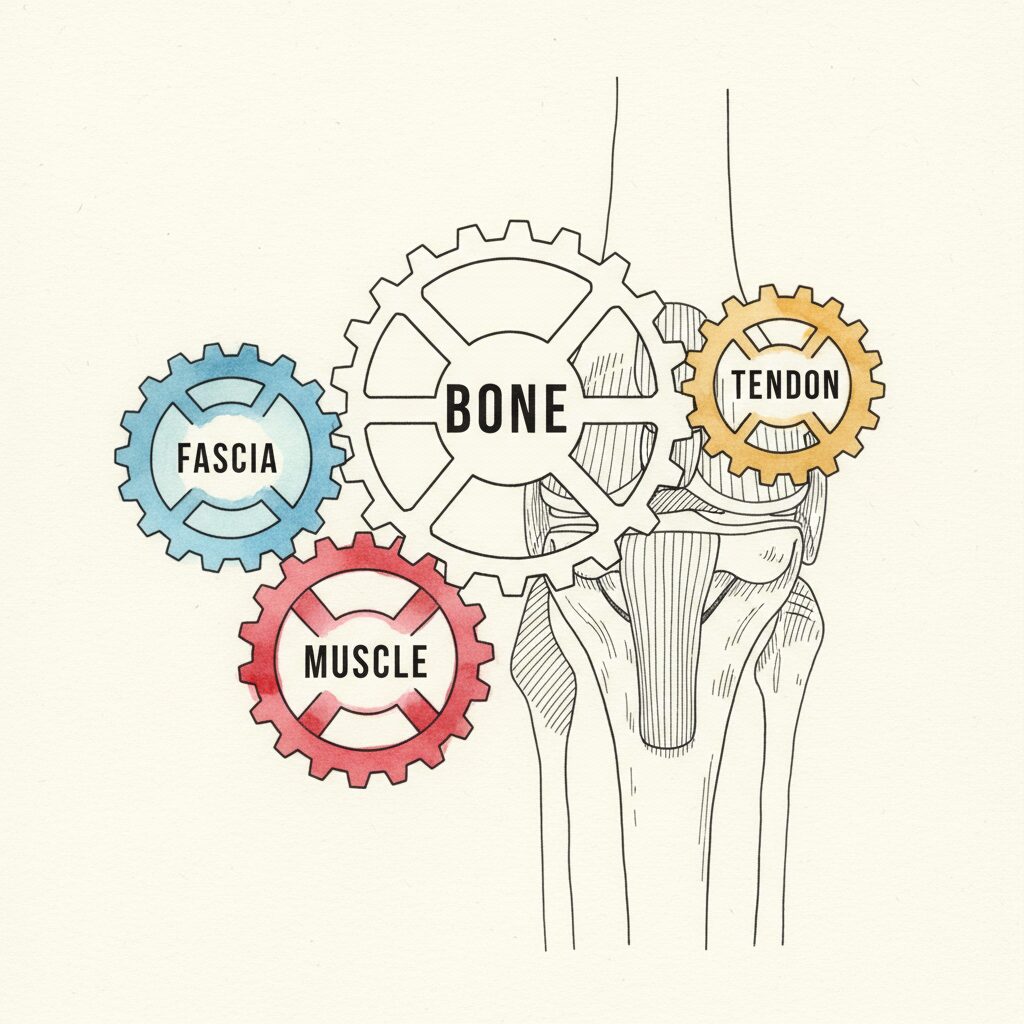
They are trying to remodel collagen without first changing the neural prediction that determines what forces the collagen receives. Six weeks of stretching delivers the same mechanical signal the tissue already knows. No prediction error. No remodeling signal. The fascial clock never starts.
Clock 4: Bone (months to years)
Wolff’s Law: bone remodels along lines of mechanical stress [1]. Change the stress, change the bone. This is real. It is also the slowest clock. And it depends on all three faster clocks firing first.
Bone does not respond to exercises. Bone responds to sustained changes in loading that persist long enough for osteoblasts and osteoclasts to do their work. That sustained change requires a fascial matrix that has already remodeled. Which requires pressure gradients that have already shifted. Which requires a neural prediction that has already updated.
Skip the neural clock, and you are asking bone to respond to a loading pattern that has not changed.
Ingber (2003) described biological structure as a tensegrity hierarchy: nested systems where mechanical forces propagate across scales, from molecular to cellular to tissue to organ [4]. In a tensegrity system, you cannot change the macro-structure by targeting the macro-structure directly. Force propagates from the inside out. The cell’s cytoskeleton determines tissue behavior. Tissue behavior determines organ-level structure. Change at the highest level of the hierarchy, the neural prediction that determines loading, propagates downward through all slower clocks. Targeting the bone clock directly without changing the neural clock is like repainting a house while the foundation is shifting.
Why you are stuck
You have been working on the fascial clock for months. Stretching. Foam rolling. Mobility work. And nothing has changed. Because the neural prediction that determines what forces your fascia receives has not updated. You are delivering the same mechanical signal through a different exercise. The tissue cannot tell the difference.
Or you have been told to “just give it time.” That bone remodels slowly. That you need years of consistent work. But time without a changed prediction is just time. The bone clock cannot start until the neural clock has fired. And the neural clock fires in minutes, when the conditions are right.
The problem was never patience. The problem was sequence.
—
Related: Kyphosis: The Complete Guide | Why Kyphosis Comes Back After PT | Pressure Bypasses Tension
—
Syntropic Core Reset works the neural clock first and continuously. Every session begins with autonomic regulation and sensory recalibration. The updated prediction then dictates new loading patterns that slower clocks receive. You do not wait months for change. You change the prediction in minutes, then let the slower clocks follow. See how it works.
Sources
- Wolff, J. (1986/1892). The Law of Bone Remodelling. Springer-Verlag. [T1]
Bone adapts to sustained mechanical stress. The slowest clock, dependent on all faster clocks changing first. - Langevin, H.M., & Sherman, K.J. (2006). Pathophysiological model for chronic low back pain integrating connective tissue and nervous system mechanisms. Medical Hypotheses, 68(1), 74-80. PMID: 16919887 [T1]
Connective tissue is a mechanosensitive signaling network that remodels based on the loading it receives from the nervous system. - Tsao, H., & Hodges, P.W. (2008). Persistence of improvements in postural strategies following motor control training in people with recurrent low back pain. Journal of Electromyography and Kinesiology, 18(4), 559-567. PMID: 17336546 [T1]
Motor control changes persist when the strategy updates, not just the output. Neural clock evidence. - Ingber, D.E. (2003). Tensegrity I. Cell structure and hierarchical systems biology. Journal of Cell Science, 116(7), 1157-1173. PMID: 12615960 [T1]
Biological structure is a tensegrity hierarchy. Change propagates from inside out, not outside in.
Related research
- Best Exercises for Kyphosis: What Actually Changes the Curve
- Cervical Kyphosis, Military Neck, and the Flat Neck Epidemic
- Your Kyphosis Is Not a Mistake Your Body Made
- Kyphosis and Ankylosing Spondylitis: What Surgery Can and Can’t Change
Comments
3 responses to “The 4 Timelines of Kyphosis Change (And Why You’re Stuck on the Wrong One)”
[…] The 4 Timelines of Kyphosis Change (And Why You’re Stuck on the Wrong One) […]
[…] four timelines of change […]
[…] The 4 Timelines of Kyphosis Change (And Why You’re Stuck on the Wrong One) […]