The question almost nobody asks first
Most people walk into bodywork with the same question. What should I do. What is the practice, the protocol, the morning routine, the cue, the breath pattern.
The question that comes before that is the one almost no one asks.
What needs to be true, before any of that will land.
I have watched this play out for ten years inside my own work and inside the cohort. The same practice, the same cue, the same breathwork, delivered to two different people. One of them changes. One of them does not. The one who does not tries harder. Books another retreat. Buys another course. Concludes the problem is them.
The problem is rarely them. The problem is that nobody told them what the soil has to look like before the seed can grow.
Three conditions. All three matter. When any one is missing, the work does not land.
Condition one: safety
The first thing your nervous system asks, below the level of thought, is whether it is safe to be in your body right now.
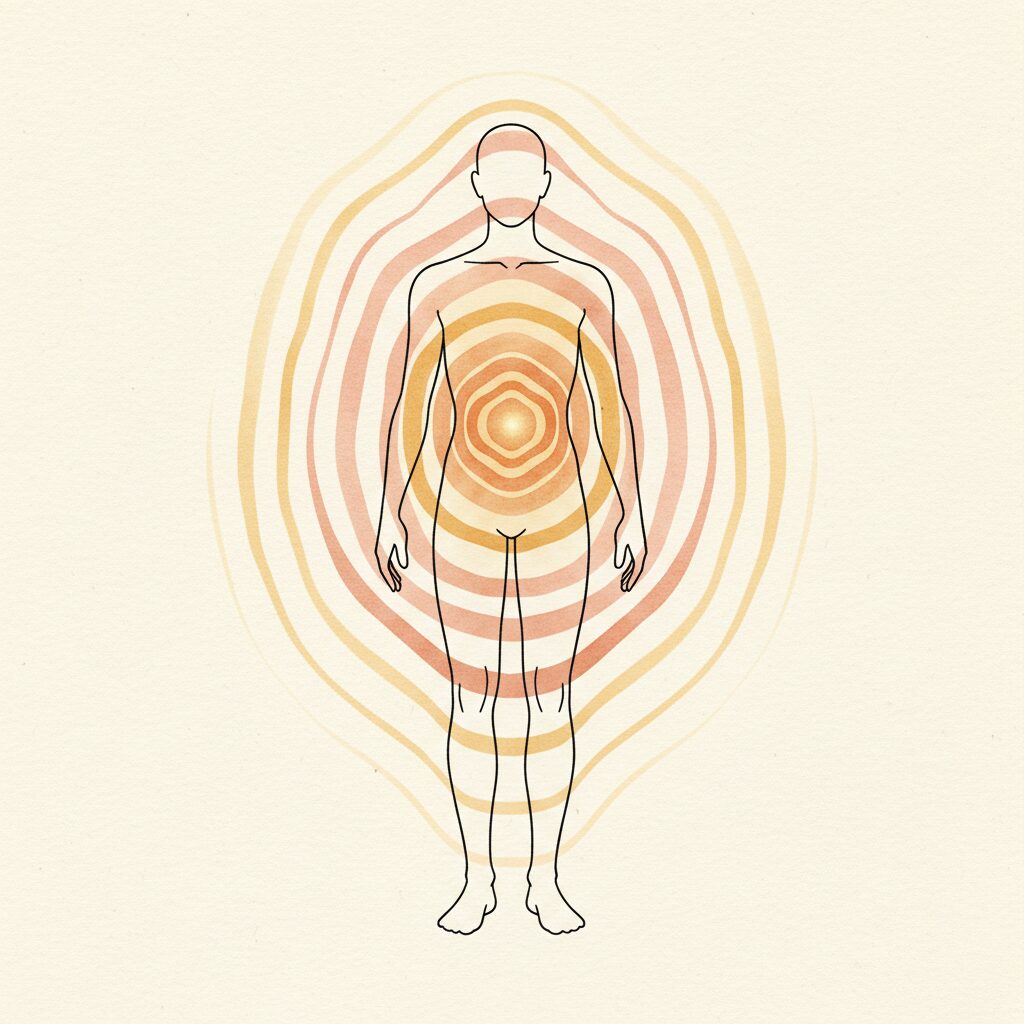
If the answer is no, the body will not update.
Not because you are weak. Because the system is doing exactly what it was designed to do. Under threat, the body locks the doors. Heart rate up. Breath shallow. Muscles braced. Attention narrow. The architecture that lets new information come in and old patterns reorganize is the same architecture that gets switched off first when the system reads danger.
You cannot think your way past this. Neuroception, the nervous system’s safety assessment, runs faster than thought and outside conscious access [1]. Telling yourself you are safe does almost nothing. Giving your body signals of safety does almost everything. Pressure. Warmth. Slow exhale. Soft eyes. Sound vibration. Co-regulation in the presence of another regulated nervous system [5].
The signals work. The thinking does not.
What this looks like when it is missing. You do the breathwork and feel more activated, not less. You try to meditate and your chest tightens. You go to the yoga class and leave more wound up than when you came in. That is not failure. That is a nervous system telling you the safety floor has not been built yet.
Condition two: interoception
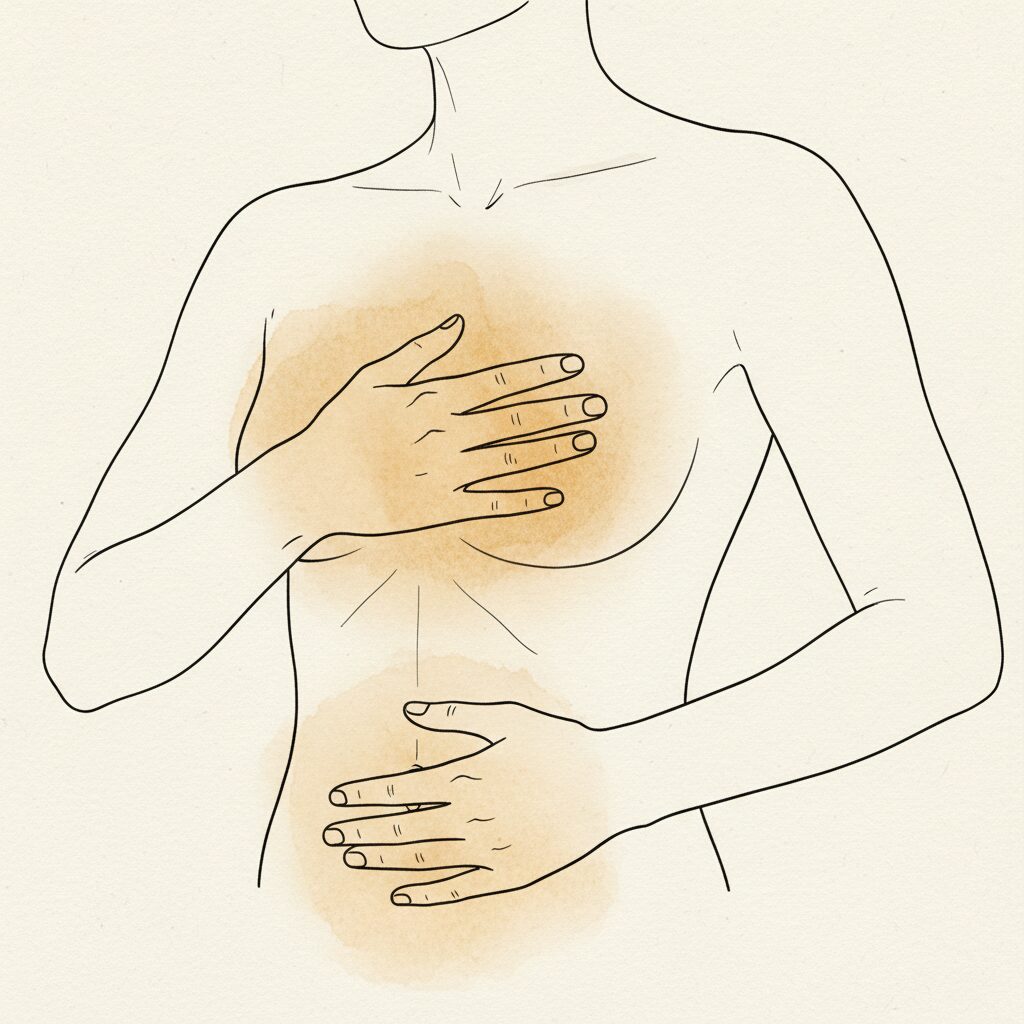
The second thing that has to be true is that you can feel what is happening in your body.

Not in a vague way. In a specific way. Warmth here. Pressure there. Tingling, holding, softening, holding again. The brain updates its internal map of the body from the sensory signal it receives [2]. When the signal is loud and clear, the map updates. When the signal is quiet, scrambled, or absent, the map stays where it is. Practice runs and runs and lands on nothing, because there is no surface for it to land on. Your own movement cancels its own sensation. That is why simply telling the body to do the thing does not update the map.
This is the layer most modern wellness skips. Sit in stillness. Breathe. Feel into your body. For some people that instruction works. For roughly a third of people who walk through the door, that instruction returns nothing, because their nervous system has gone quiet. The signal is muted. The interoceptive channel is partially offline. You cannot feel into a body that is not sending.
The fix is not to try harder. The fix is to generate signal before searching for it. Pressure on the foot. Low humming in the chest. A warm object on the belly held long enough that the system can finally register it. Conscious shaking. Sound that vibrates inside the ribcage.
A 2026 fMRI study from UCSF (Strigo and colleagues) found that an interoceptive attention training program helped some chronic pain patients and did nothing for others [3]. The difference was not motivation. It was which part of the insula their brain was using to read body signal. Same practice. Different prerequisite met. Different outcome.
The interoceptive channel has to be open, or the rest of the work cannot reach.
Condition three: body-budget
The third condition is the one no one wants to hear.
Your nervous system runs on a metabolic budget [4]. Sleep, food, hydration, movement, rest, connection, meaning. Every body change requires energy to lay down. New schema, new motor pattern, new pressure organization, new fascial tone. None of it is free. The body bills the budget for everything.
When the budget is depleted, the system stops investing in long-horizon updates and starts triaging. Survive today. Worry about the curve, the breath pattern, the tone, the schema, later. There is no later when the budget is empty. The body keeps the lights on and lets the renovation wait.
The budget has three layers. The tangible one. Sleep, food, water, rest. The relational one. Co-regulation, touch, the people who fill you and the people who deplete you. And the meaning one. The reason you get out of bed. The thing larger than the day that pulls you forward.
All three layers matter equally. The meaning layer is the one most often missed, and the one whose absence shows up as a body that produces but never recovers. The budget that never refills.
Posture is downstream of all of it.
The order is the law
Safety, then sensory, then everything else. That sequence is not a preference. It is how the system is wired.
If the safety floor is not there, the sensory channel cannot open. If the sensory channel is not open, the tone cannot reorganize. If the tone stays unresolved, the pressure cannot find its container. Without pressure, no motor pattern actually changes.
Most wellness culture starts at motor. Stand up tall. Pull your shoulders back. Tuck your pelvis. Strengthen your glutes. The cues are not wrong. They land on nothing because four upstream conditions have not been met. The system runs the cue, the brace shows up where the structure was supposed to, and within a week the body returns to whatever shape it was generating before.
The work is the prerequisites. The practice that everyone is selling is downstream of a practice that almost nobody is teaching.
You cannot plant seeds in concrete. You cannot out-discipline soil that is not ready.
Why this matters for the thirty percent
Across multiple research programs, across multiple intervention types, the same number keeps appearing. Roughly thirty to forty percent of people in any well-designed somatic, interoceptive, or pain-reprocessing program do not respond [3].
The polite version of this story is that the practice was not right for them. The honest version is that the prerequisites were not met, and the practice was delivered to a system that could not yet receive it. Three decades of contemplative research, four contemplative lineages that survived for two and a half thousand years, and a fresh wave of neuroimaging are all telling us the same thing. The practice has to be matched to what the nervous system can currently hold. When the prerequisites are met, the work lands. When they are not, the work does not, no matter how hard you push.
This is the layer that gets called the practice before the practice. It is not a warm-up. It is the work that the rest of the work depends on.
Where to start
The order matters. Build the safety floor first. Open the interoceptive channel second. Tend the budget continuously.
The take-home from this is not another protocol stacked on top of the protocols you are already failing at. The take-home is a question. Of the three conditions, which one is most absent in your life right now. That is the one the body is waiting on.
If safety is the gap, slow the exhale, find warmth, and stop trying to push through. The system needs to finish a cycle, not start a new one.
If interoception is the gap, generate signal before you go looking for it. The body is trying to tell you something. The job is to learn to read it.
If budget is the gap, address sleep, address meaning, and stop strip-mining the system to make the practice happen. The body is not broken. It is under-resourced.
The body changes when the conditions converge. Show up. Give the inputs. The state will arrive when the state can arrive.
You are not the problem. You have been working downstream of conditions that nobody told you to set first.
That is what the practice before the practice is for.
Sources
- Porges SW. The Pocket Guide to the Polyvagal Theory: The Transformative Power of Feeling Safe. W. W. Norton & Company. 2017.
- Khalsa SS, Adolphs R, Cameron OG, et al. Interoception and Mental Health: A Roadmap. Biol Psychiatry Cogn Neurosci Neuroimaging. 2018;3(6):501-513. PMID 29884281.
- Strigo IA, et al. Two neural phenotypes predict response to interoceptive attention training in chronic pain. UCSF Osher Center. 2026. PMID 41690396.
- Barrett LF. Seven and a Half Lessons About the Brain. Houghton Mifflin Harcourt. 2020.
- Ogden P, Minton K, Pain C. Trauma and the Body: A Sensorimotor Approach to Psychotherapy. W. W. Norton. 2006.