
The ones who do not respond
Across credible somatic, interoceptive, and pain-reprocessing programs, the same pattern keeps appearing. Some participants in a well-designed program do not respond. Same protocol. Same delivery. Same instructor. One body changes. Another does not.
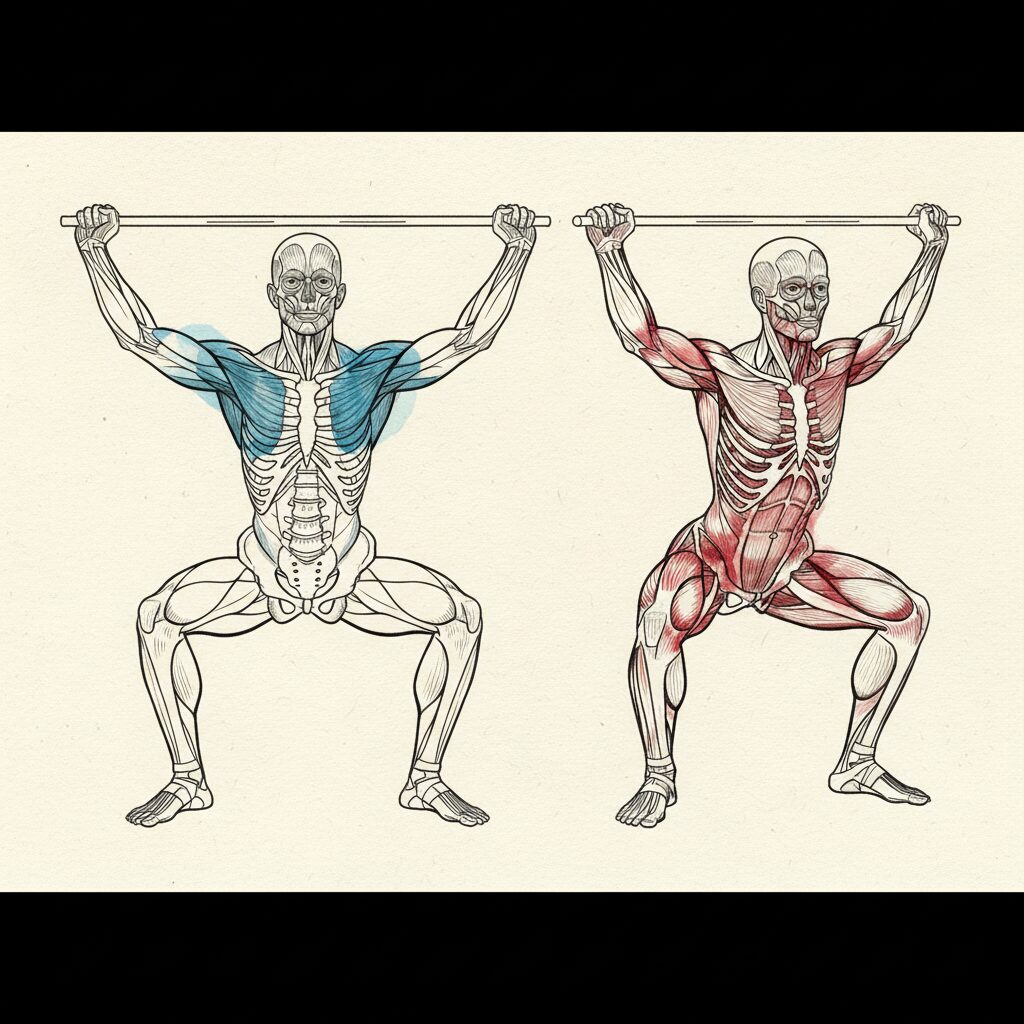
The polite explanation is that the practice was not the right fit. The honest explanation is that the practice was delivered to a nervous system that could not afford to use it.
What separates the bodies that respond from the bodies that do not is rarely motivation, intelligence, or willingness. It is metabolic state. Specifically, it is what Lisa Feldman Barrett calls the body budget, the brain’s running tally of the resources available to invest in repair, reorganization, and update [1].
When the budget is full, the body invests in long-horizon changes. New schema. New motor pattern. New pressure organization. New fascial tone. When the budget is depleted, the body triages. It keeps the lights on and lets the renovation wait.
This article explains what body budget is, why it determines treatment outcomes more than method, and how to read your own budget before you commit to another program.
The 150-word answer
Body budget is the brain’s running prediction of how much metabolic resource is available to invest in long-horizon body changes. When the budget is full, the nervous system writes new schema, lays down new tone, and reorganizes posture under corrective practice. When the budget is depleted, the same practice cannot land because the body is triaging survival over update. Three layers feed the budget: the tangible (sleep, food, hydration, rest), the relational (co-regulation, touch, the people who fill versus deplete you), and the meaning layer (purpose, agency, reason to invest forward). Barrett, Kleckner, and the broader allostatic-load literature show that chronic budget depletion blunts interoceptive precision, raises baseline sympathetic tone, and shuts down the cortical channels that schema update depends on. A 2026 UCSF study found that people with chronic low back pain split into two brain-response subgroups, and one subgroup responded better to interoceptive training. My read is that the starting state of the nervous system matters, not just the method. The lever is not more effort. The lever is restoring the budget before asking the body to change.

What body budget actually is
The body budget concept comes out of Lisa Feldman Barrett’s work integrating predictive coding with allostatic regulation [1]. The argument runs as follows.

Your brain is not a reactive organ. It is a predictive organ. It is constantly running forward models of what the body is about to need, then allocating glucose, oxygen, water, sodium, and immune resources to meet the predicted demand. This prediction is the body budget. When the prediction matches reality, the budget stays balanced. When the prediction is wrong, the budget pays the difference.
Chronic prediction errors deplete the budget. So do real stressors that exceed available resource. Poor sleep. Under-eating. Over-training. Sustained interpersonal stress. Caregiving load. Financial pressure. Active illness. Chronic pain. Unresolved trauma. Each one taxes the budget. None of them are free.
When the budget runs chronically negative, the system goes into long-term triage. The technical term is allostatic load [5]. The body suppresses repair, suppresses immune surveillance, suppresses the cortical channels that handle long-horizon update, and runs the basics. Heart. Lungs. Digestion. Threat scanning.
Body schema update, the kind of nervous system rewriting that corrective postural therapy depends on, sits in the long-horizon channels. The channels that get shut down first under allostatic load.
This is why two patients can run the identical program and only one responds. The responding body has the budget to invest. The non-responding body does not.
The three layers of body budget
The budget is not one number. It runs across three layers that are often missed when only the tangible layer gets discussed.
The tangible layer is what most clinics ask about. Sleep, food, water, movement, rest. This layer is the easiest to measure and the easiest to intervene on. Most practitioners screen here and stop here.
The relational layer is what almost no clinic asks about. Co-regulation with another safe nervous system is one of the largest contributors to budget recovery. Touch, presence, attuned conversation, and time around people who fill rather than deplete the system measurably restore allostatic capacity [4]. Conversely, time in dysregulated or hostile relationships drains the budget continuously, even when the tangible layer looks fine on paper.
The meaning layer is the one most often missed by clinical scoring instruments. The reason you get out of bed. The relationship between what your day demands and what your life points toward. Patients with strong meaning, even under significant load, often hold budget well. Patients with depleted meaning, even with optimal sleep and nutrition, often run negative.
A practitioner who screens the tangible layer and ignores the other two is reading a fraction of the relevant signal.
The Strigo finding
In 2026, a research group at UCSF led by Strigo published a finding that changed how I think about treatment non-response [3].
They scanned 43 people with chronic low back pain while they waited for pain, and 29 of them then did an eight-week interoceptive attention training on their phone. The group split into two brain patterns. One leaned on the dorsal anterior insula, a more thinking, evaluating way of handling what was coming. The other leaned on the ventral anterior insula, a more reactive, emotional way. The evaluating group responded better to the training.
The study was not about motivation. What differed was how each nervous system was already set up before the practice arrived. The study did not measure body budget. My read is that budget is one of the things that shapes that starting state.
To me, this is some of the clearest evidence that non-response is not only a method problem. It is also a prerequisite problem. The practice cannot do its work if the channel it depends on is offline.
How to tell if your budget is depleted
A few signs that you may be running negative and pushing into postural or somatic work that will not land until the budget is restored.
You sleep eight hours and wake up unrefreshed. The system is not consolidating. Repair is not happening at depth.
You finish your day with a kind of tiredness that food and rest do not touch. You are not under-fueled. You are under-budgeted.
You go to your physical therapist, do your prescribed exercises, and feel either nothing change or feel slightly worse afterward. The dose is not too high in absolute terms. It is too high for the budget you currently have.
You start practices with intention and abandon them within weeks. The system is not refusing to commit. It is signaling that it cannot afford to commit.
Your interoception has gone quiet. You used to feel hunger, fullness, fatigue, emotion, sensation. You feel less of all of it now. This is one of the cleanest signals that the budget has dropped below the threshold for the interoceptive channel to fire reliably.
You catch every cold. You take longer to recover from minor injuries. Your hair, skin, and nails are slower to update.
None of these are character problems. All of them are budget problems. They are reversible. They are also non-negotiable. No practice will overpower them. The CSCN directory doesn’t track intake screening practices, so ask a prospective practitioner directly whether they screen for these signals.
What raises budget versus what depletes it
Raising the budget is rarely about doing more. It is about extracting the depleters first, then adding what the system can actually metabolize.
Depleters that often go unaddressed. Insufficient sleep duration or quality. Under-eating, especially under-protein. Chronic dehydration. Caffeine substituted for rest. Alcohol substituted for co-regulation. Time in dysregulating relationships. Work without recovery. Exercise dose calibrated to a body that is no longer the current body. Doomscrolling. Information environments that keep threat assessment running continuously.
Investments that the system can metabolize. Sleep prioritized over almost everything else. Adequate protein, sodium, and water across the day. Time in regulated company (the relational layer matters even more than the tangible one for many patients). Movement that the system can recover from, not movement that wins social-media currency. Time outside, ideally with feet on the ground. Practices that lower sympathetic tone (slow exhale, conscious shaking, humming, warmth, weight). Meaningful work, even fifteen minutes of it, oriented toward something the system values.
These are not surprising. They are surprising in their priority. Most cases that are working hard on the structural layer are skipping the budget layer entirely, then wondering why the structural work plateaus.
Sequence the budget before the brace
For a scoliosis case, a chronic kyphosis, a stalled forward head, or a chronic pain pattern that has not responded to physical therapy, the order of operations matters more than the method.
Restore the budget first. Address sleep, address relational load, address meaning. Eight to twelve weeks of focused budget work changes the substrate that everything downstream depends on.
Open the interoceptive channel second. Once the budget allows for it, the channel that reads body signal comes back online. Practices that generate signal (warmth, pressure, sound, weight) work in this window.
Layer in the corrective structural work third. Now the same Schroth, BSPTS-Rigo, SEAS, or DNS protocol you may have tried before will land differently. The schema is available for update. The channel is open. The system can afford to invest.
This is not a fringe sequence. It is what the predictive postural literature, the allostatic-load literature, and the polyvagal literature all converge on. It is also what gets skipped in most clinical practice because the budget layer is harder to bill for than an exercise prescription.
Most plateaued cases are not plateaued at the structure. They are plateaued at the budget.
Find a budget-aware practitioner
The CSCN practitioner directory lists each practitioner’s methods and specializations, but ask them directly which upstream layers they actually screen and address. Filter by Body Budget to surface clinicians who read nervous system state, screen for allostatic load, and sequence the corrective work to fit the budget the patient currently has.
Browse the practitioner directory and ask a candidate practitioner directly whether they work with body-budget/nervous-system-state factors. If you have run a scoliosis, kyphosis, or chronic pain program that did not produce the change you expected, this is often the layer the previous team did not address. Pair body-budget care with a PSSE-certified practitioner or a behavioral optometrist for the strongest results.
FAQ
What is body budget in simple terms?
Body budget is your brain’s running estimate of how much energy and resource the body has available to invest in repair, growth, and adaptation. When the budget is full, the body invests. When the budget is depleted, the body triages survival and skips the repair. Posture, schema, and structural therapy all sit in the repair bucket [1].
Why do some people respond to scoliosis treatment and others do not?
Method, dose, and motivation explain some variation. In my view, body-budget state at the time of treatment explains a lot of the rest. Patients with adequate sleep, nutrition, relational support, and meaning often respond. Patients running on chronic depletion often do not, even with strong programs.
Can I do postural therapy if I am exhausted?
You can. Whether it will produce the change you want is the question. Therapy delivered to a depleted system tends to maintain function rather than produce change. Restoring the budget first, even partially, tends to make subsequent therapy work better. Speak with a practitioner who reads state before prescribing dose.
How long does it take to restore body budget?
Tangible-layer restoration (sleep, food, hydration) can produce noticeable change within two to four weeks. Relational and meaning-layer restoration often takes longer because both involve changes to environment and life structure. Eight to twelve weeks of focused work tends to produce the substrate change that downstream therapy depends on.
Is body budget the same as adrenal fatigue?
No. Adrenal fatigue is not a recognized clinical diagnosis. Body budget is a research-grounded concept rooted in allostatic-load and predictive-coding literature [1]. The symptoms overlap (chronic fatigue, poor recovery, blunted interoception) but the mechanism is described differently and the interventions are different.
Sources
- Barrett LF. Seven and a Half Lessons About the Brain. Houghton Mifflin Harcourt. 2020.
- Kleckner IR, Zhang J, Touroutoglou A, et al. Evidence for a large-scale brain system supporting allostasis and interoception in humans. Nat Hum Behav. 2017;1:0069. PMID 28983518.
- Strigo IA, Torrisi S, Guerra SG, Alter BJ, Lotz JC, Mehling WE, Simmons AN. Brain mechanisms of pain anticipation in chronic low back pain: Insights into phenotypical responses to mind-body therapy. J Pain. 2026;41:106212. doi:10.1016/j.jpain.2026.106212. PMID 41690396.
- Porges SW. The Pocket Guide to the Polyvagal Theory: The Transformative Power of Feeling Safe. W. W. Norton & Company. 2017.
- McEwen BS. Physiology and neurobiology of stress and adaptation: central role of the brain. Physiol Rev. 2007;87(3):873-904. PMID 17615391.
Comments
One response to “Body Budget: Why Your Nervous System State Determines Treatment Outcomes”
[…] Body Budget: Why Your Nervous System State Determines Treatment Outcomes […]