You are not a victim of your pain
You have been fighting it. Or avoiding it. Or managing it. Or pushing through it.
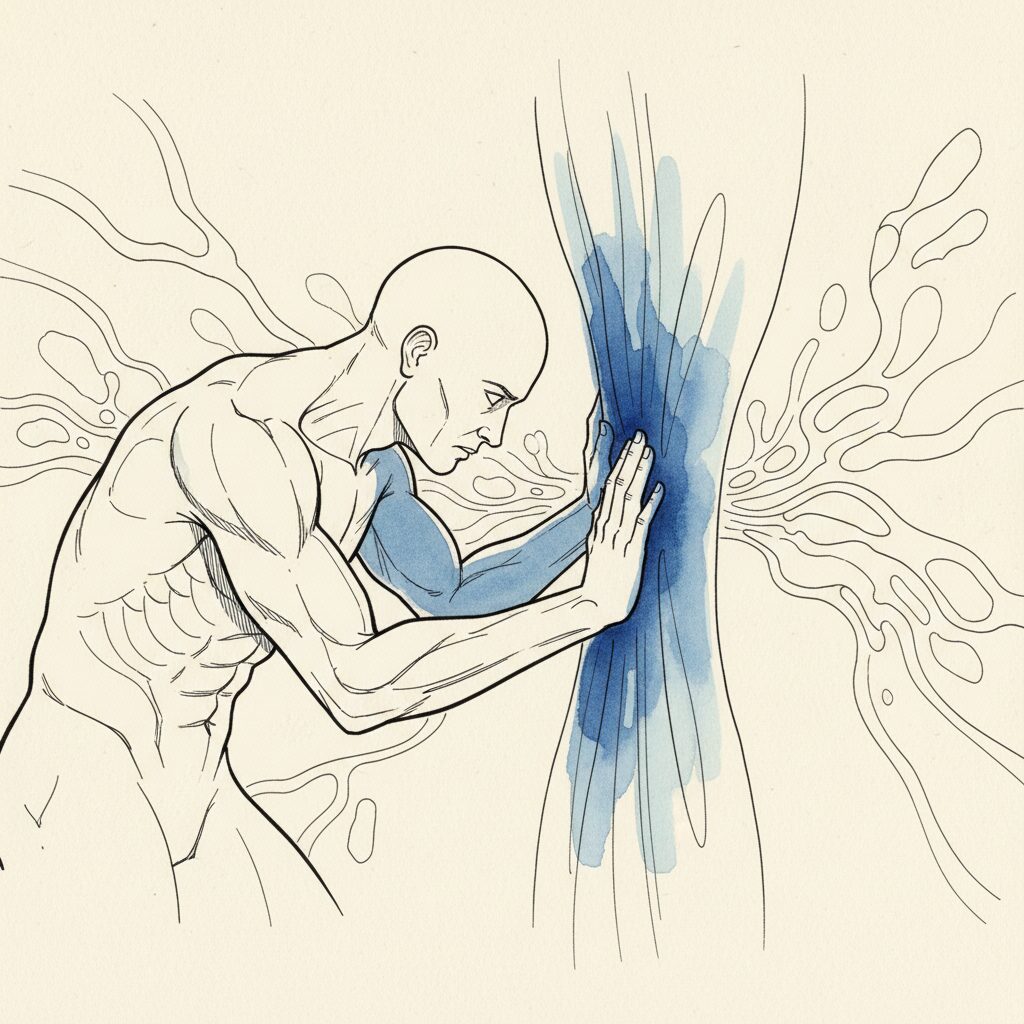
Every approach you have tried assumes the same thing: pain is the enemy and your job is to defeat it, endure it, or escape it.
What if it is none of those things?
What if pain is a diagnostic report your nervous system hands you every time it cannot organize under load? Not a punishment. Not a malfunction. A message. And the reason nothing has worked is that you have been trying to silence the messenger instead of reading the message.
PAIN. Pay Attention, Integrate Now.
That is not a platitude. It is a protocol.
The two default responses and why both fail
When pain shows up, almost everyone does one of two things.
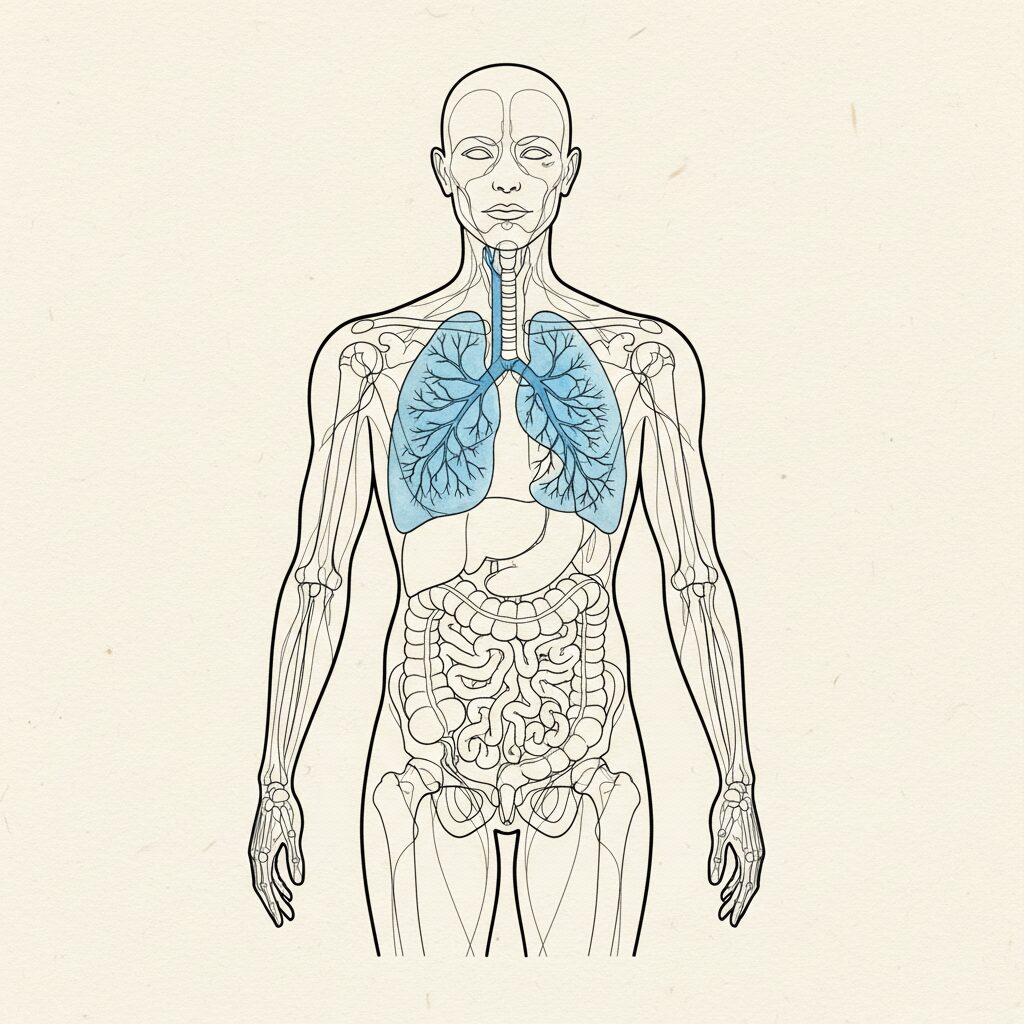
The first is to push through it. Grit your teeth. Finish the set. Keep running. Work through it. This is the override strategy. You treat pain as weakness, as something to be conquered by willpower. The problem is that every time you override a pain signal, you teach your nervous system that its reports are being ignored [1]. So it turns up the volume. The signal gets louder. The area gets more sensitive. The threshold drops. You now feel pain at loads that should not produce it, because the system has learned that subtlety does not get your attention.
The second is to avoid. Stop the exercise. Stop the movement. Stop doing the thing that hurts. This is the escape strategy. You treat pain as damage, as proof that something is broken and must be protected [6]. The problem is that avoidance teaches the nervous system that the painful movement IS dangerous. The prediction of pain becomes the pain itself. You stop moving before the pain even arrives, because the anticipation is enough. Your world gets smaller. Your capacity shrinks. The fear-avoidance cycle [6] is one of the most well-documented patterns in pain science, and it begins with a single reasonable decision to stop.
Both strategies treat pain as the problem. Neither reads what the pain is actually saying.
What pain actually is
Pain is not a damage report [1]. This is possibly the most important sentence in this article.
The neuromatrix theory established decades ago that pain is generated by a distributed neural network in the brain [2], not by sensors in the tissues sending a “pain signal” up the spine. There is no pain nerve. There is no pain pathway. There are danger signals from the tissues called nociception. And then there is pain, which the brain constructs based on nociception plus context plus memory plus prediction plus emotional state plus beliefs about what the sensation means [1][2].
Two people with identical disc herniations will have wildly different pain experiences. One might be in agony. The other might not know the herniation exists. The tissue is the same. The brain’s interpretation is not.
Lorimer Moseley, one of the leading pain researchers alive, tells a story that makes this unforgettable. He was once bitten by a highly venomous snake during a bush walk. He nearly died. Years later, walking in the same area, a twig scratched his leg. Same location. Same context. His brain evaluated the situation and concluded: last time we were here, you almost died. He collapsed in screaming agony from a scratch that broke no skin [8]. The twig was harmless. The context was not. His brain generated pain based on what it believed was happening, not what was actually happening.
This is not to say your pain is not real. It is absolutely real. It is the most real thing you feel in that moment. But real does not mean it is an accurate report of tissue damage. It means your nervous system has evaluated the situation and decided you need to pay attention. Now.
Pay Attention, Integrate Now.
The question is: what does the attention reveal?
Become a detective, not a victim
Here is where everything changes.
The moment you stop reacting to pain and start describing it, you shift from being inside the experience to observing the experience. This shift is not philosophical. It is neurological. Pain catastrophizing, the pattern of rumination, magnification, and helplessness that amplifies pain, requires you to be consumed by the sensation [4]. The moment you describe the sensation, you engage prefrontal circuits that modulate the pain response. You literally change the processing [5].
But you cannot describe what you have not learned to observe. Most people have exactly one word for pain: pain. Maybe “bad pain” or “sharp pain” or “it hurts.” That is like a mechanic saying “the car sounds bad.” It tells you nothing about what to do next.
You need better adjectives. And each adjective is a diagnostic clue.
The adjective method
Sharp vs. dull. Sharp pain that comes and goes with specific movements points toward mechanical irritation, a nerve being compressed in a specific position, a joint surface being loaded at a specific angle. Dull pain that lingers and spreads points toward regional bracing, the kind of background tension that comes from a nervous system holding a protective pattern across an entire area rather than a specific structure [3].
Burning vs. aching. Burning suggests neural involvement, irritation along a nerve pathway, or inflammatory chemistry in the tissues. Aching suggests compression, sustained load without adequate support, the kind of fatigue that comes from muscles doing a job they were not designed to do for that long [3].
Shooting vs. diffuse. Shooting pain that travels along a predictable line follows a nerve. You can almost trace it with your finger. Diffuse pain that covers an area without clear borders is the nervous system casting a wide net, protecting a region rather than a structure [2].
Pulling vs. pressing. Pulling pain suggests a tension chain, something being stretched or held at length under load. Pressing pain suggests compression, something being squeezed or bearing weight it cannot distribute.
Moving vs. fixed. Pain that changes location is following a compensation chain. The system is shifting load, and wherever the load lands, that area reports. Pain that stays in one spot, the same spot, every time, points toward a local tissue issue or a fixed point in the bracing pattern that never gets relief.
Each adjective tells you something different. Each one points you toward a different system: neural, fascial, muscular, visceral, joint. You do not need a medical degree to read these signals. You need a vocabulary.
Somatic practitioners take this even further. Instead of “pain,” they teach clients to use texture words: gummy, sticky, sleepy, buzzy. These sound strange, but they do something important. They reframe a threatening sensation into a workable tissue state. “My lower back is in pain” keeps you stuck. “My lower back feels gummy and compressed” gives you something to work with. And when a client grimaces during a movement, the question that changes everything is not “does that hurt?” It is: “Is that muscle working, or is it hurting?” That single distinction forces the brain to differentiate between effort and damage. Most of the time, it is effort.
Stop rating your pain on a scale of 1 to 10. That number tells you intensity. It tells you nothing about cause, pattern, or direction.
The three clues pain always gives you
Beyond the quality of the sensation, pain gives you three pieces of information that most people ignore.
When does it show up? Pain under load (during a kettlebell swing, during a run, during a deadlift) tells you the system cannot organize under that specific demand. The demand exposed a gap. Pain at rest (lying in bed, sitting still, first thing in the morning) tells you the system is compressing even without external load. That is a baseline bracing issue, not an exercise issue.
What makes it leave? If lying down eliminates the pain, your issue is gravity-dependent. The system cannot support itself vertically, so horizontal removes the demand and the pain resolves. If movement eliminates the pain, your issue is stiffness-dependent. The system is locked and needs input to recalibrate. If distraction eliminates the pain, your issue is threat-dependent [1]. The pain is being amplified by attention to it, which means the nervous system’s threat level is set too high.
Does it move? Pain that migrates is following a compensation chain. Fix one area, the next weakest link reports. This is actually good news. It means the system is reorganizing and revealing the next layer. Fixed pain that never changes, never moves, never responds to anything, warrants imaging and professional assessment. Not because it is necessarily structural, but because a signal that static deserves a closer look.
Why this changes everything
When you become the detective instead of the victim, three things happen.
First, you stop fearing movement. Fear of pain is what drives the avoidance cycle [6]. But fear of a mystery is different from curiosity about a signal. When you know that the sharp pulling sensation in your right lower back during kettlebell swings means your internal pressure system is not supporting the spine under rotational load, you do not fear the swing. You modify the swing. Or you address the pressure system. The pain gave you the next step.
Second, you start treating training as a diagnostic tool. Every exercise becomes a question. Can my system organize under this load? In this position? At this speed? The answer is immediate and honest. If it can, no pain. If it cannot, pain, and the quality of that pain tells you exactly where the gap is.
Third, the pain itself begins to change [5]. Pain neuroscience education, simply understanding what pain is and is not, has been shown to reduce pain, disability, anxiety, and catastrophizing [5]. Not because understanding is a painkiller, but because understanding changes the brain’s threat assessment. When the brain no longer interprets the signal as evidence of damage, it does not need to generate as much pain to get your attention. The volume turns down. Not because you ignored it. Because you finally listened.
What to do next
Start today. The next time pain shows up, do not react. Do not push through. Do not stop. Pause.
Describe it. Out loud if you can. Use adjectives. Is it sharp or dull? Burning or aching? Shooting or diffuse? Pulling or pressing? Moving or fixed?
Note when it arrived. What were you doing? What position were you in? What load were you under?
Note what changes it. Does lying down help? Does movement help? Does distraction help?
Write it down if you want to. Not for anyone else. For the detective in you that is learning a language your body has been speaking your entire life.
You were never a victim of your pain. You just did not have the vocabulary to read what it was telling you.
Now you do.
PAIN. Pay Attention, Integrate Now.
Sources
[1] Moseley, G.L., & Butler, D.S. (2015). Fifteen Years of Explaining Pain. The Journal of Pain, 16(9), 807-813.
[2] Melzack, R. (2001). Pain and the neuromatrix in the brain. Journal of Dental Education, 65(12), 1378-1382.
[3] Craig, A.D. (2003). Interoception: the sense of the physiological condition of the body. Current Opinion in Neurobiology, 13(4), 500-505.
[4] Sullivan, M.J., et al. (2001). Theoretical perspectives on the relation between catastrophizing and pain. Clinical Journal of Pain, 17(1), 52-64.
[5] Louw, A., et al. (2011). The effect of neuroscience education on pain, disability, anxiety, and stress in chronic musculoskeletal pain. Archives of Physical Medicine and Rehabilitation, 92(12), 2064-2075.
[6] Vlaeyen, J.W., & Linton, S.J. (2000). Fear-avoidance and its consequences in chronic musculoskeletal pain. Pain, 85(3), 317-332.
[7] Moseley, G.L., & Hodges, P.W. (2006). Reduced variability of postural strategy prevents normalization of motor changes induced by back pain. Behavioral Neuroscience, 120(2), 474-476.
[8] Moseley, G.L. (2007). Reconceptualising pain according to modern pain science. Physical Therapy Reviews, 12(3), 169-178.
Comments
2 responses to “Stop Fighting Your Pain. Start Reading It.”
[…] Stop Fighting Your Pain. Start Reading It. […]
[…] Stop Fighting Your Pain. Start Reading It. […]